
Behind Bars, Beyond Borders: The Struggle of the Global Sumud Flotilla
From the sea to prison walls, voices of resistance refuse to be silenced.

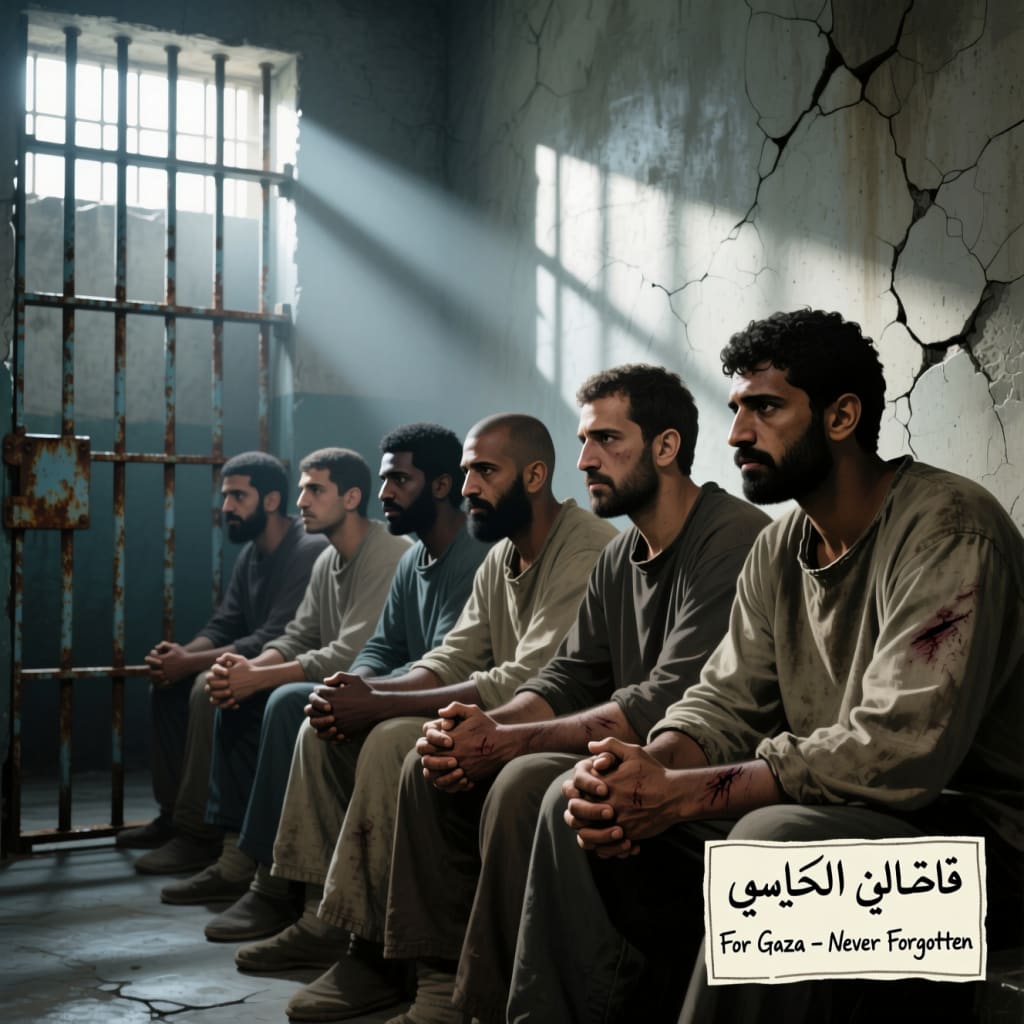
Behind Bars, Beyond Borders: The Struggle of the Global Sumud Flotilla
The roar of the sea had been replaced by the clang of iron doors. For the activists of the Global Sumud Flotilla, who had set sail with nothing but hope and humanitarian aid, the sudden transition from open waves to concrete cells felt surreal. Yet, even in captivity, their mission refused to die.
When Israeli naval forces intercepted the flotilla in international waters, the world watched in shock. The activists had carried medical supplies, food parcels, and messages of solidarity to the besieged people of Gaza. Instead, they were dragged into detention centers, accused of defying a blockade that many human rights organizations had long deemed illegal.
Inside the prison, fluorescent lights replaced the sun. Some activists were interrogated for hours; others were threatened with deportation. Yet among them, silence never took root. They sang resistance songs in their own languages, chanted for Palestine, and scribbled messages on scraps of paper to smuggle out to the world.
One activist, a doctor from South Africa, whispered to her cellmate, “They may have our bodies, but not our spirit. Every minute we endure here echoes louder outside.”
And indeed, outside, the echo had already begun.
In Europe, thousands took to the streets demanding their release. In Latin America, university students painted murals of the flotilla on campus walls. In Asia, Muslim communities held candlelight vigils. Even in the United States, where criticism of Israel often carries political cost, human rights groups held press conferences urging accountability.
The arrest had inadvertently amplified the very message Israel wanted to suppress. By silencing humanitarian aid, they had given the world a new headline: “Why is feeding Gaza a crime?”
In prison, the activists crafted solidarity out of hardship. A Greek fisherman taught others how to knot invisible ropes with their hands, a symbolic gesture of freedom. A young Palestinian with dual citizenship recited verses of Mahmoud Darwish’s poetry to uplift spirits: “We suffer from an incurable malady: hope.”
Days turned into weeks, and international pressure mounted. The United Nations called for their immediate release, while human rights lawyers prepared legal cases against the detention. Families of the activists gave emotional interviews on television, showing the human side of the struggle. A mother in Spain, clutching her daughter’s photograph, said: “She sailed to heal the wounded, not to be treated as a criminal.”
Inside the prison, news trickled in. Smuggled newspapers revealed that solidarity marches were spreading. The activists realized they were no longer isolated prisoners; they were symbols of defiance.
And yet, not all was hope. Some faced physical mistreatment during interrogations. Others were denied phone calls. The uncertainty gnawed at them — how long would they remain here? Would they ever reach Gaza?
One night, in a crowded cell, an elderly activist from Turkey stood up. He raised his hands as though he were back on deck and declared: “Even if we never see the shores of Gaza, our ship has already docked in the hearts of millions.”
Tears filled the eyes of many. That night, they did not feel like prisoners. They felt like witnesses to a larger truth.
Weeks later, under mounting global outrage, Israel reluctantly announced the deportation of several detainees. Exhausted but unbroken, the activists walked out of prison gates into the embrace of journalists and supporters. Their first words were not about their suffering, but about Gaza. “We are free,” one activist said, “but Gaza is not. Our journey is not over.”
The Global Sumud Flotilla had failed to reach its physical destination, yet it had succeeded in reaching the conscience of the world. From behind bars, it had exposed the fragility of a state that fears even humanitarian aid. From confinement, it had sparked a storm of solidarity across continents.
As the freed activists boarded planes back home, they carried a promise: the flotilla would sail again. Because resistance, like the sea, cannot be contained by walls or borders.
About the Creator
Wings of Time
I'm Wings of Time—a storyteller from Swat, Pakistan. I write immersive, researched tales of war, aviation, and history that bring the past roaring back to life
Keep reading
More stories from Wings of Time and writers in Fiction and other communities.
Echoes of a Forgotten City
Echoes of a Forgotten City The city once glowed with culture, art, and the laughter of children. Its streets carried the footprints of generations, and its walls echoed with stories older than memory. But when the war came, the city that once sang was reduced to whispers of smoke and broken stone.
By Wings of Time 6 months ago in Fiction


Comments
There are no comments for this story
Be the first to respond and start the conversation.