
Awakening the Machine Mind
How Artificial Intelligence is reshaping our world — and what it means for humanity

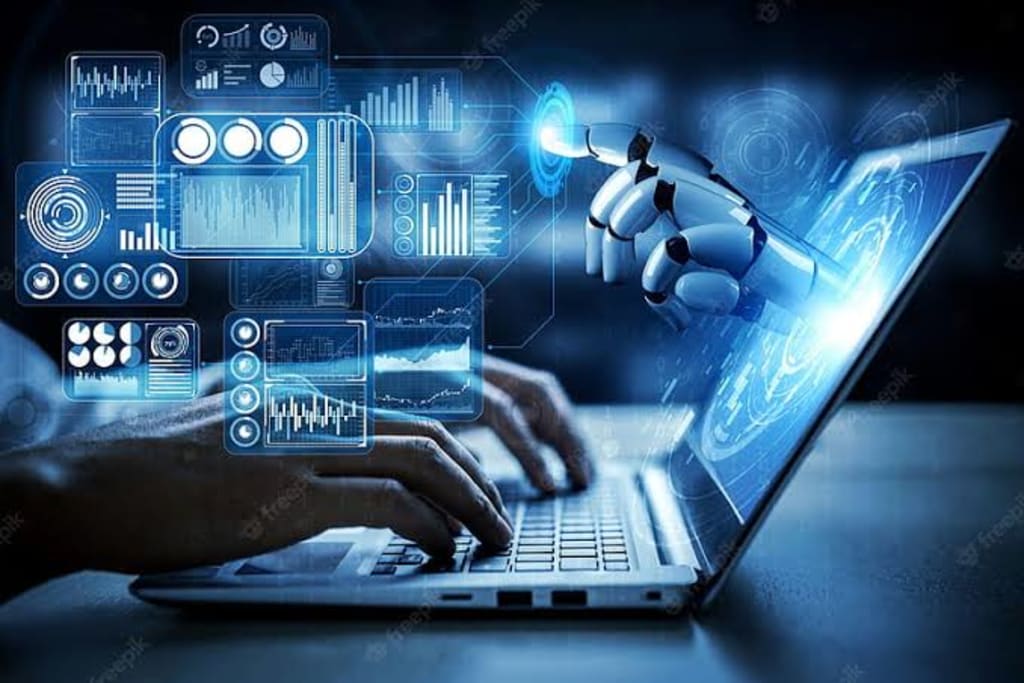
In the span of just a few decades, humanity has gone from marveling at pocket calculators to conversing with machines that can write poetry, detect diseases, and navigate cars through busy city streets. At the heart of this revolution is Artificial Intelligence (AI) — a technological force that is transforming industries, redefining jobs, and challenging our understanding of intelligence itself.
But what exactly is AI? And what does its rise mean for the future of our societies, economies, and daily lives?
---
Understanding AI: More Than Just Robots
Artificial Intelligence refers to the ability of machines to mimic human intelligence — including reasoning, learning, problem-solving, understanding language, and even perception. It’s not limited to robots. In fact, many of the AI systems we use daily are invisible: recommendation engines on Netflix, voice assistants like Siri, or fraud detection tools used by banks.
At the core of modern AI lies machine learning — a process where algorithms learn from data rather than following step-by-step instructions. The more data they receive, the better they become at identifying patterns and making predictions. A powerful branch of machine learning, deep learning, mimics the human brain using artificial neural networks, enabling machines to recognize faces, translate languages, or beat world champions at chess and Go.
---
The Many Faces of AI in Everyday Life
Today, AI is embedded in nearly every aspect of modern life:
Healthcare: AI is used to detect diseases like cancer from medical scans, analyze patient data, and even assist in surgeries through precision robotics.
Finance: AI algorithms monitor global markets, execute trades at lightning speed, and detect unusual activity to prevent fraud.
Education: Intelligent tutoring systems adapt to students’ individual needs, helping personalize learning in ways never before possible.
Transportation: From ride-hailing services to autonomous vehicles, AI is driving the future of mobility.
Entertainment: Streaming services use AI to suggest movies or songs based on user behavior, and generative AI tools create music, art, and even film scripts.
---
Jobs, Automation, and the Workforce Shift
While AI promises convenience and efficiency, it also raises serious questions about employment. As machines become capable of performing tasks once reserved for humans — from factory work to legal analysis — millions worry about job displacement.
However, AI doesn’t just eliminate jobs; it also creates new ones. Roles like data labeling, algorithm training, AI ethics, and robotics maintenance didn’t exist a decade ago. The future workforce will need to focus more on skills that machines can’t replicate easily: empathy, creativity, critical thinking, and ethical judgment.
Governments and institutions must prepare for this shift by investing in reskilling programs, digital infrastructure, and inclusive technology policies that ensure people are not left behind.
---
The Ethical Frontier: Can AI Make Moral Decisions?
As AI grows more powerful, ethical dilemmas become harder to ignore.
Should an autonomous vehicle swerve to save a child if it endangers its passenger? Should a facial recognition system be allowed to track citizens in public? Can an algorithm make hiring decisions without discriminating?
These questions don’t have simple answers, but they highlight the need for AI transparency, accountability, and regulation. Just because a machine can do something doesn’t mean it should. Many experts argue for the inclusion of ethicists, social scientists, and philosophers in AI development — not just engineers and data scientists.
Additionally, bias in AI remains a major concern. Algorithms trained on biased data can perpetuate inequality — denying loan approvals, misidentifying individuals, or unfairly targeting certain communities. The push for responsible AI is growing, demanding fairness, explainability, and human oversight.
---
Superintelligence: A Distant Dream or Imminent Threat?
A topic that fascinates both scientists and science fiction fans is Artificial General Intelligence (AGI) — a hypothetical AI that surpasses human intelligence in all fields. AGI would be capable of understanding, learning, and applying knowledge across any domain, potentially reshaping civilization entirely.
While AGI remains speculative, notable figures like Elon Musk and Stephen Hawking have warned about its potential dangers, including loss of human control. AI alignment — ensuring that future AI systems act in humanity’s best interests — is one of the most urgent topics in AI research today.
We are not there yet. Current AI is narrow — excellent at specific tasks, but lacking general reasoning, emotions, or consciousness. Still, the pace of progress suggests we must start preparing now, not later.
---
AI and Humanity: A Partnership, Not a Replacement
Despite the fears, AI isn’t inherently good or evil — it is a tool. Its impact depends on how we design, use, and regulate it. In the best-case scenario, AI can help us solve some of the world’s greatest challenges: climate change, global health, hunger, and education inequality.
The key lies in creating a human-centered approach to AI — one that values dignity, diversity, and sustainability. Artists can collaborate with AI to create new forms of expression. Doctors can use AI to catch diseases earlier. Teachers can use intelligent tools to reach struggling students more effectively.
AI should enhance humanity, not replace it.
---
Conclusion: The Road Ahead
The rise of Artificial Intelligence is not a passing trend — it is a paradigm shift, like the invention of electricity or the internet. It brings extraordinary possibilities and serious risks.
The decisions we make today — as individuals, institutions, and societies — will shape how AI affects future generations. Will it be a force for inclusion, creativity, and progress? Or will it deepen divides and concentrate power?
The choice is ours.
Let us proceed not with fear, but with wisdom, vision, and above all — responsibility.
---
Moral:
Artificial Intelligence is not our future enemy or savior — it is our reflection. Let us build it wisely.
About the Creator
What are we doing here?
"Will you just talk to me?" Mark begged, as his ceiling fan completed lazy, insistent revolutions. He watched as a fly— he couldn’t say when it had arrived— performed small frantic circles in the air before settling on the nightstand beside him. It groomed its front legs. Such fastidiousness in something so fundamentally unclean.
By Sandor Szaboa day ago in Fiction
Ludacris and Nelly draw backlash over bookings at MAGA-coded music festival
Ludacris and Nelly headlining a mostly right-wing event is good for them. It’s also great for the genre of hip hop. The two rap veterans have showcased their talents on other stages. Why can’t they perform for mostly MAGA folks and grab that bag?
By Skyler Saunders6 days ago in Beat


Comments
There are no comments for this story
Be the first to respond and start the conversation.