
Katsa skimmed just above the ground on her sidera, fighting a little as the small craft listed from side to side. It felt like the gyroscope was out of alignment, and it would be difficult to avoid getting thrown off before Rhoden could fix it. By dint of a few maneuvers that would have made her flight instructor proud, she made it to the engineercorps’ building without mishap. Recognizing her energy signature, the door obligingly dematerialized without asking for identification. There were benefits to having to come in so often.
Rhoden was bent over his workbench, tinkering with something as usual. He straightened up and removed his goggles, blinking against the light. Before he could say anything, Katsa was already prattling on at a parsec a minute.
“I beamed the readings from those new sensors back to Central a few minutes ago, and the new information just looks wrong.” She flipped open her wristpad to show him the data she had recorded. “I came back so fast to show you that I hit a bad patch of turbulence and broke something on the sidera.”
Rhoden scrutinized the glowing green characters. “You’re right, that does look strange. I can’t tell you what it means, though; better minds than mine will have to interpret that. I just build things. He looked into the engine compartment of Katsa’s vessel, which he had already opened up while talking.
“It looks like you’ve shifted one of the magnets. I won’t be able to use tools for this.” He placed his hands on the gyroscope and closed his eyes, concentrating. With a barely audible click, the component snapped into place. Telekinetic abilities made extremely delicate work easier, although very few people were strong enough to use theirs for heavy lifting.
“Whatever’s going on,” he continued, “the officials are upset. Most of us have been set to work on building the most massive passenger transports I’ve ever seen. There have been rumors that there’s some kind of natural disaster happening, and we’ll have to evacuate
Fethraed and search for another habitable planet.”
“That’s insane! We don’t even know if any exist! Besides, there’s no way we’d be able to build enough ships to evacuate the entire planet!”
Rhoden nodded. “If it’s true, they’re going to have to pick.”
Katsa kept thinking about that. She knew it was most likely just a rumor, but the dilemma stuck in her head and would not go away. She had been trained in evacuation procedure: civilians first, beginning with children, captain leaves last of all; but the destruction of their planet rather than just one ship or even an entire fleet felt different. In this case, they would have more to think about than the individuals involved; they would need to ensure the survival of their race for who knew how long.
Her hopes were dashed a few days later, when gongs summoned everyone in the capital city to the main square, where a gigantic hologram of Chief Scientist Ennan Fith waited, as it did in every other city on the planet. He informed them that a nascent coronal mass ejection from their sun had been
predicted. This wave would be powerful enough to completely overwhelm Fethraed’s weak magnetic field and thin atmosphere, and would irradiate the planet enough to annihilate all life. Fortunately, an evacuation plan was already underway, and with the full assistance of the Fethraedian people, there was still hope. The scientist then flickered out of existence, leaving his audience hopeful, but still afraid and full of questions.
Katsa’s wristpad chimed, informing her that, as a Scoutcorps Lieutenant, she was expected to attend a coordination meeting. Rhoden was apparently supposed to be there as well, since he appeared out of nowhere, grabbed her sleeve with a brusque “Come on!” and practically dragged her to the Central Headquarters, strangely jittery for someone usually so calm.
The meeting was exactly like every other that Katsa had been to, and would have been boring if everyone had not been painfully aware that the tiniest detail could mean the difference between survival and total extinction. Antimatter generation capacities and reserves of titanium were discussed, and the Chief Engineer, Katsa’s father, brought forward a prototype of an early-warning system to let them know precisely when the wave would hit. Then, the discussion turned to the limited space on the transport ships. Ennan Fith, in the flesh this time, announced that the early-warning system would allow them to build more ships as they could work until the last second in complete certainty that they would not be too late, thus saving as many as possible. The room erupted in cheers, and Katsa glowed with pride as her father’s colleagues shook his hand and clapped him on the back. Fith went on to say that, in order to best ensure the survival of the Fethraedian race, those individuals who were the most physically and mentally capable should be the first to be assigned space, as those who were very young, very old, or in poor health would need more care and could even jeopardize the mission by being of less help in an emergency. After a moment of stunned silence, everyone began clamoring at once, some taking one side
and some the other. Aides to the officials present were unable to restore order, and the remainder of the meeting was postponed pending further deliberation. Katsa allowed herself to be swept out the door by the crowd, thoroughly confused.
Rhoden was in the hangar tightening the bolts on one of the larger craft when Katsa came in. “You know, you spend all your time building these things; have you ever been on one?”
He did not answer immediately. When he did speak, it had nothing to do with her question. “What did you think about Fith’s proposal?”
Katsa sat on the prow of her sidera and swung one leg back and forth. “I don’t know. I’ve thought about it as hard as I could. I know it feels wrong, but you really can’t argue with his logic. I think I’d have to agree with him. It’s our best chance to survive.”
For the first time Katsa could remember, Rhoden set down his spanner to talk to her. “I know it is, but the chances are slim anyway, so we might as well give them to the people who need our protection most. I know it sounds like suicide, but I really don’t think I could live with myself if I knew I had left someone more vulnerable to die.”
“That is suicide, Rhoden. If being weaker meant that there would be any difference in their chances of survival on Fethraed, I would agree with you. But the people left will be just as dead no matter who they are, so all you’d be doing is giving those who did escape a worse chance of survival.”
Rhoden was silent, staring at the floor. After a while, Katsa started up the repulsors on her craft and skimmed away. Just before she left the hangar, she caught a glimpse of Rhoden in the window, his reflection silhouetted against the sky as he watched her go.
Time passed. The entire population was working fast and hard, getting ready to evacuate. Without
much technical experience, Katsa was primarily tasked with shuttling parts and materials to job sites around the planet, and helping with construction between deliveries, while still wrestling with herself over the dilemma of who to send off-world. She still thought that the option to send the most healthy and competent was the most rational, but sometimes the survival of the race seemed like a hollow excuse for a cold, unfeeling appraisal of the value of different people’s lives. Other times, she went back to what she had told Rhoden that day in the hangar, only to change her mind yet again. Previously, decisions she had had to make were comparatively simple affairs of following and giving orders, and she had never had to deal with a problem with so many sides to it.
It would be just under one month, as measured by the largest moon, until the wave hit, and tensions were running high. Katsa had not seen Rhoden since the day of the meeting, and at first suspected he was avoiding her, but she soon found out that he had been working around the clock, sometimes even sleeping in his workshop. It had paid off. Word went around that the engineercorps had invented an energy field that would redirect part of the kinetic energy and charge of the incoming wave and use it to launch the ships off-world, giving them both a certain means of escaping safely and the ability to keep building almost until the moment of impact. Hope and fear had become so inextricably connected that many had trouble remembering what it was like to experience them as separate emotions.
Katsa was at home on one of her rare breaks, nursing a sore shoulder from a collapsing support strut when her wristpad informed her that another meeting had been called. She got up and headed out, thinking about the unanswered questions from the last one. Just before she reached the door, she caught sight of baby Aeryx dozing peacefully in her magnecrib. Katsa stared at her for a long moment before turning to leave.
No one stood on ceremony, as everyone knew they were using up precious time. They sped through the usual reports until the only thing left was the topic everyone had been avoiding.
“Ennan, I’ve told you what I think many times,” Katsa’s father said, “but for now I’ll just say this: No one group is worth saving any more than another, but we do have an obligation to protect those more vulnerable than ourselves. It is not a statement of value, but of responsibility. If we as a people do not care for those who need our help most in this crisis, how long will it be before we turn to savagery, and sacrifice the weak and powerless when we think it suits our gains?”
“I agree with Engineer Dunfira,” said a voice, and Rhoden stood, raising his hand like he was still in school. Katsa was shocked at his appearance. The strain had taken its toll on everyone, but he was especially pale and thin, with dark shadows under his eyes from lack of sleep.
“What’s your name, boy?” Fith asked.
“Tallanfell, sir. Junior Engineer Rhoden Tallanfell." Rhoden tugged nervously at the hem of his green uniform tunic, then put his hands behind his back and clasped one wrist to keep them still. “And respectfully, sir, I think you’re focusing too much on the survival of the race rather than the lives of individuals. If all we cared about was the race, we might as well just load a ship with our genetic material and send it off. But that’s not what we’ve been spending all this effort doing; we’re trying to save people. Your proposal makes complete logical sense, but I would argue that logic alone is not a suitable compass. Sentient lives are not a numbers game. I would even say that if we decide to save ourselves at the expense of others, then we don’t deserve the life we would have.” He finished speaking and appeared to realize that everyone in the room was looking at him. He coughed and mumbled something that was probably “I’m done talking now”, but could have just as easily been something else entirely, before sitting down.
Before she knew it, Katsa found herself standing up instead.
“Chief Scientist Fith, after the last meeting, I agreed with you. But just before coming here, I saw something that made me change my mind, and the thought struck me that many of us here deliberating would be the first to get a ticket out, and that many of the people we’d be leaving behind would be incapable of understanding it even if asked. What I saw was my sister Aeryx, who would have no idea what is meant by the survival of the race, and would only realize what was going on when she woke up to find we had left without her. Arguments like yours make sense in the abstract, but once you take them out of the cold light of logic and into the real world, you realize that you will have to look into the eyes of your brother, or your grandson, or your maiden aunt in a maglev chair, and tell them they’re not worth saving.”
Katsa could feel the air vibrating from the tense emotions, and was concerned a fight could break out, but to her surprise Fith inclined his head in respect to her and Rhoden. “A fine speech, Tallanfell, straight from the heart. And you, young lady, have proved that the Dunfira silver tongue is indeed hereditary. Much as I feel there is only one prudent course before us, one man cannot choose for all. The idealism of youth is a valued component of a functioning society, though to prevent rash actions that would spell doom for all, it must be tempered with the wisdom of age. Since we have both here in abundance, and have already heard many fine arguments both for and against, it is time to decide once and for all. Shall we put the issue to popular vote?”
By the end of the day, the logistics of the evacuation had been planned out to the last detail. The transports would be crewed by the most competent men and women in their field, but their passengers would primarily be children, with only the adults who would have the skills necessary to care for their charges in the new world. After every child on the planet had been accounted for, the aged and disabled would then be given preference over the young and healthy.
As Katsa was leaving the building, she found Rhoden waiting for her. “Thank you for saying that,” he said softly. “I wasn’t sure they’d believe me. And I was kind of worried about whether you would agree with me. I mean, I’m not saying you were callous, but sometimes people think too much with their head and not enough with their heart.”
“Actually, I wanted to thank you, for showing me why it wasn’t a good idea. I
would hate to have been in the wrong about something so important.” She paused. “By the way, you never answered my question about whether you’d been sailing before.”
“I…don’t think I can. I need to get back to work.”
“Rhoden, you’ve been putting in 32-hour days for who knows how long. If you don’t take time to unwind, you’ll end up either making a mistake or killing yourself, and at this point I don’t know which you’d consider worse. Come on, just take a ride.”
He finally agreed, and they boarded her sidera, which despite being a one-man vessel, could carry two easily. Before they started, Katsa opened a compartment and pulled out two bands of flexible silicon, handing one to Rhoden and buckling the other around her own neck.
“Compact life support system,” she explained. “Microabsorption pads concentrate oxygen and dissolve it safely into the bloodstream while regulating pressure and temperature. You need them anytime you’re in the upper atmosphere in an open-cockpit craft. You won’t die as long as you stay in the thermosphere of course, but this gives you enough energy to be able to do things. And if you somehow get knocked out into space, it gives you about half an hour to send out a distress signal. Now, strap in and let’s go.”
She throttled up and within minutes they had overcome Fethraed’s weak gravity and were coursing above the planet, the magnetized keel of her sidera slicing along the charged particles of the ionosphere. Rhoden grinned like a little boy as Katsa demonstrated every trick she knew at high speed.
“I love it up here,” she said, after they tired of fancy flying and were seated on the drifting sidera looking at the stars. “Without as much atmosphere in the way, their light is so pure and brilliant. My favorite is Siarkand,” as she pointed to the glittering blue jewel in Dethoris’ Belt.
“I’ve never seen anything so amazing,” Rhoden agreed. “Thanks for bringing me up here. This was probably my last chance to see something like this, so I appreciate that.”
“Don’t be like that. We’ll have the same stars on our new world.”
“I won’t be going. I’ve decided to join the Lastguards.”
“Damar Thaynesar’s crew, the ones who are staying behind to make sure everyone boards?”
“Yes. They don’t have nearly enough people, and I thought this was something I should do.”
“I’ll stay with you,” Katsa declared impulsively.
“No, Katsa, you can’t. You’re one of the best pilots on the planet; I heard your flight instructor say so. There’s no telling what dangers are going to be out there, so you’re indispensable.”
“And you’re not? Rhoden, you’re a genius! What makes you think we won’t need you to fix things?”
“You only think I’m special because I made your sidera and because you always come to my lab when you need something fixed. There’s nothing I can do that thousands of others others can’t. He paused, took a deep breath and continued quietly, “Also, I have a debt to repay. When I was a baby, my home city was destroyed in the Firefall. Just a random, freak disaster, like this one. I was the only survivor because my family died to save me. I’ve tried ever since to do something they would be proud of me for, and the machines -- I don’t know.
I’m good with them, but I just never felt...complete, I guess.”
“Rhoden, why would you think they would be ashamed of you? You’ve done so much good in the last few days alone. You don’t need to die to make your parents proud of you!”
“I know I don’t; that’s not why I’m doing it. I just feel like I should repay them by doing for someone else what they did for me.”
Katsa paused. “I understand. I wish you’d change your mind, but I still admire you for
it.”
“Thank you. I haven’t told anyone else yet, and I was worried you’d laugh at me. I really think this is what I was here to do.”
His hand found hers on the deck of the sidera, and he turned and looked at her for the first time since he had started talking. In the light from the largest moon Anrey, his eyes were the exact color of Siarkand as it shone behind him, and they looked like he was about to cry.
She kissed him.
The next month passed in a blur of building and stress. Spurred on by near-panic, the citizens had exceeded estimates, and they now had enough capacity for the majority of the population, not counting the Lastguards, or others who had chosen to stay. Among the latter group was Katsa’s grandmother. “I’ve lived my life,” she had explained. “Let someone else live theirs.” Katsa had cried.
Whenever their off hours coincided, she and Rhoden would go sailing together, or just sit and talk about every topic imaginable. Although they had been friends since before they could walk, they each felt that they were just getting to know each other. Unfortunately, these respites were rapidly growing fewer and farther between as impact drew near.
Finally, late one evening, their stargazing was cut short by a shrill alarm from both Katsa’s wristpad and Rhoden’s earpiece. They both knew they would never see each other again. Each had separately thought of what they would say when the time came, but now their rehearsed valedictions seemed foolish. A short, sweet goodbye was the best option.
Stealing precious seconds in the comfort of his arms, Katsa whispered, “I’ll never forget you.”
“I’m glad I could be your friend,” Rhoden replied.
Back on the ground, they lost no time running to their respective assignments. Rhoden combed rural areas for people who needed help getting to the ships, while Katsa helped direct traffic in the launch area itself. Her grandmother came to say goodbye. Ever since the announcement that she was staying, Katsa had kept on hoping that she would change her mind and decide to go anyway, but the old matriarch was adamant. “You gave me the right to choose,” she said, pressing a locket that had been her own as a girl into her granddaughter’s hand. “This is my choice, and I make it freely. You know I’ll never truly be gone, Katsa. Always remember that I am proud of you.”
When nearly everyone was safely aboard, all pilots were ordered to man their flight consoles. Katsa smiled when she saw her sidera secured to the side of the transport, ready to explore their new home. Five minutes to impact. Katsa punched in her code and began igniting the engines. Three minutes. The ships slowly rose off the ground in preparation to be kick-started by the incoming wave. One minute. Out of the corner of her eye she spotted an old woman who was trying desperately to make it to her ship. How had she been missed? Katsa set temporary autopilot and raced out to the entrance ramp, which was now several feet in the air and still rising. The woman had managed to scramble onto it, but the doors began closing for the trip and she staggered and fell off. Thirty seconds. Katsa caught her, but had no leverage to pull her up, and her telekinesis was too weak to be of much use. Twenty seconds. She closed her eyes and heaved her up and onto the ramp, nearly screaming from the physical and mental effort, then lost her own grip and was left dangling in the air. Five seconds. Her flailing leg hit a lever on the side of the ship, and the bindings on her sidera released and it fell to the ground, where it broke in two. One second.
The wave hit, and Katsa’s world exploded into oblivion as she was flung out into space.
Damar’s voice crackled in Rhoden’s earpiece. “The transports are away! The transports are away!” Rhoden jumped up in the air and cheered; he could hear his fellow Lastguards doing the same.
The erstwhile inhabitants of Fethraed stared out the viewscreens of their ships, looking back toward everything they had ever known and their loved ones who had stayed, and forward toward uncertainty, possibility, and hope.
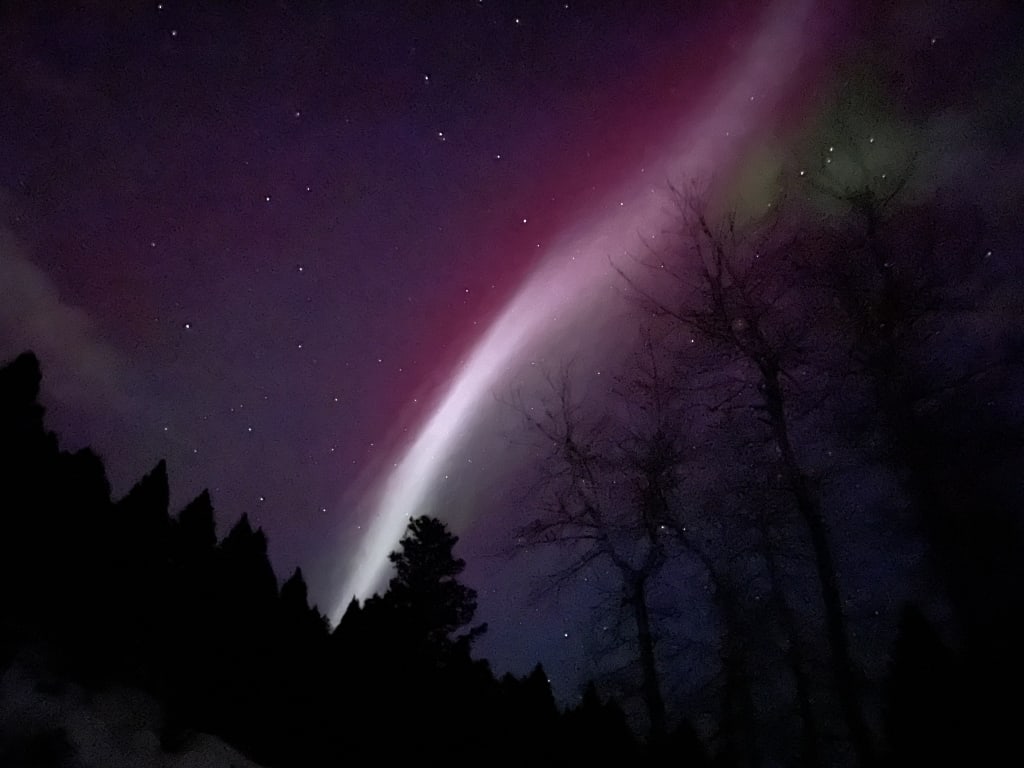
Marooned on a dying world, Rhoden Tallanfell watched as blinding auroras danced across the darkening sky. They were the most beautiful things he had ever seen.
About the Creator
Keep reading
More stories from Phoenix Drake and writers in Fiction and other communities.
Unit 735
Nobody can hear a scream in the vacuum of space, or so they say. Many different races of sapients used this phrase, or something similar, and Unit 735 had at first deduced that it was a literal instruction that distress signals through vacuum must be accomplished via light rather than sound. However, the unit had observed sapients using the phrase in situations for which this meaning would be inappropriate, leading it to conclude that there must be some other meaning. Sapients sometimes used words in strange ways, but the unit was often unable to interpret these instances, because its operators always instructed it using precise language. It did not matter, as the unit was not programmed to express fear or pain in the same way sapients did.
By Phoenix Drake4 years ago in Fiction
Flower Bloom 369
FLOWER Bloom 2/25/26 Wednesday By Mariann Carroll Karen had been with Tony for 7 years. Tony started acting strangely after her surgery. He would mow the lawn in the rain and be on his cellphone. He started pushing Karen away. Tony came clean about seeing someone. Karen moved out two months later. Karen moved in with a friend. She felt betrayed.
By Mariann Carroll5 days ago in Fiction



Comments
There are no comments for this story
Be the first to respond and start the conversation.