
Animal Farm (George Orwell) - Chapter- 6 (Novel)
A Fairy story

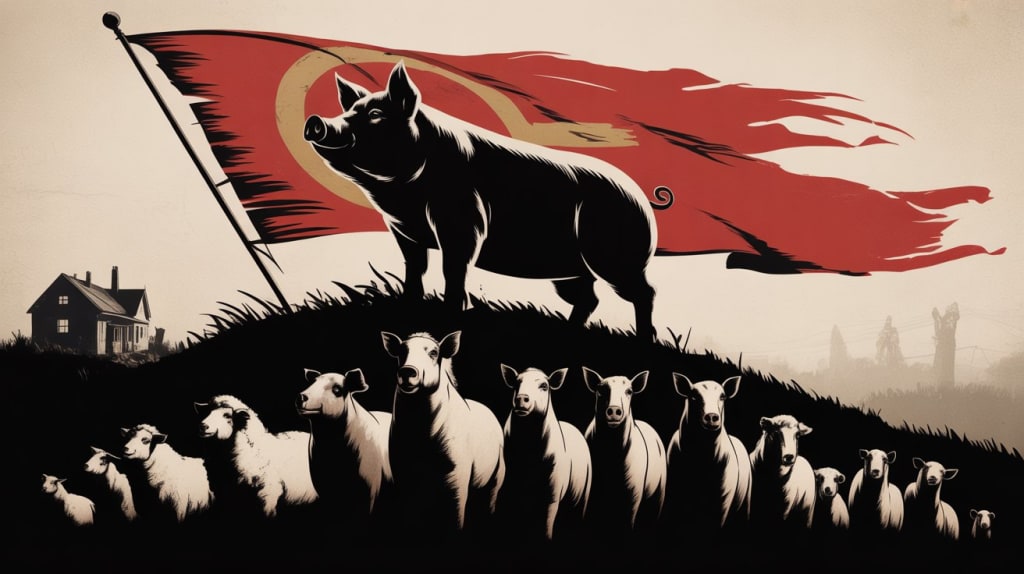
As Animal Farm's second year of freedom begins, the animals face new hardships and challenges. The winter is harsh, and food supplies are dangerously low. Nevertheless, Napoleon insists that work on the windmill must continue without a break, promising to lighten their burden once it is completed. The animals work harder than ever, often toiling from dawn to dusk, but their rations are reduced and the cold bites harder. Boxer, the hardworking carthorse, adopts his new maxims with even greater dedication: "I will work harder," and "Napoleon is always right." His strength and passion become the backbone of the farm's efforts, but even Boxer begins to tire.
Napoleon uses his skilled propagandist Squealer to convince the animals that the hardships are necessary sacrifices for the greater good. Squealer explains that the animals are actually better off than Mr. Jones, and that the shortage of rations is due to external trade difficulties rather than poor management. In fact, Napoleon has secretly begun trading with neighboring human farms, something Old Major's original vision explicitly forbade. The animals find this contradictory and ambiguous, but they accept Squealer's assurances that such dealings are necessary to obtain the necessary equipment for the windmill, such as machinery and materials.
The trade is carried out primarily by the pigs, who have taken over many of the administrative tasks. Napoleon and the other pigs live comfortably compared to the rest of the animals, enjoying the farm's milk and apples, which are said to be essential to their health while they carry out their intellectual duties. Although the animals find this unfair, Squealer's clever explanations overpower their objections, reminding them that the pigs need to be well for the farm to run smoothly.
Meanwhile, work continues on the windmill, although progress is slower than expected. The animals grow tired and frustrated as the promised relief from labor seems further away than ever. Storms damage parts of the windmill's foundation, and the rebuilding efforts sap the animals' strength and morale. Nevertheless, Napoleon insists on moving forward.
As the years pass, Napoleon's leadership becomes more authoritarian. The Sunday meetings, once democratic forums for all the animals to express their opinions, have been abolished. Decisions are now made by Napoleon and his circle of pigs. The animals are expected to follow orders without question.
To enforce his rule, Napoleon relies on nine fearsome dogs he raised from puppies, who roam the farm as his private enforcers. When any animals show signs of dissent or confusion, the dogs intimidate or chase them into silence. Even some animals who once questioned Napoleon’s decisions are now hesitant to speak out for fear of the consequences.
In a dark twist, Napoleon sets the stage for public confessions and executions. Animals accused of secretly conspiring with Snowball or sabotaging the farm are rounded up and swiftly disposed of by the dogs. The victims include some of the most loyal animals, who are executed in front of their peers. This brutal crackdown has shaken the community, but fear keeps the survivors quiet.
The Seven Commandments of Bestiality, once vividly painted on the barn wall, begin to subtly change. Initially, the changes are small and easily overlooked, such as "No animal shall sleep in a bed with sheets" replacing the original prohibition. The animals do not notice these changes, trusting Squealer's explanations that the commandments have not been broken but clarified. Gradually, the commandments change to suit the pigs' increasing privileges and the new realities of the farm.
Despite oppression and hardship, the animals cling to their hope for a better future, fueled by the memory of Old Major's dream and songs of rebellion like "Beasts of England." But their faith is shaken by hunger and promises are not kept.
The chapter ends on a dark note: the animals are overworked, underfed, and increasingly controlled, yet they continue to believe that they are freer than ever. Orwell skillfully captures the tragic irony of their situation - the revolution has replaced one form of oppression with another, wrapped in the language of equality and progress.
About the Creator
Echoes of Life
I’m a storyteller and lifelong learner who writes about history, human experiences, animals, and motivational lessons that spark change. Through true stories, thoughtful advice, and reflections on life.
Keep reading
More stories from Echoes of Life and writers in Fiction and other communities.
Animal Farm (George Orwell) - Chapter- 5 (Novel)
The arrival of winter brings new challenges and new conflicts to Animal Farm. Molly, the idle white mare, begins to act suspiciously. She is often late for work, complains about trivial matters, and is nervous when contacted. Eventually, Clover discovers that Molly has been secretly talking to one of Mr. Pillkington's men, letting him pick her nose and accept sugar and ribbons. When Clover confronts her, Molly denies everything, but after a while she disappears from the farm. Later, the pigeons see her pulling a cart for a man in a nearby town, wearing a shiny ribbon and enjoying sugar. Molly chooses a life of slavery over her hard-won freedom, and no one talks about it again.
By Echoes of Life6 months ago in Fiction
Wild Card Weekend Recap: What Happens Now?
I think I figured out why I love Wild Card Weekend so much. It's because it's the first playoff anything of the calendar year. The NFL season starts in the fall, and once upon a time, the champion was crowned either on or slightly before New Year's. The evolution of the NFL schedule has resulted in the playoffs starting just into the New Year, and currently, the final week of the season falls on the first weekend of the New Year, with Wild Card Weekend coming a week after that. So yes, chronologically, the NFL's Wild Card Weekend serves as the first playoff anything of the calendar year.
By Clyde E. Dawkins4 days ago in Unbalanced



Comments
There are no comments for this story
Be the first to respond and start the conversation.