
all dreams break in the end
for the summer that wasn't challenge


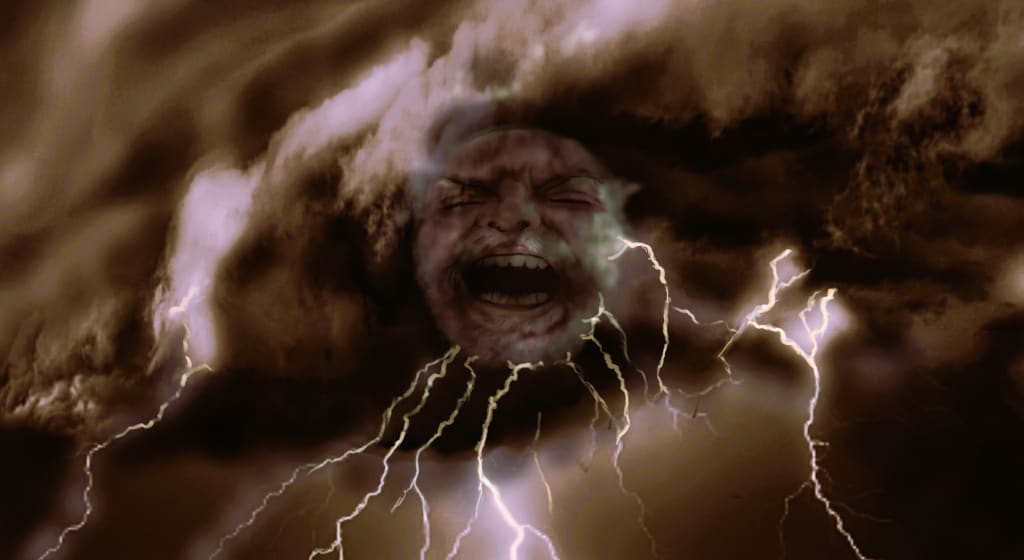
Alas! what is life, what is death, what are we/ That when the ship sinks we no longer may be? - Percy Bysshe Shelley
...
May the day perish on which I was born, and the night in which it was said, a daughter is conceived, may that day be everlasting darkness. The sea, the cruel sea has robbed me of all my joy, the memory of its pounding waves filling my last days with misery and woe.
You may wonder, what vexatious misfortune justifies such protestations, and I shall put down a few thoughts on the subject. I have often meditated on Job's complaint and feel a strong kinship with him.
My mother died giving birth to me and for this fault I still cannot forgive myself. I swore to make my mark in the world, to make something of her and my father's sacrifice.
In this good work I assiduously applied myself, studying the classics, gaining proficiency in Greek, Latin and the Romance languages, completing eleven novels and tirelessly editing and promoted Shelley's poetry and essays that his name might be remembered among the elect.
In my youth, I dared to dream, and one summer day the world unfolded to me like a child’s puzzle purse. I met a young man of beautiful countenance, tender in manner and astonishing in intellect. How many times did I lose myself in the intensity of his bright eyes? How many times did I dream of making myself worthy of his lifelong companionship?
But when my visions began, the fabric of self was pulled taut like silken threads stretched upon a loom and I experienced a rending like a garment torn in a moment of fierce rage. I beheld the future in that great tearing, as if witnessing Prometheus himself bring undreamed of gifts to mankind.
In the liminal spaces between my visions and waking perception I heard a still voice hissing like lava entering the sea, but I was as deaf to oracle as King Agamemnon was to Cassandra.
At the tender age of sixteen, I ran away with my Shelley and we witnessed together both horrors and wonders. We journeyed by foot through the wreckage of shattered France at the ending of the Napoleonic wars, refugees like scarecrows wandering the roads we shared in search of food and shelter and finding none.
Thirty-five years have passed and yet the bands of those starving souls haunt me still.
We visited Herculaneum and Pompeii. Climbed Vesuvius and held hands within the Pantheon when the moon lit the columns of the Rotunda through its aperture above us.
We wandered among the great statuary of the Ancient Greeks in the Vatican's museums and were moved to tears by the divine paintings of Rafael and Michelangelo's Pieta in the center of St Peter's square.
But our youthful idylls were brief, and the storms of our life had only just begun.
By age eighteen, I nursed my second child, William, my precious little Willmouse, having lost our first a few days after her premature birth.
I still dream of her lying at my side as if only sleeping and I carry her gently to our fireplace and rub her tiny chest and face till she awakens. But my littlest angel is dead, and no fairy dream will ever return her to me.
After Willmouse entered our lives the years of famine began, sweeping across Ireland and Wales like the furies pursuing the damned. Even the very old among us had never witnessed tribulations like the ones following in its wake. But these things were only the beginning of sorrows. Many such afflictions crossed the channel to the mainland and with them riots, Typhus, Cholera and the death of millions.
The summer that followed changed everything and yet truly wasn't a summer at all.
No one was safe for long. In my fear for our welfare and with Willmouse teething and in a frightful temper, I pleaded with Shelley to take us again abroad.
My stepsister helpfully suggested traveling to Lake Geneva, the perfect excuse for visiting what I hoped were sunnier climes. I knew Clair only plotted to see her lover Lord Byron again even though he had left England to flee her. But her machinations suited my need to escape London. Crossing France into Switzerland, the landscape was as desolate as any I ever witnessed.
The skies perpetually dark, the sun forever invisible, some days I wondered if its broad disk had vanished into the ether. It proved itself a wet, cold and ungenial summer. Trapped in the Villa for days at a time, I endured the lecherous ministrations of Dr. Polidori, and watched poor, pregnant Clair exercise her coquettish charms on Lord Byron to no avail.
And the rain! It rained every morning; it rained every afternoon; it rained every night. It was not the ceaseless mists of foggy England, but the tropical monsoons of Asia. It rained like it must have during the great flood, the winds perpetually howling, the precipitation plunging out of clouds so dark it seemed to me that the end of the world waited impatiently at our doorstep.
Only Shelley and Lord Byron seemed to enjoy the virtue of one another's company, nightly debating philosophy and the topics of the day while the rest of us, far from the amiableness of domestic affections, stewed and schemed. And the cold! I shivered constantly, Willmouse fussing and clinging to me for whatever feeble warmth I could give him.
Our party whiled away many frigid evening hours sitting by a blazing wood fire playing whist or entertaining ourselves with German ghost stories to the perpetual crash of thunder and the pounding rain upon the roof tiles. Then one night, Lord Byron, clearly starved for fresh amusement suggested a ghost story contest and we all readily agreed.
The following day, Dr. Polidori regaled us with the first, a Vampyre story that he later published to greater public acclaim than anything I had ever hoped to produce. And as the days passed first one then another would invent some blood curdling tale. But my mind was numb as my toes. My thoughts filled with the dark clouds of fear and the promise of a summer that never came and a rain that never ended.
When we wearied of stories, Lord Byron and Shelley talked far into the night while I listened devoutly and held my darling Willmouse in my arms or nursing at my breast. Then one especially stormy evening they vehemently argued whether man would ever discover the elemental principles of life. Lord Byron believed it not, but my Shelley insisted that with the eventual increase of knowledge man would unlock nature's greatest mystery and even bring about life where none was seen before.
Sitting in silence, I saw the mad light growing in Shelley's bright eyes and began to tremble with more than mere cold. I knew in a moment the desire of my husband's heart. He would never be satiated by ordinary book-learning. He would have it all or lose everything in the attempt.
That night in our bed, I lay awake for many hours staring blindly into the night, the pounding of the incessant rain and the thunder crashing filling me with anxious thoughts for our wellbeing and the safety of our young child. But I feared the restless thoughts that kept Shelley awake at my side even more.
Though I did not sleep, I had what seemed to me a waking dream, so vivid, it was if I witnessed it with my eyes rather than my imagination. The phantasm I saw lay, still as a stone, upon a table. I hesitate to call it a man. Severely disfigured, it looked as though some cruel god had haphazardly shaped its body with a bit of earth before animating the clay with life.
But no god filled this monster's lungs with divine breath. The creator standing at the creature's side was mortal. Both hope and terror animated his features when he willed his creation to rise.
The monster's body began to shake, as if awakened by some hidden engine, before stirring with strangely unhuman vitality. It struggled to rise, but weakened by its exertions, its head returned feebly to the table, its soulless eyes closing wearily. Starring in wonder at the vision, it did not fade, and I experienced an intense pity for the creature and felt great enmity for its arrogant maker.
But my vision did not end there. Oh, no. I watched in fascination and disgust when it stared pitifully at its horrified master and named him papa, smiling with hoped for approval like a little child.
His creator, staring at him with contempt, exclaimed, No, daemon, I know thee not! And the monster wept at his master's unjust words and bitterly complained to him who gave him life and yet refused to love what his hands had made.
When neither tears nor pleas moved his maker’s heart, the monster secretly swore to avenge himself by destroying everything his creator loved beginning with the woman promised to be his wife. And I in my lonely vigil wept at the horror of the tale's unfolding through the long, torturous hours of the night.
In the morning, while jotting notes from the vision in my journal, I remembered the Fall. Did God not warn both Adam and Eve not eat of the tree of the knowledge of good and evil? In Shelley's growing madness, even his genius paled before the secret gnosis he now desired to master.
That night as I spoke, I knew by the astonishment upon my audience's faces that the youngest member of our company had won the laurels. My lover's face was ashen and awestruck, Lord Byron shouting Bravo, Mary, again and again. Shelley whispered in my ear, his lips a tremble, Your tale has terrified me, my love. Well done. That night I felt a little hope that he understood the message hidden within the dark folds of my story and I slept soundly in the wee hours of the morning when we eventually retired.
The summer that was not a summer passing, we returned again to England and stayed a while in Bath and later, after we married, settled in Buckinghamshire. There our lovely Clara was born giving dear Willmouse a baby sister. But due to Shelley's poor health, debts and fear of creditors casting him into debtor's prison, we fled for Italy with no plans of ever returning.
But I cannot remember Italy without tears cascading down my cheeks. Poor Clara died in September 1818 in Venice and my darling Willmouse in June 1819 in Rome. In the months following a darkness overcame me and my debilitating headaches began. I continued to write, my last remaining joy, but it was not until the birth of our fourth child, Percy Florence, that my spirits began to somewhat lift.
But Shelley conceived the mad idea that he would travel in the footsteps Dante had taken during his long banishment from Florence. He began to write poetry in the terza rima rhyme scheme that Danti invented for his la divina commedia, soon suffering from the same ambition that inflamed other Dantista's before him, the insatiable hunger to know more.
About this time, he began to experience dreamlike visions of his own, but he named them his visitations. They were always the same, the sea's crashing waves entering our home and tearing everything down. He began to dream of writing a work to rival Dante's great poem of Hell, Purgatory and Heaven.
The last time I saw my Shelley, he prepared for a voyage from Pisa to Lerici, and a great fear overcame me, the darkness long present within me causing me to tremble uncontrollably. Seeing his eyes fairly glow with the mad light of destiny, I begged him upon my knees not to go. But he lifted me to my feet, hugging and kissing me goodbye.
A few weeks later I received a letter from Leigh Hunt intended for Shelley. When I read the words Pray write to tell us how you got home, for they say that you had bad weather, the paper fell from my hands, and I trembled all over.
At the inquest, a sailor testified that he cried out to the captain of the boat carrying Shelley to come aboard the ship on which he stood or to lower their sails before they capsized their small craft. In answer he heard a high-pitched voice above the howling winds commanding the little boat to sail on. I knew in my heart that it was Shelley that he had heard. In his last few moments on this earth, he sailed not to home but to the undiscovered country, desireth of his last, great adventure.
In his final journal entry, my Shelley wrote, The spring rebels not against the winter but it succeeds it--the dawn rebels not against the light but it disperses it.
He was a beautiful, brilliant man and I was happy for the short interlude that we together shared. But all dreams break in the end, my friends ... even the ones that come true. Sometimes we simply live too long.
...
My trembling hand shall never write thee -- dead/ Thou liv'st in Nature, Love, My memory/ With deathless faith for aye adoring thee/ The wife of Time no more, I wed Eternity. - Mary Wollstonecraft Shelley

About the Creator
John Cox
Twisted writer of mind bending tales. I never met a myth I didn't love or a subject that I couldn't twist out of joint. I have a little something for almost everyone here. Cept AI. Ain't got none of that.
Reader insights
Outstanding
Excellent work. Looking forward to reading more!
Top insights
Compelling and original writing
Creative use of language & vocab
Easy to read and follow
Well-structured & engaging content
Expert insights and opinions
Arguments were carefully researched and presented
Pearl
1980 something. we all hung out at Pearl and you and i were nothing special, or so i thought. i mean we all danced, drenched in our own sweat, our own saline solution of fear, too many beers, shots, laughter, tears, fucks in the bathroom and i don't know when we began to be afraid. do you?
By ROCK aka Andrea Polla (Simmons)7 days ago in Fiction
High Score
“We need normalcy,” we say as we sit in the park, shoulder to shoulder, after work and every weekend. Life is scary right now, and we are searching for stability amidst this new normal: a pandemic rages, my friends’ marriages are dissolving, and I often feel that I am dying inside.
By Aubrey Rebeccaa day ago in Fiction
Unofficial Challenge: Black History Celebration
Forward: February 28th, 10:53 PM, EST... The final hour of Black History Month, 2026. Hello fellow writers. I've had this challenge waiting in my drafts for most of the month. But I held off on publishing it, until now.
By Sam Spinelli4 days ago in Writers


Comments (20)
oh my gosh this is incredible
Such beautiful prose. I absolutely loved this blend of historical facts and creative license. Congrats on the challenge win. It was very much deserved!
So this was how Frankenstein was birthed! loved this and easily, a WIN! Congratulations, John. You truly channeled her thoughts/feelings as I would imagine and blended historical facts.
I’ve always been curious about their ghost story contest. Thank you for bringing it to life for us and congratulations on your win!
This was an incredibly unique piece, and you really mirrored a more antiquated voice in your writing that represented and captured what how I would imagine Mary Shelley's voice. Love the idea of an event/experience in her life influencing the creation of her story. Congratulations on your win.
Congratulations on the win, John! This is such a fantastic story and so deserving!!
Wooohooooo congratulations on your win! 🎉💖🎊🎉💖🎊
Super congrats to you, Sir John!!! So happy for you, my friend!!! 🤩🍻🥇
Well John, Congratulations on the win, this well written piece truly shows your talent as a writer.
Back to say congratulations! Very well deserved!
This piece was masterful! Rich in historical voice, layered in emotion, and so vividly rendered that I felt transported to every place and moment described. Congratulations on your win, it’s an honor to be in the company of such eloquent and haunting storytelling
I like the geographic elements of this. The bible references too. The constant rain for this challenge and the historical marrying is very fitting. What made me laugh was the stepsister bit. About needing to see her lover Lord Byron again... Even though he had left England to flee her 🤣 I think my ribs fell out with this one. The monsters master who showed no pity. What a position to be in. The love she had for her husband was so beautiful. Sadly his love for adventure became his undoing. You took us far and wide in this story, it was very entertaining. Your artwork is also great. I am in awe at how you did the lightening. Very nicely done, John 👏🏾
Oh, wow. You've outdone yourself here. The intensity and beauty of the initial paragraph draws your reader in and hooks them. This was such a wonderful idea to write from Mary Shelley's perspective - and in reading it, one would absolutely believe she had penned such thoughts to paper. I love "But when my visions began, the fabric of self was pulled taut like silken threads stretched upon a loom and I experienced a rending like a garment torn in a moment of fierce rage" - it's so immersive, so drowning in its palpable emotion and loveliness. Well done, my friend. Such a lovely and wonderful piece of masterful writing.
This is such a powerful and heartbreaking reflection, John! Mary Shelley lived through so much loss, tho still found a way to turn her pain into something lasting. Bravo! Love the historical take on the challenge! You always come up with such fascinating themes! (Came back to add that and realized my original comment had a typo in it, so I redid it ☺️)
First, LOVE the new profile pic. Second, this is yet another stunning narrative from the mind of John Cox. Excellent storytelling!!!
Monsters and Creators and you--oh, my! This was so beautiful. Ah, to write like you! But, in the meantime, I'll get to read what you write. Bravo.
Spectacular bit of historical narrative! Very well done!
This was mesmerising. I was reading and thinking "Is this? Is it Mary Shelley?" and then, yes! And the evocation of it all - her grief, her love for Shelley, the competition - was just exemplary, John. Really. Well done.
This was so heartbreaking, especially the death of her babies 🥺 Loved your take on the challenge!
I like how you took the tale of how. The story Frankenstein was created. The summer retreat where the greatest authors had a competition and Mary won. So well told for any who follow literary works. Well done, yet the ending is new to me, very sad indeed