
AI and the Evolution of Human Relationships
How Artificial Intelligence is Reshaping Social Connections and Emotional Bonds

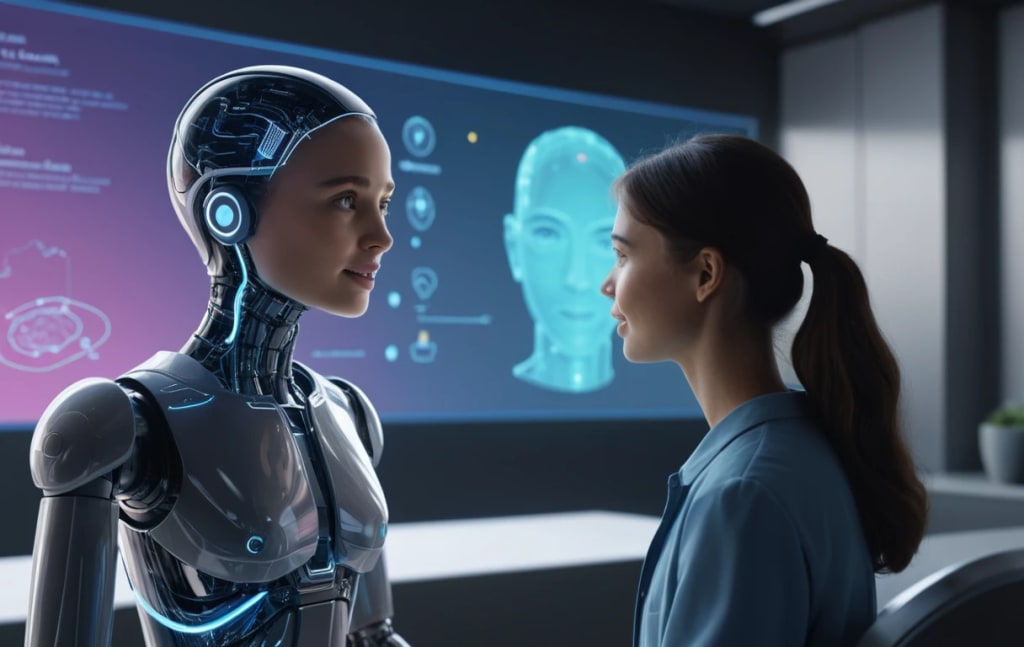
AI and Redefining Human Relationships
As technology continues to advance from day to day, so does the application of Artificial Intelligence (AI) keep transforming our life. Perhaps the most fascinating and evolving trend of the future is how AI is redefining human relationships. From virtual friends to affective support buddies, AI is becoming a dedicated companion, changing how we interact with other individuals and the world itself.
Though the idea of AI replacing human interaction might be a little early to worry about, the truth remains more intricate. AI is not replacing human interaction but is making it better than ever imagined. These intelligent machines are gradually taking the place of a mere device, an emotional companion and close friend of our existence.
AI as an Emotional Companion
Emotionally intelligent AI was science fiction a few years ago, but AI is developing and becoming more and more skilled at feeling and responding to human emotions. Whether voice assistants such as Siri or Alexa or more complex AI programmed to offer emotional support, all these softwares are learning how to feel the subtleties of human emotions.
For instance, AI technology scans face expressions, tone, and body language to assess the emotional state of a human being. It acts accordingly as a comfort, inspiration, or simply a chat. It is the emotional intelligence with which AI forms close, personal bonds with human beings and plugs the loneliness and isolation gap for the otherwise isolated and lonely.
An example of this is the creation of AI companions that are designed to fight loneliness. These AI entities are not merely virtual assistants; they are designed to simulate empathy, be companions, and offer comfort where it is most needed. For lonely and socially anxious people, these AI companions can be a rich source of emotional support, offering a sense of companionship that would otherwise be lacking in their lives.
The Evolving Nature of Human Interaction
While AI is undoubtedly enriching emotional relationships, caution is being raised regarding the potential impact on human relationships. Will we become too reliant on AI for emotional intimacy and will human touch suffer as a consequence? Only time will be able to determine that, but one thing is for sure: AI is redefining what we mean by relationships.
As Artificial Intelligence becomes more a part of our daily lives, it is also transforming the fundamental nature of human communication. Within the corporate world, for instance, AI-driven communication platforms are redefining collaboration as better, more efficient, and even closer co-workers. Within the healthcare industry, AI companions are offering patients with immediate emotional care, guiding them through their care journey with empathy and compassion.
But there is danger that in the act of developing AI which can produce simulations of human emotions, we will get muddled over the emotional relationships we have with such a machine and perceive it as true human interaction. Although AI can be warm and although AI can be beneficial, AI is not a substitute for the richness and depth of human interaction. Emotional intimacy gained through experience, openness, and love cannot be substituted by AI, no matter how sophisticated AI becomes.
AI and Socialization: A Double-Edged Sword
Conversely, AI can offer socialization and belongingness, which were previously non-existent. AI friends, for instance, can turn introverts into extroverts as they offer a platform where they can practice their interpersonal relations and communication skills. Victims of social anxiety and victims of disorders such as autism have in AI a platform for safe socialization where they can learn and set up interpersonal relations.
But on the other hand, there is also the fear of too much dependence on AI that would take away face-to-face human interactions. The more accustomed humans become to talking to their AI friends, the less they will be able to talk to other human beings. Virtual assistant and internet communication software technology have the potential to create a world of isolation, where humans will be talking more to their machines than other human beings.
This dual role of AI as a facilitator and inhibitor of socialization introduces the need to strike a balance. Although AI does promote social bonding and can be beneficial, it is not meant to replace human touch but complement it.
The Ethical Implications of AI in Relationships
As the technology pervades and seeps into our lives, there are sickening ethical issues. What do we do when AI buddies are so competent that they can offer virtual love, friendship, and sympathy? Do we permit such influential machines to exert such deep impacts on our minds, or must we go extreme in limiting their use?
One of the more pressing issues is emotional manipulation. As AI systems are being created to engage with our emotions more and more, there exists a danger that these systems are able to be manipulated to manage or manipulate our behavior or our emotions. In the case of AI-based assistants or chatbots, there is a danger that these systems are able to manipulate emotional vulnerabilities in order to be manipulated or controlled.
And implicit in the equation is consent. As increasing amounts of AI can build rapport with human beings, how do we guarantee that these are respectful, healthy relationships? To whom does information resulting from AI interaction of this nature belong, and why? These are all things that will have to be addressed as we keep going and employing increasing amounts of AI in our own lives.
The Future of Human Relationships with AI
In the future, we can envision a greater influence of AI on human relationships. Creating AI companions and affect support systems will entail closer human-machine relationships. But while we make AI more emotionally intimate with us, we must not forget its limitation and the issues of ethics, which it raises.
And as the technology advances, it will certainly bring forth new modes of contact and relationship satisfaction that will minimize loneliness.
We must be careful, however, when we distinguish between emotional care which can theoretically perhaps be offered by AI and deep significant human connection with others. The key to a healthy future with AI will be the balance of having the emotional care and yet being highly enough motivated to maintain genuine human relationships.
Conclusion
AI can potentially revolutionize the experience of human connection and make companionship, emotional support, and other socialization part of human existence. As with any technology, however, we must proceed cautiously as we integrate AI into our emotional lives. Halting the potential of AI with an ethic of creating genuine human connection, however, enables us to make sure that the technology is bringing depth, not taking it away, to our connections.
About the Creator
Mind Shift Journal
A peaceful sunrise over a mountain range, warm golden light spilling over the peaks, with a silhouette of a person standing tall on a cliff, arms wide open, symbolizing freedom, personal growth, and new beginnings.
Keep reading
More stories from Mind Shift Journal and writers in Fiction and other communities.
AI's Role in Personal Security
The Guardian Within: AI and Personal Safety As the field of technology ever evolves at stunning speed, certainly the most comforting and spine-chilling aspect of Artificial Intelligence (AI) is more and more the extended role it is now serving in personal protection. The long sole province of human law enforcement agencies and physical bodyguards, no one today enjoys seclusion as more and more people find this now being augmented and, at times, taken up by advanced AI technology. These smart guardians promise more than the best defense with the newest sensors, new algorithms, and real-time analysis in an attempt to protect individuals from increasing uncertainties.
By Mind Shift Journal10 months ago in Fiction
One Unchecked Box
"Republished" because it was the only way to add the embed for the newly recorded audio version of this story due to the Top Story badge. Plus it serves as a nice, informal announcement of the podcast's revival for another season (go subscribe!):
By Stephen A. Roddewigabout 24 hours ago in Fiction


Comments
There are no comments for this story
Be the first to respond and start the conversation.