
I think I was getting close to the end of my rope when I found that postcard. My gallery was on the verge of bankruptcy, I had just been dumped, and my favorite coffee shop had closed due to one too many botched health inspections. I wasn’t even certain I would make it through the week, so I was pretty surprised that something as small and insignificant as a postcard was able to change my life.
My usual haunt being closed, I had walked into a diner down the street from my apartment to get some breakfast and contemplate the emptiness of my future. After a rather fitting plate of undercooked eggs and overly greasy bacon, I shuffled my way to the cash register to settle my bill. That’s when I noticed the postcard taped to the inside of the glass case under the counter.
The picture on the card was beautiful, but what really caught my eye was that it had obviously been hand painted. I tapped at the postcard and asked if I could see it up close. The server rolled her eyes and reached into the case to grab the card. I was right, the postcard was hand painted and it was absolutely stunning. I scanned it, looking for a name or any other marker that could tell me where this simple little masterpiece had come from. Nothing. I glanced up at the server, holding up the card.
“Where did this come from,” I asked. “Who painted it?”
“I don’t know, some old guy that pops in on occasion looking to buy some food or coffee with a postcard,” she said with a truly annoyed shrug. “A bunch of the local owners play along and give him a bite to eat”.
“Do you know where I can find him?”
She lifted a cutting eyebrow at me before shaking her head. “No clue, maybe try the park”.
“Thank you,” I blurted out with a truly insane sense of excitement. I started moving quickly toward the door, ready to hunt for what I thought was my last chance at staying afloat.
It was a brisk autumn day, so my lungs were burning cold by the time I made it to the park. Glancing around at the people passing by, it occurred to me that I had no idea who I was looking for. I glanced around some more, hoping to find some big neon arrow pointing at this mystery artist, but alas, nothing. I turned around to see a small cafe across the street. It seemed as promising a lead as any.
The cafe was cute, hipstery, like the mom and pop version of the big guys without the siren on the cup and for half the price. I ordered a latte, scanning the store for anything that might keep this adventure going. There it was, a whole row of painted cards neatly displayed along one of the beams across the ceiling. Instantly I could see those paintings lined up in my gallery, admired, consumed, and most of all, purchased for some decent cash.
“Simon,” the barista called out, shaking me from my daydream. “Medium latte, no sugar”.
I retrieved my drink with a wide eyed nod before pointing at the display of paintings. “Do you know who painted those? Could you describe them?”
The girl smiled and nodded. “Mr. Brant. He is a regular,” she pointed toward the park where an old man sat, tossing sunflower seeds to a group of excited pigeons. “He’s right over there, if you want to meet him”.
I was already heading in the old man’s direction before the coffee girl was done talking. The man wore a ratty old corduroy coat that looked like it had been new during the Great Depression, and a cabby hat that looked even older. His gloves were fingerless, because of course they were, and his shoes had actual duct tape wrapped around the toes. His pants, however, were a wonderful kaleidoscope of colors, paint splotches and smears that made them look like a Pollock.
“Excuse me, sir,” I blurted out as I approached him. “I have just had a wonderful introduction to your art, and I absolutely need to talk to you”.
The old man glanced up at me with a warm smile before returning his gaze to the birds.
“Oh, I’m sorry. My name is Simon Farrow,” I extended my hand to him with a smile of my own. “I manage a gallery a few blocks away, and I was interested in possibly doing an exhibition of your work”.
The old man took my hand and used it to pull himself up off of the bench. He, again, gave me that warm magoo smile, before turning silently and walking off down the park path. It took me a moment to process what had just happened before I started to follow him. He walked the length of the path, which honestly felt like over an hour of puttering, before crossing the street and making his way down a nearby alley. I followed him, trying to get his attention. The old man turned down a small alcove that had a beat up canvas tent roughly set up.
“I am glad you enjoy my paintings,” He said as he crawled into the opening of his little tent and settled into a seated position on what I could only assume was a pile of scrapped blankets. “They are meant to inspire”.
“Then let them,” I pressed. I felt so close to that brass ring I could taste it. I didn’t know why I suddenly felt like tossing the dice on this homeless postcard artist, but I could feel it was something special. “I can get you canvas and paint. We could make you famous. Have your paintings hanging in the houses of the kings and queens of culture”.
The old man nodded for a moment before looking at me with the brightest smile. “No”.
And there went the brass ring. I stared at him, dumbstruck, for what had to have been a full minute. “Why not”?
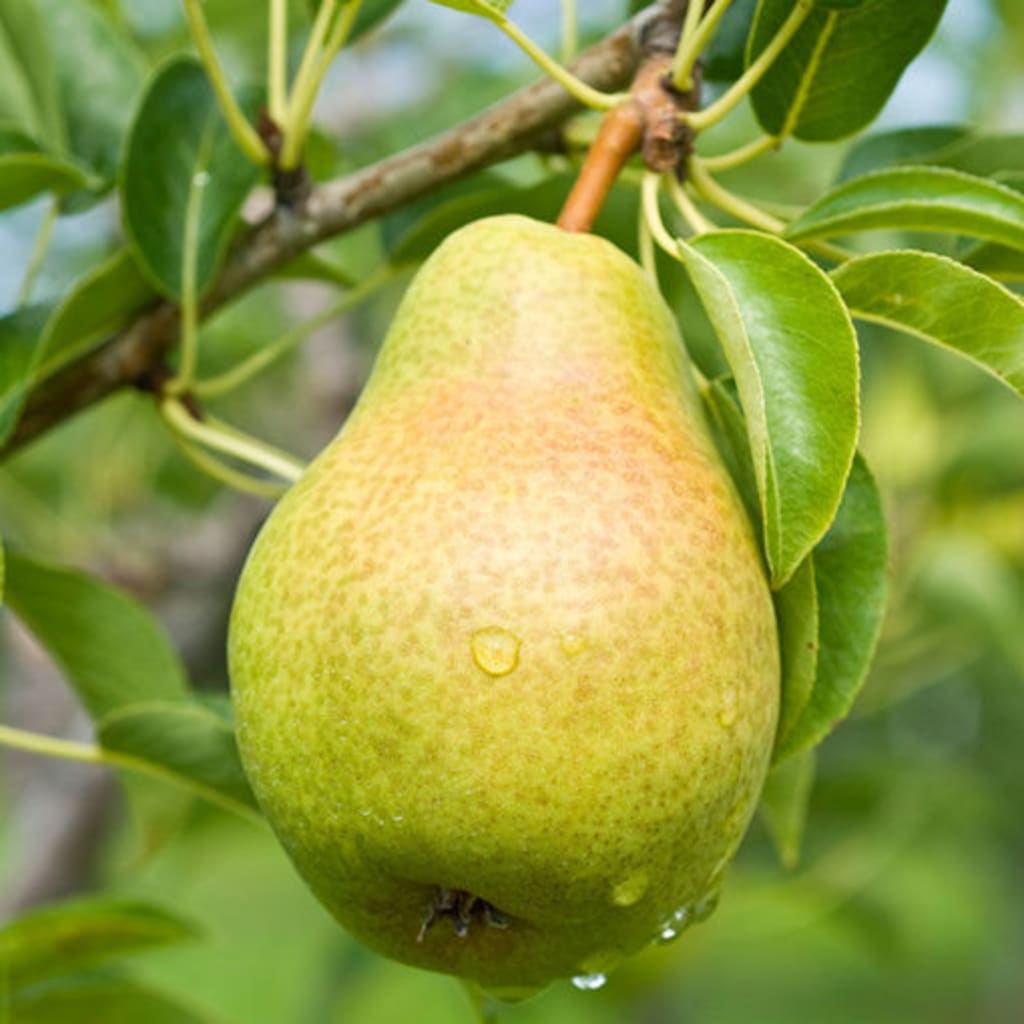
The man reached into his tent and pulled out another postcard. He looked at it for a moment with a soft grin before handing it to me. The image was an almost perfectly realistic landscape of a pear tree in autumn. It was stunning, from the smooth color transition of the leaves from green to orange, to the crystalline glisten of the dew on the perfectly ripe pear. Even the fallen fruit upon the ground had a soft, leathery quality that seemed to almost summon the overly sweet smell of rot. I looked back toward him, my confused look becoming even more lost.
“Artists are trees,” he said with the soft authority of a professor. “The art they create is their fruit. The royalty get their pick first, taking the brightest, most perfect specimen of the harvest for their own”. His smiling eyes glanced up into the aether, looking beyond the brick and grime of our surroundings. “The merchants are next, picking the fruit they believe they can sell and leaving the rest to fall from the branch, discarded as something without value. But those fruits do have value to the scavengers, who embrace the fruit as life maintaining sustenance”.
At this point, I was pretty certain the man was insane. Luckily, some of the best artists were insane. I sat down on the ground next to what I really hoped was another cast off blanket rag and not some dead animal. “Pardon my ignorance, but….what does that have to do with selling paintings?”
The man chuckled a bit before turning to look at me. “After enough harvests, the tree produces less fruit, draws the eyes of the royalty and merchants less, until eventually it produces no more fruit. At that time…” He lifted his shoulders in a coy shrug and his smile seemed to fade slightly.
Somehow, that seemed to make enough sense that I was able to end his sentence. “The tree dies”.
He nodded, folding his hands in his lap. We sat in silence for a while before I glanced down at the postcard in my hand.
“Your work should be remembered, your name should be remembered,” I glanced up at him. By now, my goal of selling out a full gallery of art had turned into a pure desire to prevent this man’s art from fading into obscurity.
“The tree is not remembered when one thinks about the sweet fruit,” The man smiled. “And I am less concerned with the fruit the royals and merchants covet.”
My head was spinning. I continued to study the painting he had handed me, absorbing the masterful shades of light and shadow, the glorious play of focus, the sharp detail in every pear. My eyes stopped for a long moment on the rotting fruit at the base of the painting. I attempted to contemplate the message it held before looking up to the old man, a deep need to hear more driving my focus. “What of the fruit that withers and decays, unconsumed by the scavengers?”
His eyes seemed to brighten as if I had finally started speaking his language. “A fruit that fades into the Earth plants seeds to make more trees in the future. Even the art that is unseen and unconsumed becomes a seed to inspire the art of tomorrow.” He leaned back into his tent and came back with a small tin. It looked like one of those old cookie tins that your grandma would use for her sewing kit, but inside he had a small stack of blank cards, brushes, and small bottles of paint. He handed the tin to me with a drained smile. “I have no more harvests left in me, but I believe you have a lifetime of fruit to produce.”
I was completely caught off guard and I tried to push the tin back into his hands. None of this made sense, and I was still processing the implication of his metaphor. With little force, he placed a hand on the tin to stop it, making it clear that he would not take it back. “I…”
“...will be able to fill your own gallery,” he chuckled. “I have given small paintings to the masses to brighten their days. I have painted portraits and landscapes that were sold to adorn offices and hotels. I have even painted an exquisite triptych of the story of Job on commission for the ArchBishop. Now, it is time to plant a seed for a new tree to grow.”
I was stunned. Who was this man? In utter shock, I mumbled an almost incoherent “thank you”, and rose to my feet. I took a couple of steps away before looking back at the man. “Can I at least meet with you to talk about your art?”
He nodded, giving a firm thumbs up. “Let’s do breakfast every morning this old tree has left. We’ll meet at the bench at seven and go from there.”
My life changed from there. We met for breakfast everyday for the next four months until the day he passed away. The day after his funeral, I opened the tin and set the paints out on my windowsill. It took me a long time before I plucked out a card and started painting. It was nothing special, nothing like he had made, but it was a start.
I took the card down to that coffee shop across from the park. It just felt right to bring it there. It paid for my coffee, and the same coffee girl from that day said she would hang it with the rest. She studied the card for a bit, a bittersweet look in her eye, before smiling up at me with a bright look.
“What is it?”
I returned her smile with one of my own and softly answered: “A pear tree in autumn”.
About the Creator
Keep reading
More stories from David Angell and writers in Fiction and other communities.
Uncanny Valley
It is amazing, no matter how hard you try, nothing remains the same. We live our lives chasing the intoxicating feelings of nostalgia, never fully accepting that it is impossible to recapture that same exact feeling from our memories. We journal, take pictures, record every moment we can on our phones and social media, desperately trying to enshrine those moments of the past, all the while the world around us keeps flowing. Maybe it is the memories of those moments that are important rather than the experience itself. Then again, those experiences are pretty nice.
By David Angell4 years ago in Fiction
Miss Persephone's Manual to a Seemingly Ordinary Life
Miss Persephone was found at the dining table, her blue eyes swollen, her tears arriving and retreating like the tides of the ocean. Earlier that day, her family had visited her in the retirement home where she had lived for eight years. It was her eightieth birthday.
By Imola Tótha day ago in Fiction




Comments
There are no comments for this story
Be the first to respond and start the conversation.