
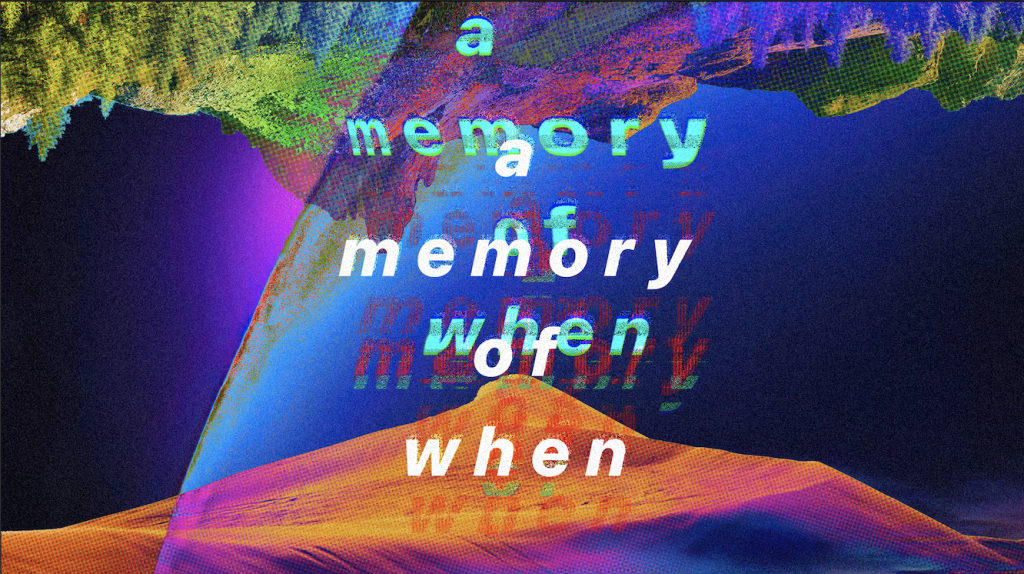
a memory of when
Words forgetting futures.

It’s high noon. He awakens in a fit of mucus-filled coughs. Old bones vibrate beneath skin stretched taut as rawhide. A mind weary from two and seventy trips around the sun slowly sputters to life. The air is tart, puckered. Heat peeks through the walls, no structure insufficiently membranous to keep it at bay.
He rolls out of bed, shuffles through a fresh layer of dust. The floors are splitting. Gingerly, he lifts his aching feet to avoid splayed hardwood boards. Into the bathroom: chalky grit of powdered toothpaste, drought so dire he lacks even the saliva to wash it down, musky smell of sand on the counter, pained effort to avoid the mirror, flash of hopeless anger when he catches a glimpse of himself all the same. Deadman condemned to living.
Outside, hot air holds the world in a stasis of mirage. Swirls of reality swarm about him as he makes his way to the sputtering condensation machines. Loud, raucous whirring, violent, like a tuning fork struggling to hold the pitch of existence lest it decay into a dissonant nothing. He fears they don’t have much longer. Beneath them, plastic tubs into which a torpid drip is meant to fall. Neither contains more than a glass full. He slams his fist on the machines but fails to conjure water.
He stands, spins around to observe the settlement. A half-finished housing development in the southeastern corner of Reno. Several empty fields serving as a commons. Hundreds of people milling about. Once-technicolor homes worn down to a sun-faded pastel. To fill in the gaps, the dwellings are draped in billowing sheets of tarpaulin, scavenged plexiglass, and rag blankets.
Around the houses, bricolage of a now eternal modernity: jalopy electric cars; bright plastic molded into an infinite array of shapes; hundreds of rusting street signs; metal mannequins plundered from abandoned fast-food restaurants and crumbling strip malls; littering of empty MREs; a giant sea of shirts bearing various colloquialisms and linguistic quirks from the End of History, loosely strung together to form a giant sail that powers the town’s lone generator; and looming above it all, a peeling billboard advertising the forgotten promise of this prosaic paradise lost. A favela in hellfire.
He stares at the sail as it flutters in the air like a mythical Halcyon.
Memories of his mother buying him and his sister sour-smelling blue polos for the school year. In the big box store, consumed by an overwhelming giddiness. First, pens and pencils and paper, then darting through low aisles in pursuit of greasy controllers. Mom pulling him away by the shoulder, admonished for touching things, hands spritzed liberally with sanitizer. Cruising past yet more clothing, noticing for the first time that the racks are growing empty. Lots of pieces of paper that read, “Discontinued” and “Supply Chain Issues.” What does this mean? Some Other begging for everyone’s patience.
Hanging on a barren rack, two large t-shirts. A superhero - his favorite - printed on the front. “Mom, can I please?” He can’t remember the reply, but it’s something to do with money.
“No one has money these days,” his dad always says.
“Then who does?”
“Just some people.”
“Then why do we still use it?”
“You know what, maybe you oughta be in charge of things. That’s a great idea!”
Laughter.
He probes and prods at the limits of recollection, pangs of anxiety when he can’t remember his little sister’s name, only what fate befell her. It’s beginning to happen more and more often, little stumbles on these walks down Memory Lane. Beyond the fear for his own mind, he feels the weight of a larger social burden, hints of a dereliction of duty.
He earns his keep mostly through recounting memories. Folks look to him as a keeper of the past. The population is young, trauma-laden, stultified by the creeping tendrils of a violent cultural fugue, such that many people can’t seem to remember what was real and what is their fever dream of the time before everything went to shit.
There was nothing sudden, no umbilical rupture toward which billions of damaged psyches can direct their hurt. Each day just a little worse than the last. Great fires came, the harvests didn’t, seas rose, wars sprung forth, masses of people began to move in search of safety; undergirding it all, the slow but steady devolution of almost every political body into a sort of geriatric gobbledygook. Anyone with enough capital fled to the sea - now more abundant than ever - to raise satin flags symbolizing heady thoughts, floating to and fro, eternal strangers at manifold moorings whilst on a dizzying tour of the apocalypse.
It was one day in his 40s that he awoke and realized that the Rapture had missed him.
He is roused by the sight of a large group of people - some 30 or so wearing poorly fitting clothes likely stolen from a beached shipping container - walking toward the center of town.
A prelapsarian vision of the Third World. Various shades of swarthy, sun-kissed skin, cool genetic melange spun out of a sweaty, anguished love reducing the world to ultimate flatness. Behind them, a loose pack of gaunt dogs sniffs the ground. Companionship, protection, and if need be, livestock.
The inhabitants of the little outpost consider these newcomers in passing, and, sensing no immediate danger, fail to spare them any further thought. It is travelers like these that help keep the settlement alive as they meander along the stretch of migratory routes flanking the Sierra Nevadas:
Originating at the equator, where thousands of skiffs and barges deposit refugees from neo-feudal regions of Northern Africa and the Morgenland, they wind their way up through Central America, going all Golgi in Mexico to avoid cartel fiefdoms, then bursting into an aerodynamic sprint toward thawing tundras, only for the peregrination to become plight amongst the militarized ghettos and destitute slums sprinkled along Canada’s southern border.
In the commons, a child standing next to a small plot of grain stalks launches a piece of trash at the migrants. It lands off-target, but nonetheless stirs the dogs into lupine leering. The group takes pains to quiet them. Anonymity is invaluable. When the dogs have been placated, they disperse into smaller bands in search of resources.
He relaxes his face from its half squint, wipes the sweat from his brow, then returns inside. Even after the door is closed, a sweet miasma of trash and sweat lingers.
He switches on the radio, listens to a citizen’s reportage about the supposed re-deployment of American troops east of the California border. Doubtful. Unwanted. Cold feet as the tides begin to lap against Wall Street, he thinks. Besides, there are no patriots here. No countrymen to save.
States are abandoned and reclaimed on an ad hoc basis. Brief, manipulative courtships whenever Washington needs a PR victory or fresh bodies to throw at its hundred-odd conflicts, sempiternally raging. Gone as soon as they came once the refugee population rises to unsavory levels. Most Nevadans long since lost to the type of ideological itinerancy that often inspires him to say, “We got no nation. We’re just some folks lookin’ out for each other.”
Falls back asleep. Re-awakens. Head in his hands. Sore back. Hollow hacking. Knock at the door. Not expecting anyone.
He gets to his feet, hesitates. Lightly runs a finger through the palm of his hand. Swallows.
At the door, a young girl greets him. No more than 14. Neon green shirt speckled with bunnies. Her nose is flat and wide between tortoise-shell eyes, mahogany skin still soft beneath a thick layer of dirt. Face askant, jaw open.
He stares back, head turned slightly. She purses her lips. No words come.
“Can I help you?”
It’s said in the pidgin that dominates the migration routes: English syntax, mostly English, Spanish, and Chinese vocabulary, and with the curious presence of certain Arabic morphological templates.
He struggles to understand her reply. New words from a language he doesn’t recognize. Perhaps slang, perhaps a fresh geopolitical maelstrom introducing yet more kindling to the pidgin’s fire.
Requests that she repeats herself.
“They said you tell things.”
He starts to speak, thinks better of it, then doubly reneges. Mouth aflutter in a spasm of silence.
Girl says nothing. He finally sighs.
“About the past, yes.” Gestures for her to come in.
Her seated on the couch. Him leaned against a teak credenza, arms folded. He waits for her to say something. Resonant cough to coddle conversation. At last, she speaks.
“I know you want thing.”
He nods to the ground. Already feels himself preparing to deny her payment. Across a living room bathed in titian light, she produces a heart-shaped locket in want of a chain.
“Ok?”
He moves to grab the item.
Upon closer inspection, it is swaddled in a layer of rust. Might be real silver. Then again, might not. He’s got no eye for valuables. Fastened tight by two interlocked balls. He fingers them lightly before making an effort to separate the faces. Inside, a picture of a little girl with a toothless grin. The picture is torn at random, ripped edges soft and velvety.
“You?”
The girl shakes her head.
“Sister.”
He gazes into eyes that glint like petrified wood. Slowly taps his fingers on the credenza in waved succession. Delicate, yet still firm enough to drain blood, leaving pale white creases around each joint.
“Alive?”
Blunt.
“No.”
He delicately hands the locket back.
“No thing.”
She shakes her head again.
“Memory is hurting. I would like to hear your memory.”
She uses the Arabic dhakira.
“What would you like to hear?”
He places the locket into her cocked palm.
She hesitates. Rolls the heart between her hands. He blithely waves to put the matter of compensation to rest. She takes a deep breath, then casts her gaze at an unfixed point beside him. Self-conscious of the words to follow.
“I would like to know what a tree is like.”
He can’t help but smile. It’s too perfect, too poetic. She, a girl who’s never seen a tree, and he, the septuagenarian guard of its psycho-acoustic image.
He leans into the smile to assure her it’s not a mocking gesture.
“No one in your family has ever seen a tree?”
“My family is not here. I am just with a group. They are nice to me, but they don’t know about trees.”
He drops his head again. Swallows hard to stifle a well of emotion, as if her words laid it all bare, made it all plain: The great sweep of death; the languid air of destitution; the quiet whisper of despair.
From behind a cupped hand, which gives his face a swooping, aquiline appearance, he croaks out:
“Trees. A lot of different ones. Some are tall, some short.”
Chops his hand level with his hip.
“Around here, there used to be trees that smelled sweet and sour. Lots of what are called branches that come off of what we call a trunk.”
He starts gesticulating wildly to give meaning to the foreign words.
“It feels rough, strong. But the leaves - green - are usually soft.”
He trails off, is left grasping for other details to describe. Her brow is furrowed. Both allow the silence to linger.
At last, he raises his head and gently smiles.
“You’ll see trees when you get into Montana.”
She frowns.
“When?”
“Only another week or so from here.”
“No, I don’t know this word.”
“When?”
He runs through the Spanish and Chinese variants he knows, but still, she slowly moves her head from side to side. Gambles on synonyms.
“When? Once? As soon as? If?”
Her eyes light up.
“Ah, yes! If we get to Montana, there are trees?”
He nods, dumbfounded, as she stands, thanks him, and leaves.
That night, he weeps, wordless and alone, and allows the memory of when to die.
About the Creator
Keep reading
More stories from writers in Fiction and other communities.
The Red Hatred
Sometimes I feel like I hate you. A kind of red magma forms inside me, in my chest, and rises to my throat. In that moment, I want to destroy. I want to grab a plate and smash it into pieces. I want to take scissors and shred that red, sexy underwear I bought to please you.
By Anastasia Tsarkovaabout 13 hours ago in Fiction



Comments
There are no comments for this story
Be the first to respond and start the conversation.