

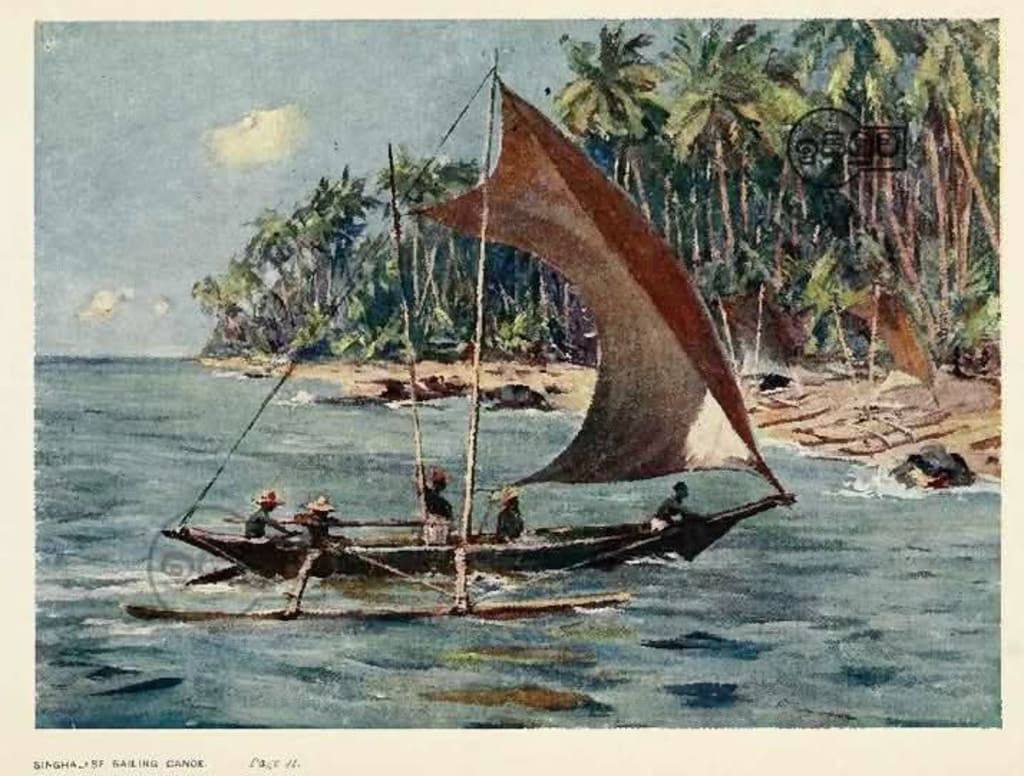
Even then, the villager's food was rice, seafood, and coconut sambal. In some houses, these were eaten for all three meals.
Those who had money bought the vegetables that the mothers brought to the doorsteps of their homes.
It was only in the upper classes that I realized that the fish sold on the land was superior in taste and nutritional value.
At that time, many people considered eating bread to be a small thing.
When breakfast needed a change, hoppers or date hoppers were added. At that time, there were hopper mothers in the villages who would walk around the village with the hopper pot on their heads and say hopper appa appo.
They brought date hoppers.
A hopper cost five cents. A hopper cost three cents. They are bigger than today. Delicious.
After the meal, fruits such as mango, banana, papaya, or coconut milk were taken as a snack.
Clothing
At that time, from a young boy to his old age, he rarely wore a saree and vest at home.
Even when traveling, men wore a saree and shirt. Some wore a coat.
Only a few people wore the national dress.
Even when traveling, they did not use shoes.
Women wore cloth and a hat at home.
Women who had money wore a long gown or kimono. Girls wore short dresses, skirts and tops at home. They had to be below the knees. Otherwise, there was no escape from older women. Older women wore saris when traveling. No married woman wore short dresses or skirts.
Some women traveled barefoot. No one wore shoes at home.
Health
At that time, there were no child clinics or maternity clinics like today. Children only received the vaccine to prevent smallpox.
It was given by a P H I man who came to Vidde village. The villagers called him Mr. Sanityport. Perhaps it is a derivative of the word Sanitary board.
When children fell and got injured while playing, they would rub a piece of kurumba on a stone and apply the paste on the wound. The wound would heal. Or they would crush the leaves of Keppum Keeriya or Undupiyali and apply it to the wound. They rarely went to a hospital.
The medicine given to the children was a mixture of crushed and powdered fenugreek seeds and honey. Mother would put them in her fingers and feed them to the children.
The children were not sick enough to be hospitalized at that time.
Born in 1945, I took medicine from a hospital when I was in the hostel of Anuradhapura Central College in 1963. I took medicine for minor ailments from the village doctor.
When I played in the mud and made blisters on my feet, the children would take me to soak in seawater, or else they would wash their feet with water made from Lunuwila plants. Our mother always did that.
At that time, in many houses, the wood used was coconut husks, coconut bats, coconut shells, etc.
In many houses, there was no umbrella even for the rain. In the rain, we would carry a banana leaf or a large habarala leaf over our heads. Even school children came like that. If work was needed, a sack with a hole made by pressing one corner of it to the other could also be used as a cover for the head and back.
At that time, a huluatta or kolapoo made of coconut leaves was mostly used for traveling at night. A candle could also be hidden in a coconut shell and used as a light to travel.
I did not see an electric torch until 1956.
When children were playing, if they heard the sound of coconuts being broken in an orchard, everyone would run there. The owner or the trustee would give all the children the tastiest and biggest coconuts in the orchard to eat or drink without any greed. It did not matter whether there were 20 or 30 children.
When the villagers were in a financial emergency, there were women in almost every village who would lend money by pawning their gold. I do not know the interest charged.
When more money was needed, the gold was taken to a pawn shop in Galle.
The women of the village bought their daily necessities from the Chinese merchant who came to the village on foot with a bundle of cloth on his head.
When he was invited to his house and spread a mat on the porch, he would unfold the cloth and sell it as per demand.
Brooches, hairpins, combs, toys, etc. were bought from the merchant who came with a box on his head.
Another important character in the village was the cloth aunt. Although clothes were not given to the bride, when a girl became a bride, she had to be bathed by the cloth aunt.
To celebrate this happiness, the cloth aunt was given a lot of food and drinks similar to a party given to relatives. In addition, money was also given.
Uncle Hene was her husband. He needed to get clothes to wear to a funeral or a funeral.
In addition, when the Sinhala New Year approached, rice, coconut, dried fish, three-five, sugar, and tea leaves had to be prepared for the Adiyya Hene uncle.
He would print the New Year auspicious papers and come to distribute them to every house. Then those items should be given to him. He would come on that day with a cart.
I don't know if we have come to progress after such a beautiful time.
About the Creator
Keep reading
More stories from Rohitha Lanka and writers in Fiction and other communities.
The Merchant and the Bird
The Merchant and the Bird A merchant kept a bird. This bird was born in India. Since he was going to India for trade, the merchant asked his beloved bird if he could bring him something from India. ''I want my freedom,'' said the bird.
By Rohitha Lanka10 months ago in Fiction
Miss Persephone's Manual to a Seemingly Ordinary Life
Miss Persephone was found at the dining table, her blue eyes swollen, her tears arriving and retreating like the tides of the ocean. Earlier that day, her family had visited her in the retirement home where she had lived for eight years. It was her eightieth birthday.
By Imola Tótha day ago in Fiction
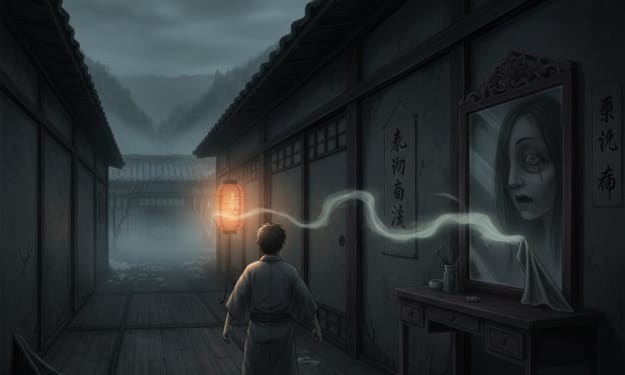
The Night Weeping Inn: A Guest Protocol for Your Serene Stay
Esteemed Guest, Welcome to the Yonaki-kan (Night Weeping Inn), a sanctuary nestled deep within the forgotten valleys of Ishikawa Prefecture. For generations, our inn has offered weary travelers a timeless respite, a glimpse into an older Japan where nature and spirit intertwine. To ensure your stay is as tranquil and undisturbed as possible, we kindly ask you to observe the following traditional protocols. These guidelines are not mere suggestions; they are the bedrock of harmony between our cherished guests and the ancient spirits of this land. Your cooperation ensures not just your comfort, but your safety.
By Takashi Nagayaa day ago in Fiction



Comments
There are no comments for this story
Be the first to respond and start the conversation.