
A Journey Through Madness and Freedom: "One Flew Over the Cuckoo's Nest"
Exploring rebellion, humanity, and the triumph of individuality in a world of control.

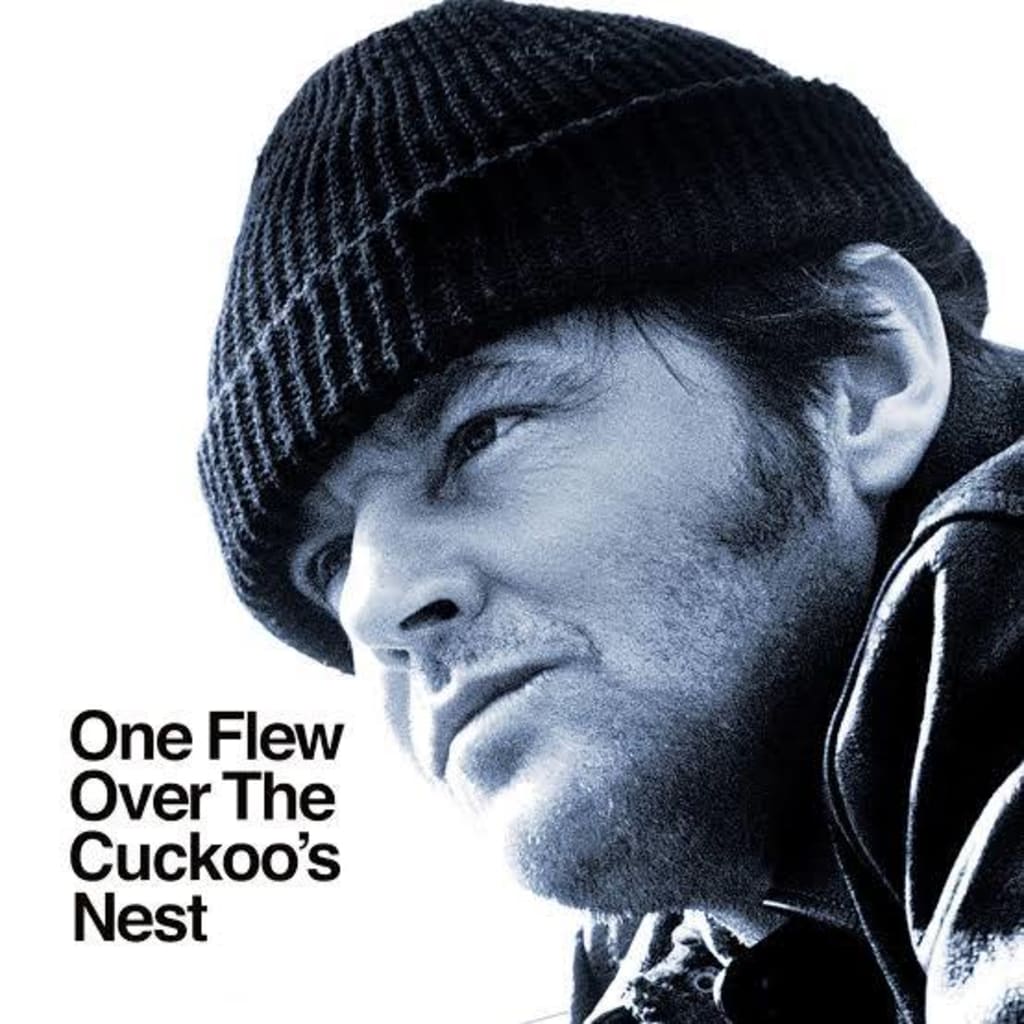
Milos Forman’s cinematic masterpiece, One Flew Over the Cuckoo’s Nest, based on Ken Kesey’s novel, remains a powerful exploration of rebellion, conformity, and humanity. Released in 1975, the film’s themes resonate universally, presenting an intense narrative that leaves an indelible mark on its viewers. In this piece, we delve into three core subtopics to uncover the brilliance of this movie: the rebellion against authoritarianism, the depiction of mental health institutions, and the power of individuality.
The Rebellion Against Authoritarianism
At its core, One Flew Over the Cuckoo’s Nest is a tale of resistance. Randle Patrick McMurphy, portrayed by Jack Nicholson in an Oscar-winning performance, symbolizes rebellion against an oppressive system. McMurphy’s arrival at the mental institution disrupts the rigid order maintained by Nurse Ratched, a character chillingly embodied by Louise Fletcher. Her quiet, calculated authoritarianism contrasts sharply with McMurphy’s boisterous and free-spirited nature.
The tension between McMurphy and Nurse Ratched serves as a microcosm of the broader struggle between individuality and control. The institutional rules Nurse Ratched enforces aim to suppress the patients’ autonomy, portraying them as passive subjects rather than individuals with agency. McMurphy’s defiance—through acts like organizing a fishing trip or commandeering the ward’s television to watch a fictional baseball game—highlights his fight to reclaim dignity and freedom for himself and his fellow patients.
This rebellion isn’t without consequences. The climax—where McMurphy’s resistance ultimately costs him his life—raises profound questions about the cost of freedom in an oppressive world. His sacrifice, however, isn’t in vain. By inspiring Chief Bromden to break free, McMurphy’s spirit of rebellion lives on, underlining the idea that even in the face of overwhelming control, the human spirit can endure.
The Depiction of Mental Health Institutions
The film’s setting within a mental health institution sheds light on the treatment of mental illness during the mid-20th century. It critiques the dehumanizing practices of such facilities, where patients are subjected to harsh treatments and stripped of their individuality.
Nurse Ratched’s character is emblematic of the institution’s systemic flaws. Her approach to care is less about healing and more about maintaining control. Therapy sessions under her supervision turn into tools of humiliation, where patients are coerced into divulging personal vulnerabilities. The use of electroconvulsive therapy as punishment, rather than treatment, starkly portrays the inhumane practices prevalent in such institutions at the time.
Through McMurphy’s interactions with the other patients, the film humanizes individuals often stigmatized by society. Characters like Billy Bibbit, who struggles with severe anxiety and stuttering, or Martini, who experiences delusions, are portrayed with depth and compassion. The camaraderie McMurphy fosters among them illustrates the potential for recovery and self-expression when individuals are treated with respect and empathy, rather than as mere subjects of a system.
This critique resonates even today, reminding us of the importance of patient-centered care in mental health treatment. The film challenges viewers to question how society defines ‘normalcy’ and underscores the need for empathy and understanding in addressing mental health issues.
The Power of Individuality
The heart of One Flew Over the Cuckoo’s Nest lies in its celebration of individuality. McMurphy’s character embodies a zest for life that inspires those around him. His laughter, defiance, and sheer will to live stand in stark contrast to the institutional monotony that seeks to suppress it.
One of the film’s most poignant moments is McMurphy’s failed attempt to lift a heavy control panel, a task he knows is nearly impossible. As he walks away, he declares, “But at least I tried.” This scene encapsulates the essence of individuality—the courage to challenge the odds, even when success seems unlikely. It’s a powerful reminder that the act of trying itself can be a form of resistance.
Chief Bromden’s transformation from a silent, seemingly catatonic figure to the story’s ultimate hero is another testament to the power of individuality. Inspired by McMurphy’s defiance, Chief reclaims his voice and agency. His climactic escape signifies not just physical freedom but a triumph of the human spirit.
In a broader sense, the film challenges societal norms that often marginalize those who deviate from the ‘accepted’ way of life. It invites viewers to celebrate diversity and to see individuality as a strength rather than a weakness.
Conclusion
One Flew Over the Cuckoo’s Nest is more than just a movie; it’s a profound exploration of humanity. Through its depiction of rebellion, critique of mental health institutions, and celebration of individuality, the film delivers timeless messages that continue to resonate. It reminds us of the importance of empathy, the cost of freedom, and the enduring power of the human spirit. As viewers, we are left to ponder our own roles within societal systems and to find the courage to champion the values that define our shared humanity.
About the Creator
Keep reading
More stories from Willow Writer and writers in Fiction and other communities.
Revisiting the Golden Age: A Review of "Once Upon a Time in Hollywood"
Quentin Tarantino’s "Once Upon a Time in Hollywood" is a love letter to the golden age of Hollywood, a time capsule of 1969 Los Angeles, and an intricate exploration of friendship, ambition, and nostalgia. With a runtime of over two and a half hours, the film is a sprawling yet intimate tale that follows the lives of fading TV star Rick Dalton (Leonardo DiCaprio), his loyal stunt double Cliff Booth (Brad Pitt), and real-life actress Sharon Tate (Margot Robbie). In this review, we delve into three subtopics to unpack the film’s unique charm: its ode to Hollywood’s bygone era, the layered performances of its leads, and the controversial yet thought-provoking climax.
By Willow Writerabout a year ago in Fiction
The Neighbour’s Wife
In every neighborhood, relationships are formed not just by proximity but by shared values, mutual respect, and unspoken boundaries. The phrase “the neighbour’s wife” often appears in stories, gossip, and even moral discussions, sometimes carrying unnecessary suspicion or curiosity. Yet, when examined thoughtfully, it opens an important conversation about ethics, social responsibility, and the way individuals choose to see and treat one another within a community.
By shaoor afridi6 days ago in Fiction



Comments
There are no comments for this story
Be the first to respond and start the conversation.