
A House with No Locks
The doors were always open, because the heart inside had nothing left to hide.
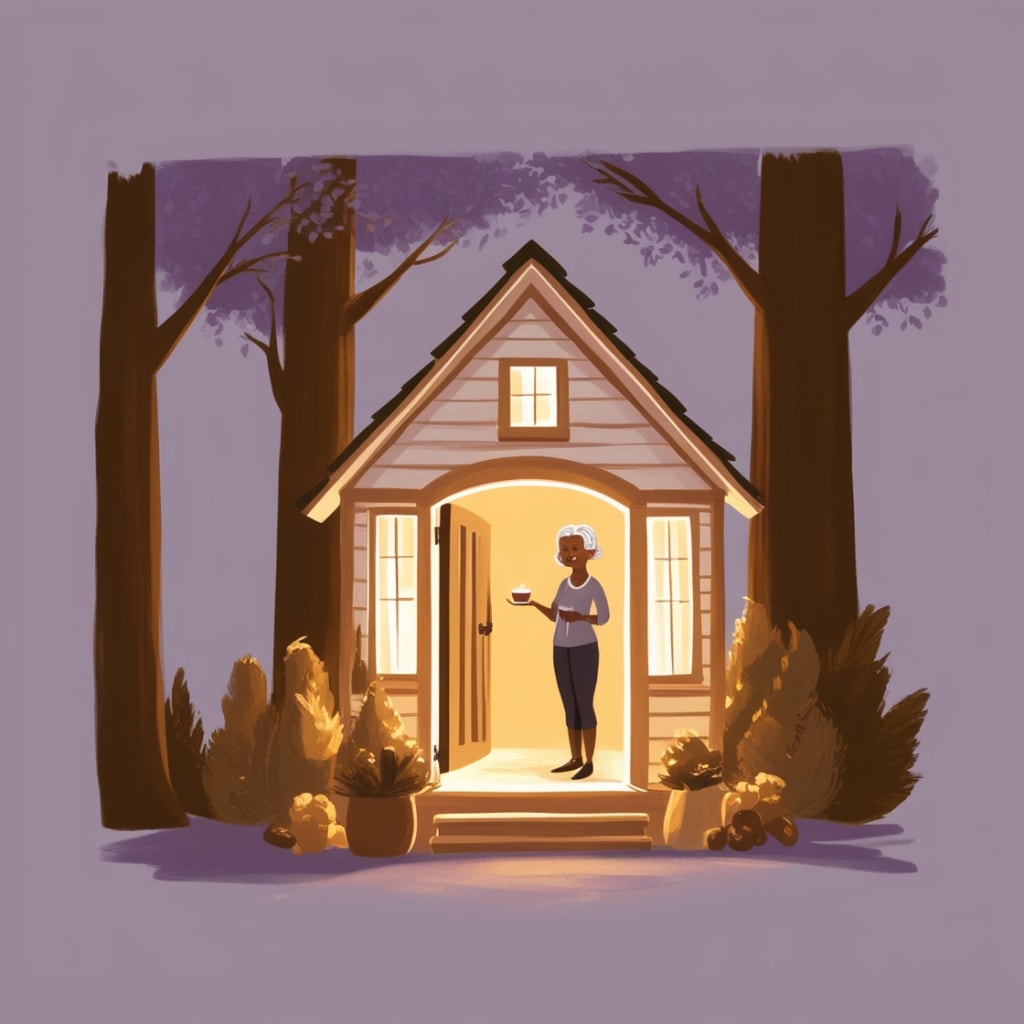
It sat at the edge of a quiet town, half swallowed by trees and half forgotten by time — a house with no locks.
Its windows blinked open every morning to the light, and its door never made a sound. No key had ever turned in its frame. There were no alarms, no barriers, no secrets.
The neighbors whispered that it wasn’t safe. That someone should close the place up before someone wandered in and stole something.
But the truth was, there was nothing left to steal.
The woman who lived inside had already lost everything.
Her name was Mira. She’d once been a singer. Her voice had wrapped itself around ballads like silk — soft and mournful. But after her husband died and her son stopped speaking to her, the music had left. First her throat. Then her chest. Then her home.
The house didn’t echo anymore.
She moved through it like a breeze — folding laundry that had no owners, setting plates for a family that no longer came to eat.
But she kept the door open. Always. She said it was “just in case.”
"Just in case he changes his mind and comes home."
"Just in case someone is lonely and needs a place to sit."
"Just in case I forget what it feels like to be surprised."
The mailman once asked her, kindly but confused, “Aren’t you afraid someone might walk in?”
Mira smiled without looking up.
“Maybe that’s what I’m hoping for.”
People did wander in, eventually.
Not thieves or troublemakers. But wanderers. Lost ones. A teenager once ran away from her father’s anger and sat on the steps. Mira gave her a cup of tea and didn’t ask questions.
An old man forgot where he lived and mistook her home for his. Mira let him nap on the couch and walked him home afterward.
The house had no locks. But it had stories. And sometimes, that’s what broken people need the most — a story that makes space for them.
Inside the house, every crack was clean. Every corner held light.
There was no fear in the open air, only a quiet kind of welcome. The house felt like a memory you didn’t know you missed. It smelled of rosemary and old songs.
People said Mira was strange. But they kept walking by.
Just to see if the door was still open.
Just to see if maybe, today, they were brave enough to walk through.
One day, a boy came to the house. Barefoot and sunburned, no older than ten. He didn’t say a word.
Mira offered him lemonade and waited.
He came back the next day. And the next. He never spoke. But he sat on the porch every afternoon, drawing something in a small notebook. She never looked at the pages.
After a week, he left the notebook on her doorstep.
Inside it were sketches.
One of Mira standing at the door, sunlight behind her.
One of her sitting with the teenager.
One of the house itself, drawn open, but glowing — like a lantern in the woods.
On the last page, he had written:
“Thank you for being open when the world wasn’t.”
Years passed.
The town grew louder. The trees thinned. The whispers faded. But Mira never changed the door. She just kept welcoming what the world rejected.
Her voice, though quieter, sometimes hummed again. Soft lullabies with no words. Songs not meant to impress but to comfort.
And one day, when Mira was gone and the house sat empty, the townspeople gathered.
They didn’t know what to do with it. There were no locks to keep, no valuables to protect.
So they did the only thing that felt right.
They left the door open.
They turned it into a refuge — a place for the lost, the tired, the invisible. A place with tea on the stove, blankets folded gently, and a guestbook that simply said:
“Enter if you’re hurting. Stay if you’re healing.”
The house with no locks became a symbol.
That the most protected hearts don’t always build walls.
Sometimes they leave the door open —
so someone else might walk through, and breathe again.
About the Creator
Keep reading
More stories from Abuzar khan and writers in Fiction and other communities.
The Things I Inherited That Weren’t Objects
People talk a lot about inheritance — houses, rings, furniture passed down from generation to generation. The physical things, the treasures, the memories captured in photographs and objects. But my family didn’t have those things. We didn’t have china cabinets heavy with delicate dishes or dusty albums bursting with smiling ancestors frozen in time. No heirlooms passed carefully from hand to hand. What we had instead was something invisible, yet just as heavy. We had echoes.
By Abuzar khan8 months ago in Fiction
Gorgon's Purgatory
A tingling sensation fills my head. A deep pressure builds into agonizing pain as the serpents swallow their midnight meal. They move their jaws in synchronized contractions, forcing the bodies of mice down their gullets. The mice wiggle within the snakes for what feels like an eternity, brushing the scaly, cold skin in a ballet of torture.
By Tas The Artist 2 days ago in Fiction


Comments
There are no comments for this story
Be the first to respond and start the conversation.