
A Day In The Life of a Citizen of Indus Valley Civilization
In the heart of Mohenjo-Daro, one ordinary day became a forgotten eternity.
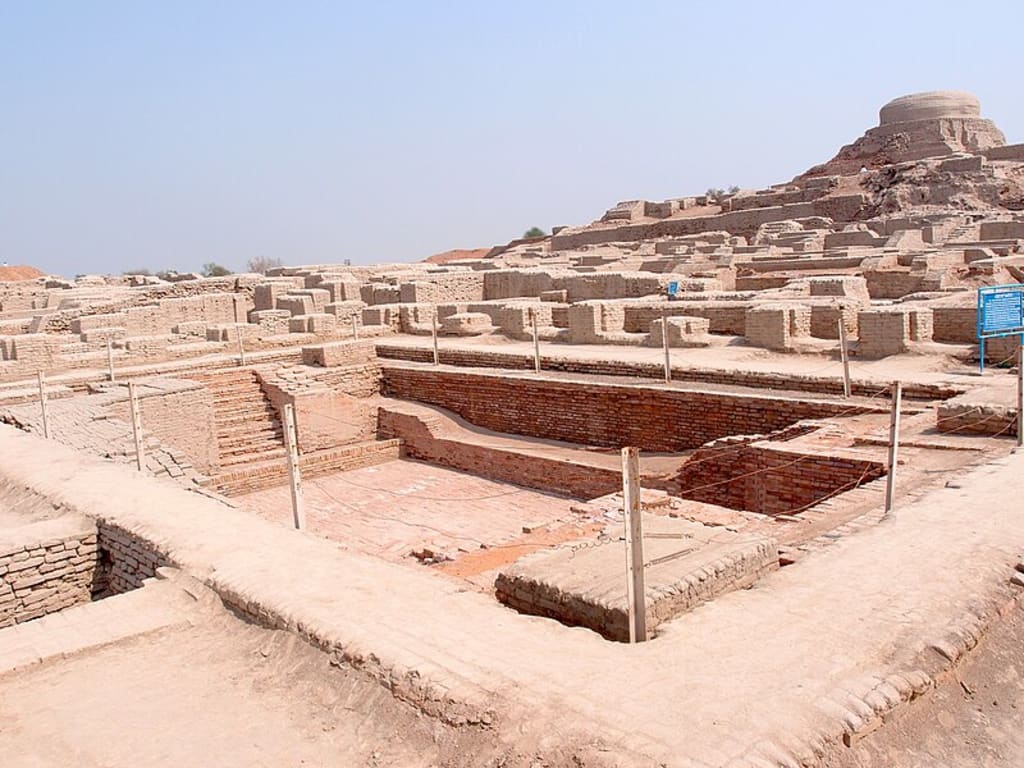
The sun rises gently over the rooftops of Mohenjo-Daro, painting the baked clay bricks in shades of orange and rose. I wake up to the sound of a copper pot clinging against the well's stone lip, my mother is already drawing water, the first task of every morning.
My name is Amaya, and this is my home: a city older than memory, but built with such order that even foreign traders call it strange. Our streets are straight, the drains carry waste away silently, and each home has its own washroom. Some say the God must have planned this place, I think it was just clever hands and minds.
I stretch, still wrapped in the linen cloth I slept in. The air is cool, but the warmth of the hearth fire from the night before still lingers. Outside, the city stirs. Smoke curls from rooftops, and somewhere in the distance, a goat bleats.
We eat simply: a thick porridge made from barley and wheat, a few dates, and fresh water poured from a painted clay jar. My little brother wants honey, but we haven’t traded for it in weeks. My father promises a better meal tonight, he’s in a good mood. His bead orders from the western market are growing, and yesterday, a merchant from far across the sea brought him a shell the color of moonlight.
After breakfast, we head to the bathing area. Public baths are common here, not for the rich, but for everyone. We scrub ourselves with sand, rinse with cool water, and dry under the morning sun. Some say cleanliness is sacred; others say it's practical. I think it's both.
Our home doubles as a workshop. My father and I spend most days shaping and polishing beads from carnelian, agate, and faience. Each piece is different, but all must be perfect. Traders use them as currency. Lovers wear them as promises. Some people even say the priests use them to tell the future.
As I grind a tiny red bead on a stone slab, I hear foreign voices from outside, Sumerian, maybe, or something older. I glance up to see a merchant unloading lapis lazuli from a donkey cart. The deep blue stones shimmer in the light. My father’s eyes light up. He’s already thinking of a new design.
By midday, the sun blazes overhead. We retreat indoors, where thick walls keep the rooms cool. I eat lentils with flat bread and rest for a short while. Outside, the neighborhood quiets, even the birds seem to doze in the shade.
As evening falls, we gather on the flat roof to share food with our neighbors. Someone plays a reed flute. My mother laughs softly at a joke I don’t quite understand. My brother dances until he trips, and everyone claps anyway.
Below us, the city glows. Oil lamps flicker in doorways. Somewhere, someone prepares for a ritual, burning incense that smells of cinnamon and something sharp, like river reeds.
Before sleep, I sit with my grandmother. She tells stories of when the river ran higher, and fish leapt from the waters into the baskets. She says the gods are restless these days, that something is changing. I listen, watching the stars, and wonder what will come.
Tomorrow will be much the same. Beads to shape. Water to draw. Stories to hear. But I don’t mind. My city is full of quiet miracles, clean water, peaceful neighbors, beauty in the smallest details.
You may never know my name. You may never read the words we once wrote, because our script has not yet spoken to your scholars. But still, I was here. I lived. I laughed. I made something beautiful.
And maybe, in the silence of our ruins, you will hear us still.
NOTE: THIS ARTICLE IS TOTALLY A WORK OF FICTION.
About the Creator
Keep reading
More stories from Manahil Fatima and writers in Fiction and other communities.
10 Everyday Items You're Using Wrong (And How to Fix It)
Introduction We all use common items every day without a second thought, until we realize there's a smarter, easier, or safer way to use them. Small changes in how you handle everyday things can save your time, money, and even frustration. Here are 10 everyday items you're probably using wrong, and the simple fixes that will improve your daily routine instantly.
By Manahil Fatima8 months ago in Lifehack
Wild Card Weekend Recap: What Happens Now?
I think I figured out why I love Wild Card Weekend so much. It's because it's the first playoff anything of the calendar year. The NFL season starts in the fall, and once upon a time, the champion was crowned either on or slightly before New Year's. The evolution of the NFL schedule has resulted in the playoffs starting just into the New Year, and currently, the final week of the season falls on the first weekend of the New Year, with Wild Card Weekend coming a week after that. So yes, chronologically, the NFL's Wild Card Weekend serves as the first playoff anything of the calendar year.
By Clyde E. Dawkins6 days ago in Unbalanced



Comments
There are no comments for this story
Be the first to respond and start the conversation.