
A Day in Nepal Today
Voices from a Nation at the Crossroads

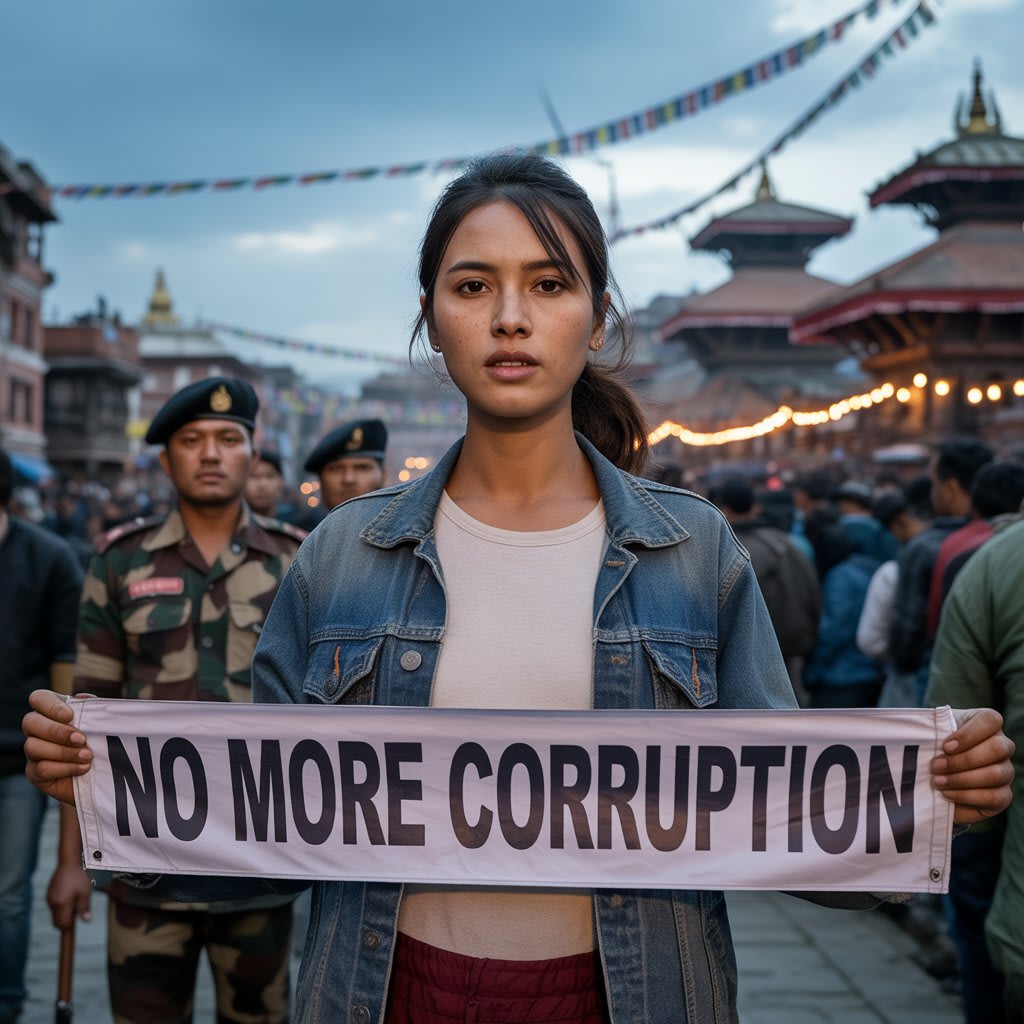
A Day in Nepal Today: Voices from a Nation at the Crossroads
The morning sun rises gently over Kathmandu, its golden light spilling across the valley. Prayer flags flutter in the breeze, but the air is heavier than usual. The streets are quieter—curfews have emptied neighborhoods that would normally buzz with motorbikes, vendors, and schoolchildren. The smell of incense from a nearby temple mixes with the faint smoke of burned barricades from last night’s protests.
“It doesn’t feel like the Kathmandu I grew up in,” says Anisha, a 21-year-old student, clutching her backpack as she hurries to a volunteer center. “The city feels tense, like it’s waiting for something to break—or something to change.”
The Pulse of Protest
In Basantapur Square, where tourists once crowded to admire temples and palaces, groups of young people huddle in circles, whispering plans. Some wear masks not just for protection against dust, but to shield their identities. Placards painted with slogans—“No More Corruption,” “Our Future, Our Voice”—lie stacked against a wall.
“This is our generation’s fight,” says Dipesh, a 24-year-old protester, his voice hoarse from chanting. “We are not here to destroy; we are here to demand honesty. The leaders forgot us, but we are here to remind them.”
Nearby, soldiers stand watch at intersections, rifles slung across their shoulders. The army’s presence is both reassurance and warning. Everyone knows the clashes of the past week have left scars—dozens dead, hundreds injured. Families are still searching hospital corridors for loved ones who never came home.
The Aftermath of Power
Across the city, word spreads that Prime Minister K.P. Sharma Oli has resigned. Radios crackle with updates, social media feeds (recently unblocked after a brief ban) flood with reactions, and rumors ripple faster than facts.
“The resignation is only a beginning,” says Ramesh, a shopkeeper whose store shutters remain down after nights of vandalism. “We need more than a new face in office. We need leaders who serve people, not themselves.”
Inside a modest tea shop, a group of elders debates over steaming cups of chiya. “I have seen many governments rise and fall,” one man says, shaking his head. “But this time feels different. These young ones—they will not be silenced.”
A Nation in Pause
The protests are not just in Kathmandu. In Pokhara, in Chitwan, even in remote hill towns, demonstrations swell and retreat like tides. Some march peacefully, others clash with police. The prison break, where thousands escaped in the chaos, is still being spoken of in disbelief.
Meanwhile, ordinary life carries on in fragments. Farmers head to their fields at dawn, children play cricket in narrow alleys during lulls in the curfew, and monks in saffron robes continue their prayers as if reminding everyone that peace, too, has roots here.
The Weight of Youth
What sets today apart is the voice of Generation Z. Their energy and anger dominate the streets, and their vision dominates conversations online.
“We are not afraid anymore,” says Kritika, a 19-year-old protester with paint on her hands from making banners. “If we don’t fight now, when will we? We are tired of watching politicians build fortunes while we struggle for jobs.”
The protests are not just about laws or leaders; they are about dignity, opportunity, and the right to shape the future.
A Fragile Tomorrow
As dusk falls, Kathmandu’s sky glows orange behind the silhouette of the Himalayas. The sound of conch shells and temple bells rise alongside the distant thud of tear gas canisters. The contrast is striking—devotion and unrest, side by side.
At a candlelight vigil near Patan, hundreds gather to honor those killed in the clashes. Flickering flames illuminate faces young and old. Some cry quietly; others stand in silence.
“Nepal has always been strong,” whispers Maya, a mother holding her child’s hand. “But strength is not enough. We need change. For them, for all of us.”
Closing Reflections
A day in Nepal today is a portrait of a nation caught between pain and possibility. Streets once known for temples, tourists, and trade are now stages of defiance. Yet beneath the chants and clashes, there is also hope—a belief that something better can be built from the ashes of discontent.
The world watches Nepal, but more importantly, Nepal watches itself. In the voices of its youth, in the resilience of its people, in the quiet prayers that rise every morning, lies a promise: that even in the shadow of crisis, the human spirit seeks light.
About the Creator
WAQAR ALI
tech and digital skill
The Dancer
For RM Stockton's March Write Club Prompt The Dancer He was the best, admired by many and complimented by more. He had been a classical ballet dancer since before he was a teenager, and became renowned. Then his fame spread and he became the most respected dancer in the land.
By Mike Singleton 💜 Mikeydred 5 days ago in Fiction



Comments
There are no comments for this story
Be the first to respond and start the conversation.