
3rd Time's the Charm
The Déjà vu was overwhelming. They were evacuating a US Embassy in a country that they had spent over a decade ‘liberating,’ only to sign a treaty, congratulate themselves, and leave. His grandfather had flown evac missions in Saigon, and his father had flown a chinook in the evacuation of Kabul.
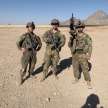

Author’s Note: Sorry if this is a little too on the nose for anyone. This is one way in which I’m processing the disheartening situation in Afghanistan. Unfortunately, it is all too easy to believe that this story may not be fiction in a few decades’ time. Both as governments and as people, we have a habit of not learning the lessons we need to.
Smith stared at the horizon. Only a small sliver of sunlight remained, reflecting off the ocean waves. The sky was clear. That could either be a blessing or a curse depending on if the mission was a go and if anybody was targeting them. The security situation on the ground was ‘deteriorating,’ which sounded like a nice way to say, ‘really bad and getting worse every second.’
Smith wished he had a cigarette right now. His wife had insisted he quit a couple years ago, but he was considering bumming some. Some of the other helicopters’ crews had infantrymen filling in as gunners. Those dudes always had nicotine.
“Hey Smith.”
He looked up to see his copilot.
“The mission got the green light. We are leaving as soon as the brief is over.”
“Roger, let’s get it over with then.”
Smith took one last look at the horizon and followed his copilot back to the briefing room. He felt like this all was a dream…or a nightmare. The Déjà vu was overwhelming. They were evacuating a US Embassy in a country that they had spent over a decade ‘liberating,’ only to sign a treaty, congratulate themselves, and leave. His grandfather had flown evac missions in Saigon, and his father had flown a chinook in the evacuation of Kabul. Now he was flying the upgraded version of the helicopter his father had flown for another evac mission. History repeats itself, only this time on a different continent.
----------------------------------------------------------------------------------------
His commanding officer looked rough. Smith could tell he hadn’t shaved in several days and the man looked about ready to drop. Once everyone took their seats, he started the brief.
“Alright everyone. This is Operation Swift Wind. After the peace treaty last year, the insurgency has conquered most of Venezuela. Our intelligence suggests that sometime this week, Caracas will fall as well. Our mission is to evacuate US Embassy personnel and Venezuelan citizens who have assisted our efforts and are considered likely targets of retaliation. You will be returning them here to Curaçao. The earlier plan to land on the carrier has been scrapped in case they have to conduct combat operations. The airport will be handling the brunt of evacuees but is expected to start taking fire soon. The Marines on security detail for the embassy and soldiers from the 75th Ranger Regiment have secured multiple buildings in the Area of Operations. Their security positions will be marked by flares.
“Do not – I repeat – do not shoot at anything if they are not shooting at you. At the moment, there have been no exchanges of fire between Americans and the insurgents. Don’t start anything. With that said, be prepared to shift your flight plans. The Navy has several ships prepared to offer fire support if the airport comes under fire. We will be deconflicting the airspace as needed so stay alert for guidance. Right now, we are planning on flying until the security situation becomes untenable or everyone gets out. Godspeed.”
----------------------------------------------------------------------------------------
The pre-flight checks had green lights across the board. Smith was the pilot in command for this trip. He wondered if anybody was taking video. It was quite the sight: three chinook helicopters flanked by attack helicopters taking off in the twilight before true night. He followed the lead chopper as they began the brief flight towards Caracas. From their approach, Smith could barely see the city. Smoke was billowing from numerous fires on the outskirts of the city and tracers were flying through the night sky. Everything was shades of green through his night vision visor. It was such a dispassionate way to observe war. All the cacophony of colors turned into shades of green, the crack of bullets and screams drowned out by the roar of the rotors and the radio chatter in his ears.
The formation of helicopters banked left to avoid the smoke and flew over the mountains on the coast. Spread out before him was the city of Caracas. The lead chopper radioed the embassy, letting them know they were five minutes out. The city was mostly black beneath his visor; the power must be out for most of it. With so little light, it was easy to see the embassy positions. Flares—someone said they were green, which didn’t matter under night vision—encircled the embassy. As they flew closer, Smith could see a large crowd outside the embassy and a larger crowd at the gates to the compound. Thankfully, the LZ was clear and all three helos landed without issues.
The crew chief ran out and guided people into the bird. Smith was waiting for the signal that they were fully loaded, while also half-listening to the radio. It sounded like the insurgents were trying to cut off the airport from the rest of the city. That would be all too easy since it was isolated from the city by the foothills, Someone was trying to get authorization for the Navy to support the forces defending the highway. Smith wondered how far up the chain of command that request would have to go to get an answer. Maybe all the way to the President? Hell, after the reports of massacres in insurgent-held areas, they might get that authorization. The war had been deeply unpopular by the end, but every average joe was becoming an expert thanks to the 24-hour news coverage of the insurgency.
The crew chief keyed his radio. “We are full back here. Raising the ramp.”
Smith replied, “Roger, once the other choppers are full, we will go. How many do you have back there?”
“I didn’t stop and count, but I would say that this is the fullest I’ve ever seen on of these birds.”
“Good work, now we just need to do it a hundred more times.”
“If only the insurgents give us enough time for that.”
Smith didn’t bother replying. These evacuations always had to be cut short. Both his grandfather and his father said that sometimes they had nightmares about the what ifs and the people who didn’t make the bird. What could have been different if the operation had been approved faster, or if they could’ve gone back one more time.
The lead chopper gave the signal and they took off. The attack helos had been circling overhead and now rejoined the formation as they headed back out over the mountains.
Before long, Smith couldn’t count how many trips they had flown. Each time, the back was packed full of people. It had started out as embassy personnel who were crucial enough to stay until the last minute. Now it was all Venezuelan civilians, but the ambassador was still on the ground. The rumor was that she was waiting to be on the last bird out with the security detail. She was a former Army officer so Smith could see it being true.
The airport situation was getting bad. The Navy had opened up on the insurgents and jets were conducting airstrikes. Everybody was concerned that the insurgents had anti-air capabilities. The war had become a proxy war between the US and China, and the insurgents had shot down aircraft before.
After he set the helicopter down, Smith looked around for a second. The helicopter was at the airfield on Curaçao. He didn’t remember anything of the last flight. The lead chopper came on the radio.
“Last trip everybody. There is fighting in the city and the embassy is taking fire. We are evacuating the Rangers and Marines this time. The Ambassador has to get on a bird. We aren’t leaving without her. If you spot an RPG or Stinger, conduct evasive action. We are flying with four attack helicopters this time for extra security.”
Smith felt a small surge of adrenaline run through his body. It had been dangerous before, but now it was going to be like the missions he had flown during the war.
It had still been mostly dark on their last flight, but now it was fully day. The daylight brought the colors of the forest and the fires into full contrast. Before, it had all just been shades of green light. Now it looked like something out of a Vietnam war film. They banked wide around the airport to avoid the shells and jets. They approached the embassy from the south-east. Now tracers were visible flying between the security positions on the north and west sides of the embassy.
“It’s a hot LZ. Escorts are breaking off to suppress enemy fire.” The attack helicopters peeled away to begin strafing the insurgents.
Smith rushed the landing and felt the entire helicopter bounce as they set down. Right now, style didn’t matter—only speed. The security forces shared his feeling as they came sprinting full speed towards the choppers. Nobody wants to be left behind. He could see a diamond formation surrounding a woman in civilian clothing running up the ramp of one of the other choppers. That must be the ambassador. It looked like most of the civilians had left once the embassy was targeted. The few that had stayed scrambled into the choppers. Smith knew that nobody in the rear was complaining about how tight it was, they were all just happy to get out. A bullet flew through the cockpit right in front of Smith and his copilot. That was too close.
He yelled into the radio.
“Are we good??”
“Roger, raising ramp now.”
With that Smith opened the throttle wide and got off the ground. A moving target was harder to hit and they had to get out of there. The other two chinooks were only seconds behind Smith.
The cityscape beneath the choppers was filled with more smoke than before. Government and insurgent forces could be seen still exchanging fire, but it was without any pattern. There was no defensive line anymore. The city had fallen.
About the Creator
Farah Thompson
A writer just trying to make sense of a world on fire and maybe write some worthwhile fiction.
Keep reading
More stories from Farah Thompson and writers in Fiction and other communities.
What's in a name?
What’s in a name? The empty void of space, broken up only slightly by stars, stared back at Lane with no answer. It was late and Lane’s brain was especially philosophical. Was a name supposed to convey character qualities or personality quirks? Or was it just supposed to be a pleasant-sounding identifier, something a person could make their own. Lane sighed and leaned back in the commander’s chair. All the status boards were still green, which meant nothing to do. He could watch a video or read a book or even go to sleep, but Lane didn’t feel like moving. He still had two days before he woke his relief up from cryo-sleep to do their two-week shift.
By Farah Thompson5 years ago in Fiction
Observed
Another Saturday night and I ain’t got nobody… He was thinking of the same damn song every weekend now. The quarantine and the curfew were things he could get used to; there was a bit of luck in having a condo in the downtown core. At least it was in a part of town without his company's handiwork. It was a perfect example of cinema right in front of him (Hitchcock be damned), all silent and distant. So, he thought, I just needed to add a song.
By Kendall Defoe 4 days ago in Fiction


Comments
There are no comments for this story
Be the first to respond and start the conversation.