
Why Social-Emotional Learning Stories Build Stronger Kids
How SEL children’s stories help kids build empathy, resilience, and emotional intelligence
Introduction: The Missing Piece in Childhood Education
Modern children grow up in a world filled with screens, notifications, and constant stimulation. They have access to endless information, but many lack the tools to process what truly matters — their own feelings. Parents and teachers often discover that while children can memorize math facts or learn new vocabulary quickly, they struggle to name emotions like sadness, frustration, or even joy.
Press enter or click to view image in full size
This gap is not a minor detail. Research in child development has shown that social-emotional learning (SEL) is one of the strongest predictors of long-term success. Kids who learn how to manage emotions, build empathy, and communicate effectively are more likely to thrive — not just in school, but in relationships and life.
So how do we nurture these skills without turning childhood into another lesson plan? The answer, surprisingly, lies in stories.
Why Stories Are the Natural Language of Emotional Learning
Children are wired for stories. From the earliest fairy tales to bedtime picture books, narratives shape the way they see the world. Unlike lectures or rules, stories invite children to step into the shoes of characters, to experience feelings safely, and to reflect on choices without judgment.
When a child hears about a character who feels scared, lonely, or left out, they recognize something inside themselves. When that character learns to cope, to reach out to friends, or to show kindness, the child learns too — without even realizing it.
This is what makes SEL children’s stories so powerful. They transform abstract concepts like “empathy” or “resilience” into lived experiences that kids can grasp, remember, and practice.
The Benefits of SEL Children’s Stories
Parents who regularly introduce SEL books often notice three key changes in their children:
Clearer emotional expression — Kids learn the words for their feelings and feel safer sharing them.
Stronger empathy — They begin to notice the emotions of siblings, classmates, or even strangers.
Resilience in challenges — Instead of shutting down when frustrated, they start finding constructive ways to cope.
Educators also find that SEL stories improve classroom behavior. A story about kindness can calm conflicts more effectively than a lecture. A story about courage can motivate children to try something new.
The Role of the Poppy Series
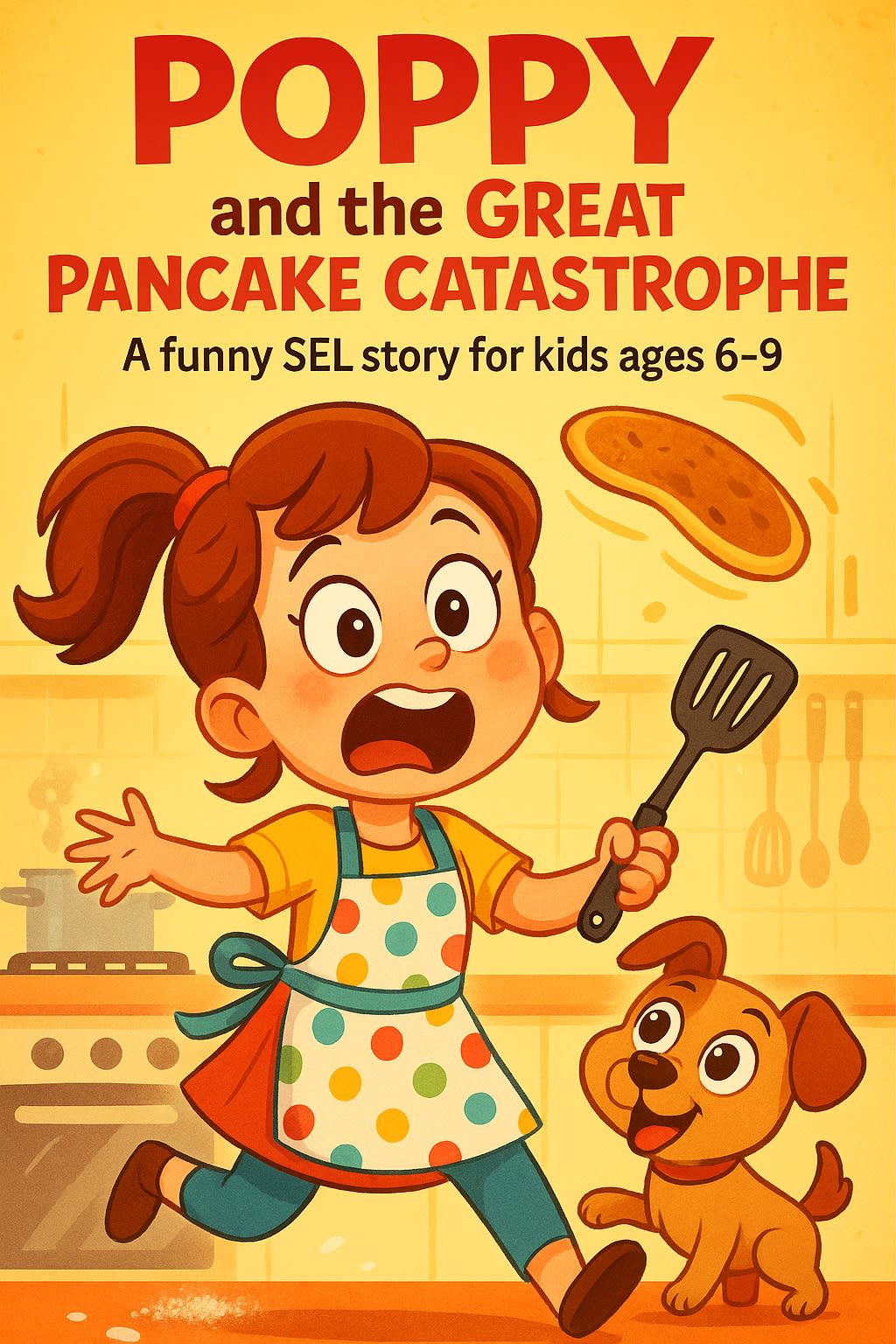
One example of this approach is the Poppy Series — a collection of stories designed to help children navigate emotions in a playful yet meaningful way.
In one book, children join Poppy as she learns to face her fears, showing that courage doesn’t mean “no fear,” but taking small steps despite it.
Another story introduces friendship and empathy, teaching kids that listening to others’ feelings is just as important as sharing their own.
Across the series, themes like kindness, patience, and self-confidence are woven into lighthearted narratives, making them perfect for bedtime reading or classroom SEL activities.
Parents often tell us that their children ask to reread these stories — not because they feel like “lessons,” but because the characters feel like friends. And when kids return to the same stories again and again, the lessons sink deeper.
Practical Tips for Parents and Teachers
If you’re considering adding SEL stories to your family or classroom, here are a few practical ideas:
Bedtime discussions: After reading, ask simple questions like “What was Poppy feeling?” or “Have you ever felt the same way?”
Role-play: Encourage children to act out a scene. Role-playing deepens understanding and helps children practice empathy.
Classroom sharing: Teachers can pair SEL stories with group discussions, allowing students to voice their own perspectives.
Printable activities: Many SEL stories can be paired with coloring sheets or reflection questions, turning reading into a hands-on experience.
Why This Matters More Than Ever
In an age where technology often replaces face-to-face interaction, children need SEL more than ever. Emotional skills are not just “soft skills” — they are life skills. The ability to express feelings, to show kindness, and to recover from setbacks forms the foundation of mental health and future success.
Stories are one of the most accessible and enjoyable ways to teach these skills. And when those stories are carefully designed with emotional growth in mind, they can leave a lifelong impact.
Conclusion: Building Stronger Kids Through Stories
SEL stories don’t just entertain — they build the kind of resilience and empathy that children carry into adulthood. Parents and educators who make SEL part of everyday life often find that kids become not only happier, but also more confident, compassionate, and connected.
The Poppy Series was created with this mission in mind: to combine joyful storytelling with meaningful emotional lessons. Whether read at bedtime or shared in classrooms, these books offer families and teachers a simple, effective way to nurture emotional intelligence.
👉 Discover the Poppy Series on Amazon and start building stronger kids through stories.
About the Creator
Pop Jack
Pop Jack writes about AI, focus, and digital minimalism. He also creates SEL-inspired children’s stories and picture books, exploring how technology shapes minds while stories build empathy.
Keep reading
More stories from writers in Families and other communities.
Wise~Guys
— Look Behind what's in Front of You ~ Make Good Choices — Hey, So how you Doin'..! Made~Men — Mobster Movies romanticise a distinctive, elegant appearance, impeccable attire style, along with the 'Families' expressive lingo. Making their 'Bones' gave them Panache — with vintage fedoras, tailored pin-striped suits, mirror-polished wing-tip shoes adorned with tassels; with their 'Gun Moll' gorgeous dates on their arms.
By Jay Kantor17 days ago in Families




Comments
There are no comments for this story
Be the first to respond and start the conversation.