
Why Do Kids Often Look Similar to Their Parents?
Discover the fascinating science behind family resemblances and inherited traits.

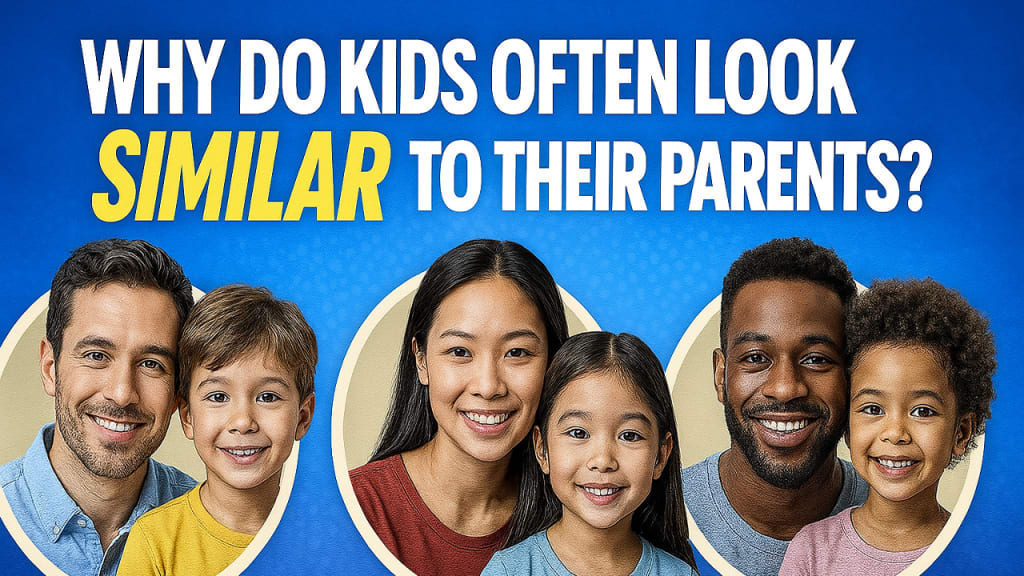
Introduction: The Fascinating Family Resemblance
Have you ever noticed how children often share their parents’ smile, nose shape, or even the way they walk? This resemblance isn’t just a coincidence—it’s rooted deep in biology. The similarities between parents and their children are a result of the genetic blueprint passed down from one generation to the next. But genetics is just one piece of the puzzle; environment and behavior also play important roles.
The Science Behind Resemblance: It’s All in the Genes
Every human being inherits half of their DNA from their mother and half from their father. DNA, or deoxyribonucleic acid, carries the instructions that determine our physical and biological traits—like eye color, hair texture, and even our risk of certain diseases.
Within DNA are units called genes, which act like tiny instruction manuals. Some genes are dominant, meaning they’re more likely to be expressed, while others are recessive, meaning they may remain hidden unless both parents carry them. For example, if one parent has brown eyes (a dominant trait) and the other has blue eyes (a recessive trait), the child is more likely to have brown eyes.
Inherited Traits: More Than Just Looks
When we think of inheritance, we often imagine physical traits, but it goes beyond that.
- Physical traits: These include facial features, body shape, skin tone, and even the way someone smiles or laughs.
- Behavioral traits: Scientists have found that certain behavioral tendencies—like temperament or energy levels—can also have genetic links.
- Health traits: Conditions such as allergies, blood pressure levels, or certain diseases can also be passed down genetically.
So, a child may not just inherit their father’s nose or their mother’s dimples, but also a predisposition to certain habits or conditions.
The Role of Genetic Variation and Mutation
Even though kids inherit genes from their parents, they never look like an exact copy of either one. This is because of genetic variation—the unique combination of genes each child receives.
During reproduction, genetic material from both parents mixes in a process called recombination, creating a new and distinct genetic makeup. Sometimes, small mutations (random changes in DNA) occur, adding even more uniqueness. That’s why siblings can look alike but still have distinct features that set them apart.
Environment Matters Too: Nature Meets Nurture
While genetics lays the foundation, the environment shapes how these traits are expressed. For example, nutrition, sunlight exposure, and lifestyle can influence a person’s height, skin tone, or body shape.
Additionally, children often unconsciously mimic their parents’ facial expressions, gestures, and speaking styles—making them appear even more alike. This is where “nurture” complements “nature,” blending genetic inheritance with learned behavior.
Why Siblings Look Similar—but Not Identical
Siblings share the same parents, but they don’t receive the exact same mix of genes. Each child gets a different combination of genetic material, which explains why one sibling might resemble the father more, while another looks more like the mother.
Identical twins are the exception—they come from the same fertilized egg, sharing 100% of their genes. That’s why they look almost exactly alike. Fraternal twins, however, are like regular siblings—they share about 50% of their genes.
Interesting Facts About Family Resemblance
Sometimes, a child looks more like a grandparent than their parents. That’s because genes can skip generations.
Certain traits, like red hair or blue eyes, are recessive and may only appear if both parents carry the same gene.
Some studies suggest that newborns often resemble their fathers more closely at birth—possibly as an evolutionary way to strengthen paternal bonding.
Conclusion: The Beauty of Genetic Connection
The reason kids often look similar to their parents is a beautiful combination of genetics, biology, and environment. Our DNA connects us to generations before us, while our environment shapes how we grow and change. Each resemblance—a familiar smile, the same eyes, or a shared laugh—is a reminder of the powerful link that binds families together through time.
About the Creator
Muhammad Irfan Afzal
I write clear, practical, engaging articles on technology, online safety, and modern digital life. My goal is to help readers understand complex. My aim to provide value, awareness, and real-world solutions for everyday digital challenges.
Keep reading
More stories from Muhammad Irfan Afzal and writers in Families and other communities.
How to Recover Deleted Messages on Instagram
Recovering deleted Instagram messages can feel stressful—especially for parents trying to understand their child’s online interactions. Whether you're concerned about safety, cyberbullying, or simply keeping communication transparent, there are several ways to retrieve lost chats. This guide walks you through practical, step-by-step methods parents can use to recover deleted messages on Instagram while maintaining healthy digital boundaries.
By Muhammad Irfan Afzalabout a month ago in Families
Wise~Guys
— Look Behind what's in Front of You ~ Make Good Choices — Hey, So how you Doin'..! Made~Men — Mobster Movies romanticise a distinctive, elegant appearance, impeccable attire style, along with the 'Families' expressive lingo. Making their 'Bones' gave them Panache — with vintage fedoras, tailored pin-striped suits, mirror-polished wing-tip shoes adorned with tassels; with their 'Gun Moll' gorgeous dates on their arms.
By Jay Kantor17 days ago in Families




Comments
There are no comments for this story
Be the first to respond and start the conversation.