
Why are white women more eager to get married
As an East Asian woman, I secretly mock white women for their enthusiasm for marriage, however...
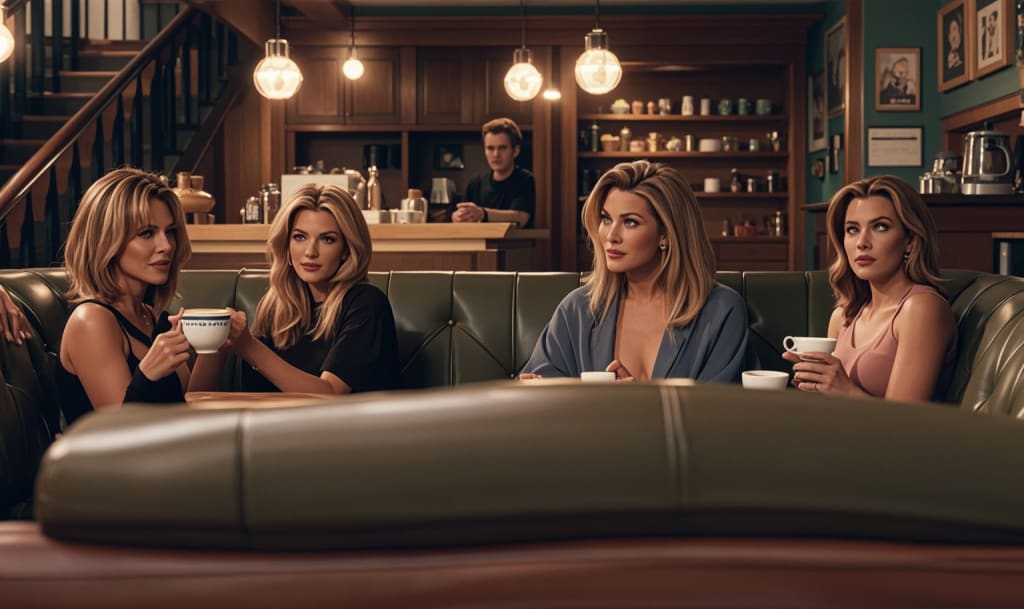
Recently, I saw an East Asian woman online asking: Why are white women more eager to get married and have children than us, and why do they yearn for a traditional lifestyle? What happened to the Western society that is supposed to be free and open, with no marriage, no children, and childless couples?
Indeed, as an East Asian woman, I secretly mock white women for their enthusiasm for marriage and childbirth and their yearning for family life.
White women are always dating, and by the time they're 30, most of them are married and have several children. In contrast, more and more East Asian women are choosing not to marry or have children, and birth rates in East Asian countries are declining year after year. This phenomenon has further evolved into the idea that East Asian women are more enlightened and progressive than white women.
There are many posts mocking and criticizing women who follow the “traditional” path of marriage and romance. For example, a woman posted that her life in Ireland, she could wear whatever she wanted, and no one would bat an eye—it was free and happy. But then she shifted her tone, looking down on local women for wanting sweet romances, aspiring to marriage and family, and loving children...
I agree with this viewpoint, but behind this agreement lies not social progress, but the bitterness of reality.
---
In the past, East Asian women were conditioned to believe that “women must marry and have children” and that “not marrying is abnormal.”Now, “feminism” has turned not marrying or having children into a “badge of progress,” openly and covertly mocking women who choose to marry and have children as being “love-struck,” “unprogressive,” “domesticated by patriarchy,” and “submitting to patriarchy”... turning normal choices about marriage and childbearing into a “progress vs. backwardness” divide.
In reality, behind this development lies the helplessness of women as victims.
---
In a welfare society, everyone could freely choose whether to marry or not, have children or not, and regardless of their choice, they would receive corresponding support from society—whether it be societal acceptance, social welfare guarantees, or support from family and friends.
White women have enjoyed the freedom granted by society, possessing the freedom to choose not to have children or to have many children. No one tells them they should have children, and no one criticizes them for having many children.
This is the debt that East Asian society owes to their women.
---
In fact, many women naturally love children, yearn for the happiness and warmth of family life, and long to create a new life with someone they love and enjoy the joys of family life—this is a natural and beautiful pursuit that aligns with human nature.
However, due to deeply entrenched patriarchy, gender inequality, and insufficient societal support for women's reproductive rights, many Asian women are unable to pursue family happiness with confidence during their prime childbearing years. Instead, they are forced to choose between staying in the workforce and building a family.
The low birth rates in East Asian countries are not merely a rebellion against reality by East Asian women; they are, in fact, the forced choices made by women in an unfair and unequal society.
---
Just as birth rates in Northern Europe are higher than in Southern Europe, this is not because Northern European women are more “traditional” or because Southern European women are more progressive in their thinking, but because Northern Europe offers better and more comprehensive childcare environments and social welfare systems—extended paid maternity leave, universal public childcare, lengthy paternity leave for men, prohibitions against workplace discrimination based on childbirth, job security for women after childbirth, and men actively taking on half of the responsibilities in family life and childcare.
In an equal society, with loving partners and comprehensive welfare support, having two children when the time is right is a natural and reasonable choice.
Many white women can settle down around age 30: they find a stable partner, live together for a while to save money, then start buying a house, getting married, and having children.
Each step seems to follow a predetermined social clock—wedding, pregnancy, and the birth of the first child shortly after. By the time the first child starts walking, they’re already pregnant with the second.Within five or six years, by around age 35, they have completed the transition from being single to a family of four, living happily together.
These white women are very happy. Their marriages are the natural outcome of happy love, not the result of parental pressure or social compromise. Having children is their free choice, not a task they feel compelled to fulfill due to parental pressure.
After the children are born, the couple works together to raise them, taking turns taking maternity leave to stay home with the children, taking turns caring for their daily needs, and taking turns going out to socialize and continue their personal lives. Every time they gather, they dress up and have a great time. Occasionally, when you see them with their children in the park or on the street, the children are all very well-behaved and adorable.
Marriage and childbirth will inevitably impact their career development and personal lives, but this impact is more of an interruption or pause—temporarily stepping away from the workplace for a year, abstaining from alcohol during pregnancy, and so on—rather than a permanent bond between mother and child, or women being confined to the role of mother and unable to pursue other aspirations or development outside the family.
--
However, achieving such a balance is impossible in East Asian society.
Therefore, on the surface, East Asian women look down upon married women with children as “backward” and “traditional.” At its core, this is an inevitable and bitter choice driven by societal pressures.
About the Creator
Keep reading
More stories from Linda Yule and writers in Families and other communities.
Wise~Guys
— Look Behind what's in Front of You ~ Make Good Choices — Hey, So how you Doin'..! Made~Men — Mobster Movies romanticise a distinctive, elegant appearance, impeccable attire style, along with the 'Families' expressive lingo. Making their 'Bones' gave them Panache — with vintage fedoras, tailored pin-striped suits, mirror-polished wing-tip shoes adorned with tassels; with their 'Gun Moll' gorgeous dates on their arms.
By Jay Kantor17 days ago in Families
The Farmer and His Three Sons
In a quiet village surrounded by wide fields and dusty paths, there lived a hardworking farmer. His hands were rough from years of working the land, and his face carried the marks of long days spent under the sun. Farming was not just his work; it was his life. Before the sun rose each morning, he would already be walking toward his fields, and after sunset, he would return home tired but grateful.
By Sudais Zakwan6 days ago in Families




Comments
There are no comments for this story
Be the first to respond and start the conversation.