
Who Am I?
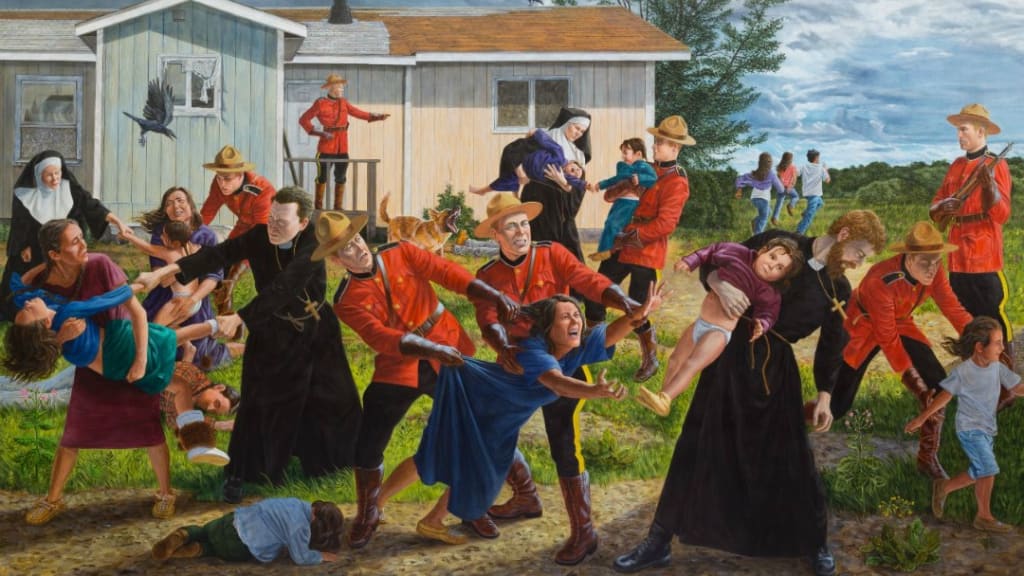
Sixties scoop
You cut the ties, you civilised, you hypnotised.
And we cried, and cried, and cried.
It was institutionalised, propagandised, the Indian child, ostracised.
Recognise, this is cultural genocide.
Now we are alone, far from home, identity unknown.
The effects remain, but we abstain.
Is this the pinnacle of human achievement?
The system's nothing more than a white man's hoax, and we refuse to be coaxed.
We are not to be misunderstood.
Our thoughts needed to be corrected, as we were not the ones who chose to not be protected.
And now, it's left for me to question?
Who am I?
But I will find the ties you took, as I refuse to let you scoop the Indian child within me.
- Bronté Corcoran-Ward
Description
This poem is a reflection on my family history and the effects that the Sixties Scoop has caused to this day.
“The Sixties Scoop was a period in which a series of policies were enacted in Canada that enabled welfare authorities to take or “scoop up” indigenous families children from their families and communities for placement in foster homes, from which they would be adopted by white families”
I reference in the poem “cutting ties” - these words are not only chosen in the literal sense, cutting family ties, it is also symbolic to chopping the hair of native children which was enforced by the government at the time to civilise and simulate the indigenous to look “white”. Unfortunately, there were plenty of cruel acts that were made to enforce such structures, however, for the indigenous cutting hair is an act that has significant meaning in our culture, as it’s a connection to our ancestors.
As a daughter of a mother who is First Nations and was an orphan, I began to realise that the Sixties Scoop unfortunately still has a major impact on future generations and the world we live in today. As a result, my mother, myself and sadly plenty other indigenous are now a product of a genocide and have no connection to their family history. However, despite these tragic events, this poem is not only a reflection on my place in the world, it is an act of empowerment and awareness that all is not lost for those who seek to gain back their belonging in the world.
About the Creator
Keep reading
More stories from writers in Families and other communities.
📢 Raise Your Voice Thread: 03/05/2026
Our “Raise Your Voice Threads” are hosted most alternating Thursdays at 12PM ET to offer creators more avenues to uncover exceptional stories on Vocal. As we are continuously searching for fresh creators and inspiring stories, this thread provides an opportunity to exchange and discuss the stories that have moved and motivated us on Vocal.
By Raise Your Voice by Vocal7 days ago in Resources
The Politics of Playing Dress-Up
Well, to start off I'd like to say a happy world book day to all who celebrate. I know I haven't really posted anything on my socials about it but I'm not a jubilant kind of person. I lay low most of the time. Let's start off with a popular anecdote from the vaults...
By Annie Kapur7 days ago in Geeks



Comments
There are no comments for this story
Be the first to respond and start the conversation.