
When the Lights Went Out
The night I realized I couldn’t pretend everything was fine anymore
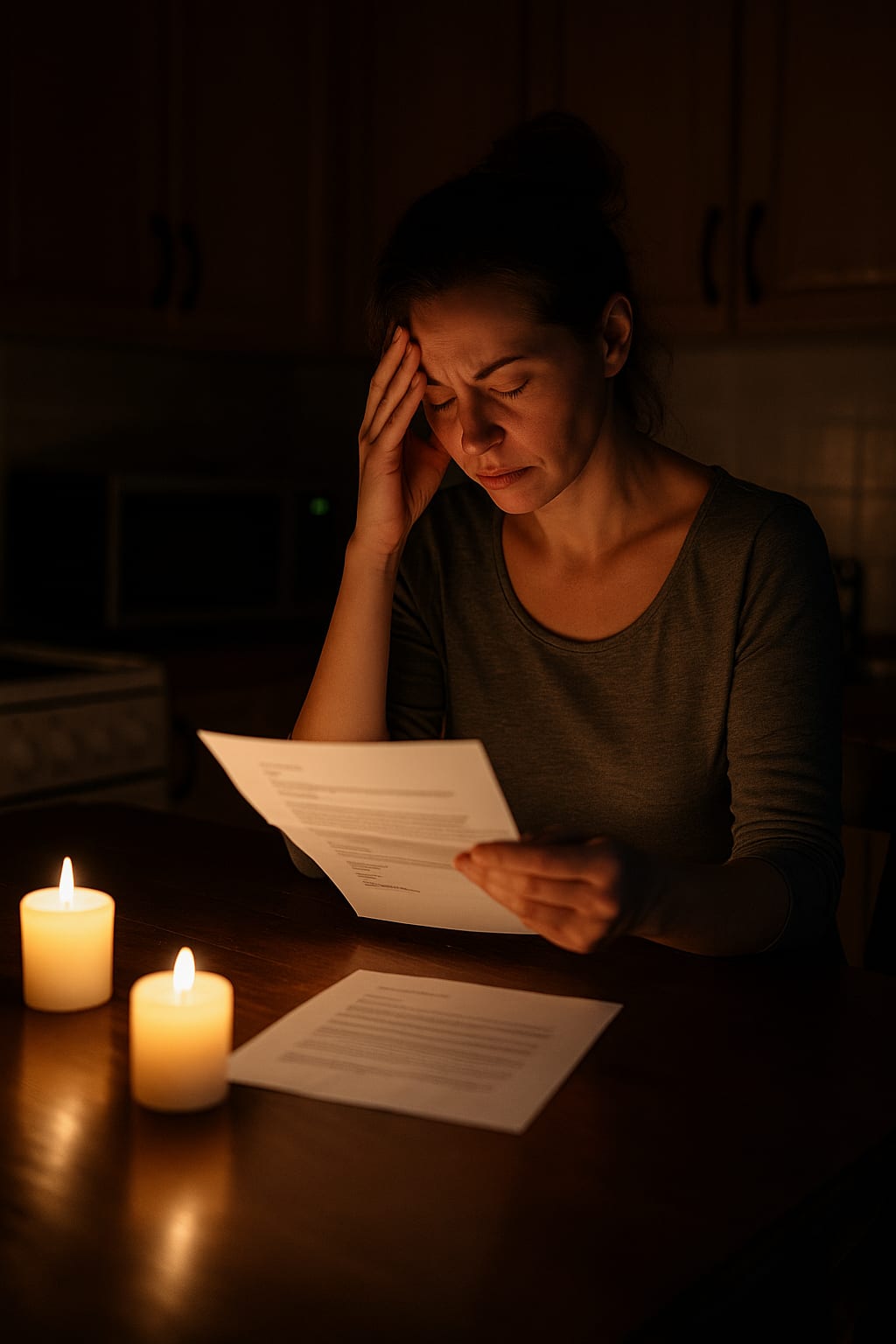
It happened on a Thursday night.
The kids were already in bed, the dog curled at my feet, and I was standing in the kitchen reheating leftovers. I reached for the light switch—and nothing happened.
The power company had warned us, but I hadn’t told anyone in the house. I’d been juggling bills, deciding which ones could wait. That night, I lost the gamble.
I lit three candles from the drawer and set them on the table. The flickering glow made the room feel smaller, quieter. My partner came in, eyebrows raised. “Power out?” he asked.
I nodded, pretending it was just a grid problem. But inside, I was crumbling.
The truth is, the lights were the least of it.
For months, we’d been drowning. My hours at work had been cut. My partner’s freelance jobs came in less often. We were caught in that dangerous space where the bills still arrived like clockwork, but the income didn’t.
I kept thinking we could fix it if we just worked harder, saved more, cut back. We sold furniture we didn’t need, canceled family outings, clipped coupons like it was a sport. But the mortgage? It was a mountain I couldn’t climb.
The first time we missed a payment, I told myself it was temporary. By the second month, I was dodging phone calls. By the third, I was afraid to check the mail.
And then the notice came. Foreclosure.
I didn’t tell the kids. I didn’t even tell my partner right away. I thought if I could just figure it out, maybe no one would have to know. But the weight of it sat in my chest, heavy and unshakable.
I spent nights searching online—terms like “stop foreclosure” and “help for homeowners”. Some sites wanted money upfront. Others promised impossible results. I felt like I was sifting through sand, looking for one grain of hope.
The more I read, the more I realized how many people had been here before. Families who looked just like mine. People who had worked their whole lives and still found themselves one letter away from losing everything.
That night with the candles, I finally told my partner. He didn’t get angry. He didn’t blame me. He just listened, his face pale in the soft light.
“We’ll figure it out,” he said.
From that moment, we became a team again. We made lists. We gathered documents. We called anyone who might help, even if it meant being on hold for an hour. I learned that the legal process isn’t instant. That deadlines are real, but there are steps you can take before it’s too late.
We reached out to housing counselors and local nonprofits. Some gave us resources. Some gave us nothing. But each conversation was a step forward.
Slowly, we began to see a path—one that involved negotiating with the lender, showing proof of hardship, and making a repayment plan that didn’t require a miracle.
It was grueling. Some days I felt like we were getting nowhere. But we kept going.
In the end, we did it. The foreclosure process was halted. The lights stayed on. And the house—the home we had filled with birthday candles, homework piles, and late-night talks—was still ours.
Now, every time I flip a light switch, I remember that night in the kitchen. I remember the silence, the fear, and the moment I decided to stop pretending everything was fine.
I’m not telling this story because it’s unique. I’m telling it because it’s not. Because somewhere, someone is reading this in the dark, wondering if it’s too late.
It’s not.
About the Creator
Keep reading
More stories from David Litt and writers in Families and other communities.
The Day the Mailbox Changed Everything
It was a Tuesday. I remember because it was my grocery day, and I’d left the store earlier than usual to beat the rush. The sun was warm but low, and the whole neighborhood smelled faintly of cut grass. It was one of those small, perfect afternoons when life seems normal—ordinary, even comforting.
By David Litt5 months ago in Families
Wise~Guys
— Look Behind what's in Front of You ~ Make Good Choices — Hey, So how you Doin'..! Made~Men — Mobster Movies romanticise a distinctive, elegant appearance, impeccable attire style, along with the 'Families' expressive lingo. Making their 'Bones' gave them Panache — with vintage fedoras, tailored pin-striped suits, mirror-polished wing-tip shoes adorned with tassels; with their 'Gun Moll' gorgeous dates on their arms.
By Jay Kantor20 days ago in Families




Comments
There are no comments for this story
Be the first to respond and start the conversation.