
When Silence Becomes Too Loud
The Unspoken Monologue of a Tired Heart


You know what, Gene? I’ve reached my limit. I’ve been storing up small disappointments like little stones in my pockets until my jeans sag under the weight. It isn’t dramatic or loud — that’s the problem. It’s quiet, slow erosion. The kind of thing that starts as a laugh missed at breakfast and ends as a person you no longer recognize sleeping on the sofa.
We used to be dangerous together in the small, necessary way people in their twenties are dangerous. We treated the city like a secret playground: a midnight movie that turned into street-corner coffee, a Tuesday turned into an ice-cream date because life felt infinite enough. He’d bring flowers for no reason, not on anniversaries, not on apologies, but just because the world suggested it might be beautiful that day. Small mercies. Small rituals. They made up our scaffolding.
Now look at us. Twenty years later and tonight — of all nights — it’s our anniversary. Twenty years. Two decades of birthdays and small catastrophes and the sort of tenderness that doesn’t make for poetry but keeps you from shivering on cold nights. Two decades that, by all reasonable accounts, should merit more than last night’s stew reheated and a cup of lukewarm tap water.
He’s on the sofa downstairs right now, the permanent print of his shape in the cushions, eyes glued to a screen that feeds him the world in flat rectangles. He turns only for the remote and the bathroom. Sometimes, I watch his profile in the television glow and try to find the man who once called me at noon just to tell me he’d bought a ridiculous hat. It’s like trying to find a photograph in a pile of burned postcards.

Do you remember how he used to purposefully fumble with his tie before a date and then laugh because he could never get it right? Remember the way his face softened when he laughed at something utterly stupid? Those are the small things I miss — the dirt under the fingernails of ordinary life, still somehow tender. I miss being taken out of my routines like a surprise, even if the surprise meant a wet umbrella and a ruined plan. I’d rather have one ruined plan with him than a hundred perfect nights alone.
Once, we danced. Maybe not professionally, but we moved the way people move when they feel like the room belongs to them. My sister invited us out to a little community dance not long ago. It wasn’t even a real night out — no flashing strobes or overpriced cocktails. Just music, laughter packed into the corners like loose change. And he huffed. He sighed. He rolled his eyes so thoroughly I thought they’d fall out. He invented reasons — “we’re too tired,” “we have errands,” “we should save the leftovers.” The leftovers. As if the fate of cottage pie could possibly outweigh the fate of two people remembering how to be present.
That was not the first time. Jack and Susan suggested a double date at that new sushi place; the Millers wanted to try mini-golf like the real grownups who still seem to know how to have fun. Invitations morphed into jokes, which then became excuses, which hardened into habits. Habits are not harmless. Habits calcify into landscapes where new footsteps find no purchase.
What enrages me most is how ordinary the cruelty is. It’s not dramatic betrayal. It’s apathy. The slow, polite, everyday dismissal that shows up in a thousand ways: a shrug where a hug should be, a television remote instead of a hand reaching across the bed. He’s not a villain. He’s a man who’s folded himself into a pattern and then decided the pattern was safer than the work of loving. He’d rather be a fixture than an adventurer. He would rather preserve comfort than risk delight.
So tonight becomes the final straw — not because I’m throwing a tantrum, but because I have a ledger and I want to close the account. If twenty years of shared life, of catastrophes survived and small triumphs celebrated, are not worth stepping out for one evening — if they can be dismissed in favor of reheated stew and whatever lies in the bottom of the kettle — then I refuse to let my life be footnote to his comfort.
This is not a threat. It’s a decision. If he wants to come back to being a part of a life that feels like living, there’s a door. If he doesn’t, there’s the same door — for me, I will open it and step through. I’ll dance alone if I must. I’ll eat sushi without him and laugh at the daftness of chopsticks. I’ll play minigolf and buy ridiculous trophies just to prove to myself that small joys are not a crime.
Do not mistake me: I am not denying the passage of time. My hair will gray; my face will show lines from all the laughing I’ve done and the suffering too. But gray is not defeat. Lines are not the signature of a life surrendered — they are cartography. They map the places I’ve been brave enough to live. The alternative is more terrifying: to hollow out while your body keeps the same schedule.
There is, in me, a stubborn child who still trusts that an ordinary Wednesday can be extraordinary if the right people show up. I want that child back. I want afternoons populated with tiny rebellions — a walk, a strange dessert discovered at a roadside stall, a small, ridiculous movie. I want my life to be a collage of these moments, not a single, slow burial by routine.
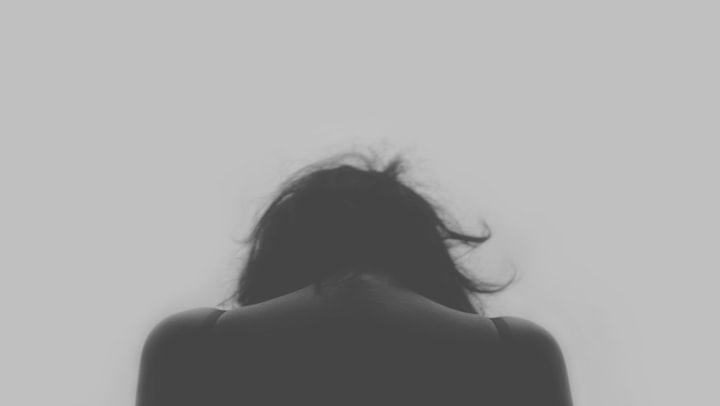
Tonight, when I leave this room and he snores in the flattening glow of daytime television, I’ll not go to bed angry. I’ll open the window, let the moon be witness, and whisper to myself that there is no shame in wanting more. There is no crime in saying, “I deserve to be wanted.” The cat, Gene, is the perfect audience — impartial and silent, offering the comfort of an ear without the burden of advice. Thank God for the absurdity of confiding in a creature that blinks and accepts without commentary.
So this is the thing: either he reopens his eyes, or I open mine wider. One of us must move. If not him, then me. If not together, then at least I choose movement over petrification. I choose to collect tiny stolen joys and stitch them into a life that doesn’t feel used up.
If that sounds bitter, know it’s not the bitter of vindictiveness. It’s bitterness like lemon after sugar — clean and clarifying. It wakes the taste buds. It reminds you you still have a mouth to taste the world. I am not finished yet, and I refuse to be complicit in my own disappearance by letting silence grow loud in the rooms where we used to sing.
Now, Gene — listen: be a cat tonight. Nap in the sun, demand ridiculous affection, knock the coaster off the table just to watch it fall. And when I go dancing alone someday, I want you to tell no one. Let this be my private rebellion. Let it be the little story I keep to myself that tastes like freedom.
Either way, the point is this: I will not become small to fit the shape of someone else’s indifference. I will stand up, take my ridiculousness seriously, and if that means I must do it alone for a while, then I will do it with my head high and my heart stubbornly young.
And if, by some miracle, he chooses to come with me? Then we’ll make terrible jokes, eat too much, laugh too loud, and buy flowers for no reason at all. We’ll collect small tickets again until the suitcase is full. Until then — I will keep my suitcase open, and the moon will know why.
About the Creator
Janalam
Start writing...Hey! I’m Jan Alam 😎✍️
I write all kinds of stories — sci-fi 🚀, romance 💖, or something totally weird and new!
Obsessed with pop culture 🎬🎶📚 and always busy creating something fresh ✨🔥
What Are the Best Places for Taking Romantic Pictures in Luang Prabang
The Southeast Asian nation of Laos is known for its natural beauty and cultural attractions; it is sure to draw the interest of couples seeking romance and the opportunity to take memorable photographs. In this regard, the city of Luang Prabang is an outstanding destination for a romantic photoshoot, presenting an array of alluring locations that offer great photo possibilities. Some of these outstanding locations are described below.
By John Ashley3 days ago in Families



Comments
There are no comments for this story
Be the first to respond and start the conversation.