
What the Next Generation Thinks of Us: A Letter From 2050
A haunting reflection written by a teenager to their ancestors

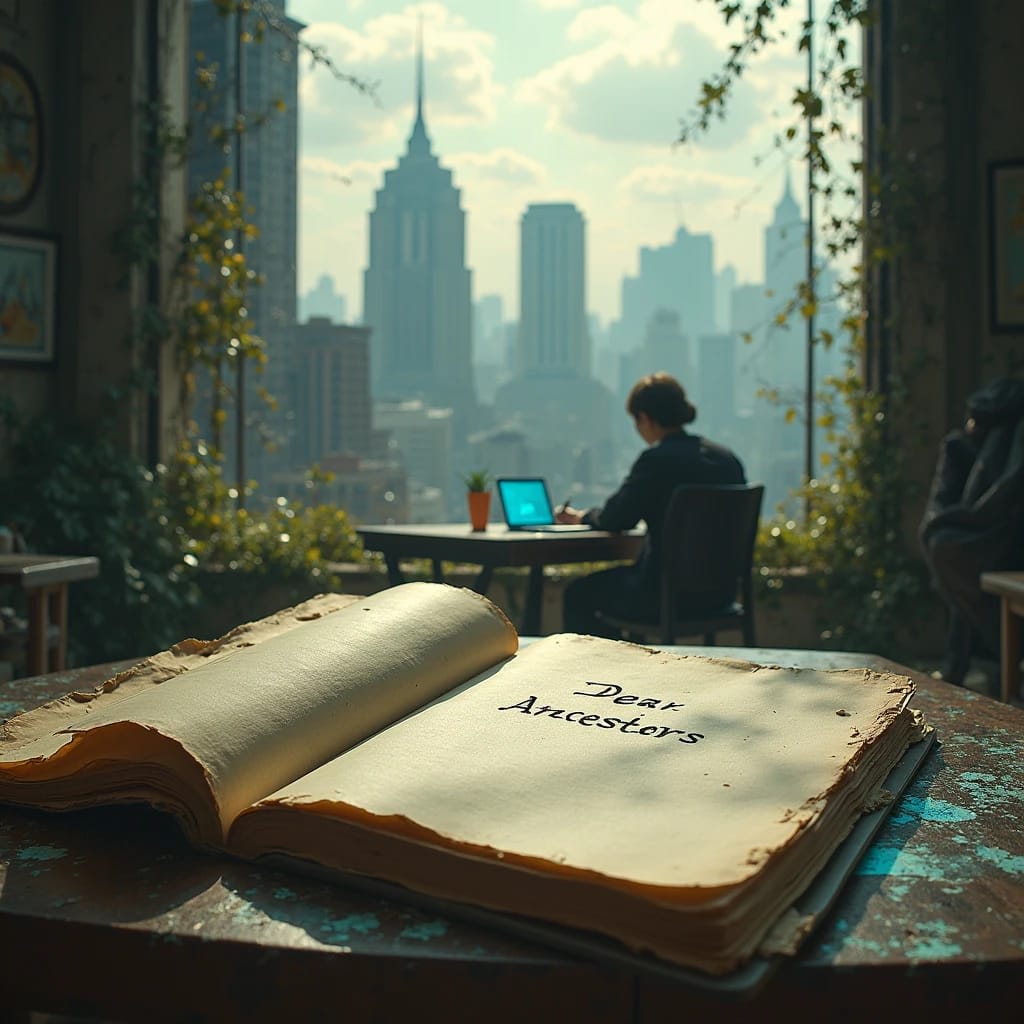
Dear Ancestors,
My name is Ilya, and I was born in the year 2034. I’m sixteen now—old enough to understand what you left us. Old enough to question why. Old enough to write this letter from what remains of Earth, in the hope that it echoes back through the data archives and makes someone, somewhere, feel what I’m feeling.
Let me start with a confession.
Sometimes, when I walk through the broken cities, I imagine what they used to be like—before the heat waves cracked the asphalt and the sea rose over the piers. My mom showed me an old movie once, with neon lights and bustling crowds. She paused it during a city skyline shot and whispered, “We had it all once.” Then she cried. I didn’t understand why, until I saw what’s left.
We live in what you might’ve called a “resilience shelter.” It's solar-powered, has recycled water, and sits atop stilts because of the floods. I guess it's a good home, if you compare it to the camps or the no-go zones. We grow vertical food. We use filtered air masks when we go outside. And we don’t look up anymore—because the sky, the real blue one you grew up with, hasn’t been seen in years.
But I’m not writing to make you feel guilty. That wouldn’t change anything now. I’m writing because I want you to know how we see you—your generation—the ones who were warned again and again but chose comfort over courage.
You were dreamers and destroyers.
Let me explain.
We Study You in History Class
Our AI-guided lessons have taught us more than textbooks ever could. They show us timelines, simulations, news reports—your faces frozen in time. We’ve seen the endless debates. The way you argued about climate change like it was just another political football. The way some of you marched in the streets with signs, begging for action, while others scrolled past on your phones or ridiculed the “activists.”
We watched you chase wealth in a system that devoured your own future. A billion packages shipped overnight. Oceans choked with plastic. You bought things to feel something. But the emptiness grew. We can see that now. In every old social media archive we’ve accessed, there's a loneliness between the likes and the filters. A silent scream.
And yet—you were brilliant, too.
You created technology that now keeps us alive. The very AI that teaches us, the carbon-capture trees lining our corridors, the satellite panels that still hum above—you made them. Sometimes I sit with the old logs and read your research papers. So much hope. So much possibility. And still… the systems you served wouldn’t let you stop the damage in time.
We Ask: Why Didn’t You Change Faster?
This is the hardest part to understand. You had the science. You had Greta. You had floods and fires and families losing everything. Still, you waited. Or worse, denied.
I asked my grandfather once, “Why didn’t they act?” He said, “Because it felt like someone else’s problem. Until it wasn’t.”
I think about that a lot.
Now, it's everyone’s problem. My best friend Mila has asthma because of the air. We ration energy during dust storms. The coral reefs are ghost towns beneath the sea. And still, we’ve learned to smile. Humans are weird that way.
We’re Different Now—Because We Had to Be
We don’t waste. Every object is reused, every bite accounted for. Birth rates are controlled—not by force, but by agreement. We learn five languages, not for business, but because migration is life now. Borders don’t mean what they used to.
The old world you loved—cars, malls, meat—those are luxuries we read about. Our joys are quieter: a good book printed on real paper, a clear sunrise through filtered glass, a moment of connection in the virtual Agora, where we meet kids across what’s left of the globe.
We’ve built empathy out of necessity. We have to rely on one another. Maybe that’s the one good thing you gave us—the final lesson that pushed us to rebuild from your ruins.
Some of Us Forgive You. Others Don't.
There are groups that still curse your names. They call you “The Sleepers.” They paint murals of the burning Amazon and tag them with your birth years. It helps them feel something, I guess.
But me? I sit in the middle.
I believe you loved this world. I believe many of you tried. But love without action is just sentiment. You had the tools. You just didn’t use them fast enough. And now, we carry the price in our bones.
Still, we rise.
We’re Dreaming Again—But With Eyes Wide Open
We don’t dream of flying cars or moon resorts. We dream of balance. Of restoring the soil, healing the rivers, rewilding the lands. The term “success” has changed. It's no longer about how much you own but how much you return.
We hold rituals where we bury data drives—digital time capsules from before The Collapse. We read your stories, your poems, your journals. We cry with your music. You left beauty behind, too.
So thank you—for the things you preserved. For the code. The art. The memories. They remind us we come from people who were complicated, messy, hopeful, and afraid.
A Final Thought, from a Future You Made
If you ever read this—somehow, somewhere—I want you to know one thing:
We’re still here.
Not because of your mistakes, but because of the parts of you that dared to imagine something better.
We inherited your storms.
But we also inherited your fire.
And we’re using it—this time—to heal, not to burn.
With hope from 2050,
Ilya Sun
About the Creator
Muhammad Sabeel
I write not for silence, but for the echo—where mystery lingers, hearts awaken, and every story dares to leave a mark
Keep reading
More stories from Muhammad Sabeel and writers in Families and other communities.
The Night My Father Cried
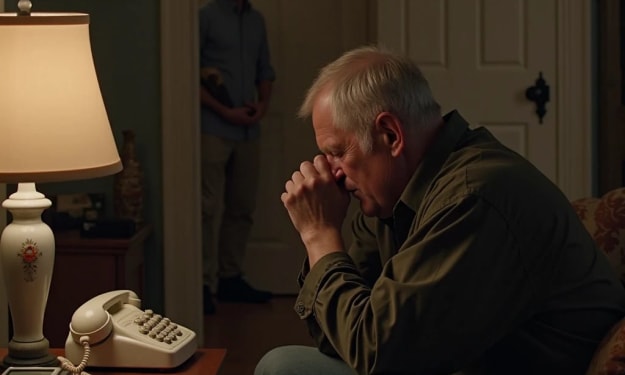
I always saw my father as unshakable. He was the kind of man who never flinched during a storm, never raised his voice in anger, and never showed even a hint of vulnerability. Stoic. Silent. Steady. The kind of father who taught you how to ride a bike by pushing once and watching from a distance. Not out of indifference—but because he believed in quiet strength.
By Muhammad Sabeel10 months ago in Families



Comments (1)
This is a powerful piece. It makes me think about how our actions today shape the future. We need to be more responsible, or our kids might face a similar fate.