
What's in a Knot
Cultural ties and elegant decorations all in one


At Chinese New Year it's customary to wish good luck and prosperity to everyone you meet.
Gong xi fa cai, gong xi fa cai. Zhu ni hao yun.
Sometimes you'll give a small decorative present as well - a red prosperity knot with shiny tassels. After all, the New Year's coming - you'll need something to capture the bad luck and make sure your family gets a good start.
I saw so many of these knots while growing up, every time we travelled back to China to visit my grandparents. Little red squares, intricate and hard to unravel. Hanging from the neighbours' door. Etched in gold on red pockets. Painted onto supermarket calendars and blown up in paper as cheap decorations to string around the living room. My great-aunt gave me a purple one when we went to visit her and I remember tracing the tight, knobbly pattern on her couch, trying to find where the cord began.
A few years ago my mum and I stumbled into a nook of our city with a wide and strange assortment of shops and exhibits.
Sheltered away from the highway outside by a block of bushes, the things here include: a miniature garden-world with detailed replicas of buildings from around the world, a walk-in aviary with less-than-friendly parakeets, a lolly shop with strangely depressing lighting, a tea cafe featuring a light-blue 'vanilla-periwinkle' tea, and the National Dinosaur Museum - 'the largest permanent display of dinosaur fossils' in the country.
Yep, a lively mix, to be sure, but the shop that excited me the most was a bead shop (at this point I was still in a friendship bracelet phase), with thousands of containers of beads
And the part of that shop that excited me the most was a book titled 'Chinese, Celtic & Ornamental Knots for Beaded Jewellery' (Suzen Millodot).
We bought the book and brought it home, upon which, as in the case of the ten-ish other books currently giving me the side-eye from my bookshelf, it was plopped into a slot and left to start collecting dust.
Up until this year I only touched the book once or twice, let alone the satin cord we bought along with it, but here are a few things I've observed.
There is a beautiful and organic fragility about the process of tying a knot from several individual cords being juggled and handled all at the same time.
You can't build a knot by only working on a single cord of the design at a time, and you usually can't let go of a single cord at any point either. It's ephemeral. If you blink, or pull a loop the wrong way, chances are that the entire shape of the shape you were making has already gone completely haywire. I know. It's extremely frustrating.
That's not to say that mistakes can't be fixed - pretty much any mistake can: just work backwards.
But I think this comforting 'fixability' only adds to the sense of impermanence. In my first attempt at starting a figure-of-eight bangle loop (shown below) it was so easy to look back at the loop I had just done and redo it... and then the one before... and the one before the one before. In addition to the learning curve of the craft itself, it could be so tiring to constantly undo the entirety of an effort just because of a small imperfection.
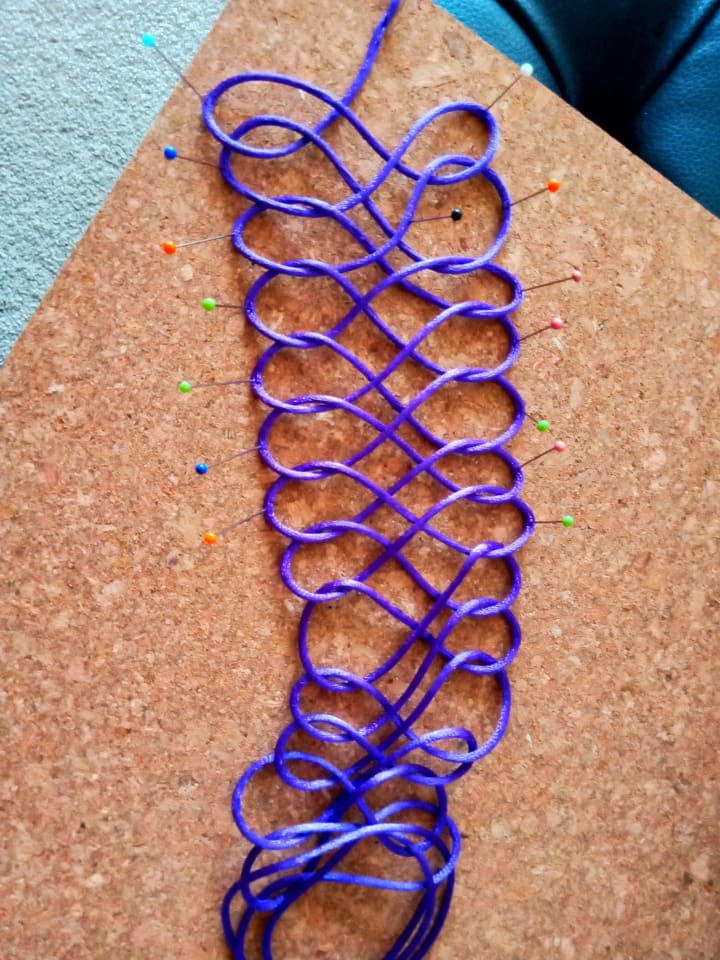
Is there a deep message about treasuring time and art and cultural heritage, and learning to trust small mishaps of the creative process, in the musings above?
Well... not consciously. These are just thoughts I had when I decided to put a solid effort into learning ornamental knots this year (or perhaps it's all a subconscious attempt to make myself feel better about continual failure at knitting - I mean, even the two words sound similar).
I love a lot of things about knotting, and the main one is directly related to the delicacy of working on many strands of cord at the same time and watching some semblance of a design emerge.
I encourage you to check out knotting as well!
About the Creator
The Hidden Truth About Construction Manager Secrets Most Professionals Never Share
Construction projects look organized from the outside. Buildings rise, teams work, and schedules appear clear. Yet behind every project, there are decisions and strategies that many people never see. Experienced industry leaders often rely on methods rarely discussed openly. These hidden ideas are often called construction manager secrets. They are the lessons learned from years of managing teams, budgets, and deadlines. Construction managers must balance many responsibilities simultaneously. They handle workers, suppliers, safety rules, and client expectations. The job requires both leadership and careful planning. While many guides explain the basics of construction management, they often miss the deeper realities of the work. Top managers know that success comes from experience and practical knowledge. They understand how to avoid costly mistakes and keep projects moving forward. These insights shape how great managers lead their teams and deliver successful projects.
By Paul Wiedmaier3 days ago in Families




Comments
There are no comments for this story
Be the first to respond and start the conversation.