
What Justifies the Importance of Electronic Health Records?
Importance of Electronic Health Records
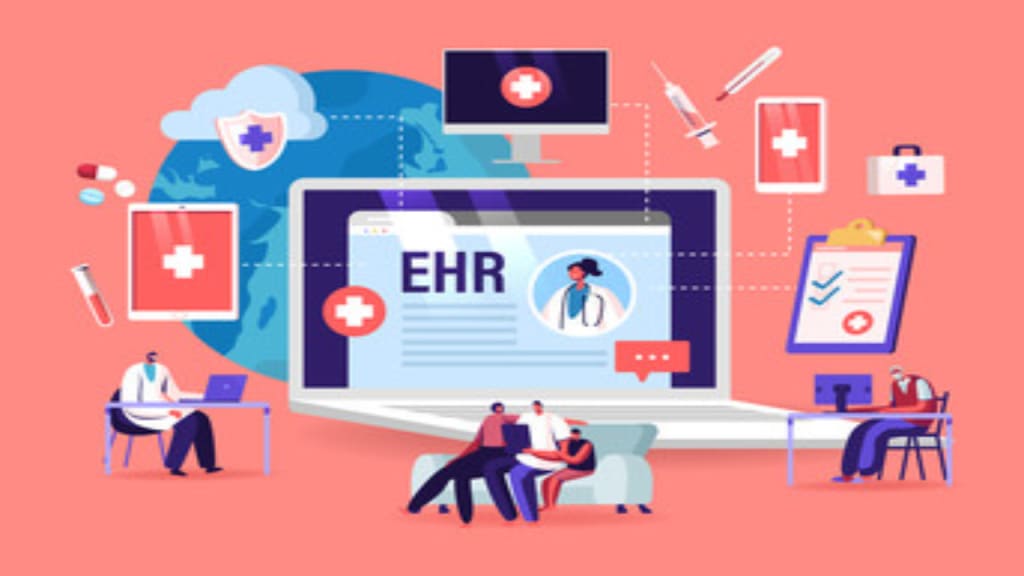
Electronic health records are essentially a digital duplicate of a physical medical chart. We'll now examine "why are electronic health records software important. Let's talk about why electronic medical records are so crucial. Realizing the promise of this technology necessitates a variety of activities for the collection, handling, and distribution of digital health information. As a result, this information can assist with decisions and medical procedures. By obtaining records from other providers or previous patient encounters, data collection should ideally begin before a patient encounter. These details and others are updated when a patient speaks with a physician or nurse. As the connection progresses, new details, such as test results, images, and progress comments, are added. Electronic health records (EHR) may support making decisions. Drug allergies and drug interactions can detect through algorithms.
Present State of Electronic Health Records
The Health Information Technology for Economic and Clinical Health (HITECH) Act of 2009 included several federal incentives and regulatory requirements to encourage healthcare providers to use EHR systems. At that time, only 12.2 percent of acute care hospitals had access to even the most basic EHR software. Less than five years later, over 80% of them now have an EHR system. By 2017, 96% of hospitals and 86 % of physician offices would use them.
Medi EMR is becoming the main method for transferring information between healthcare networks. Thanks to the information they make available and the ease with which each healthcare provider involved in a patient's care can access it. Medical professionals can offer deeper care when put into place and managed well. Opening a patient's file allows a doctor to swiftly assess a diagnosis, learn the outcomes of the tests, and maintain track of the patient's prescription history, thereby minimizing confusion and duplication. Most importantly, patients have access to their medical records, which enables them to keep up with their care and treatment schedules.
How essential are electronic health records?
Your medical team is aware of the importance of your medical records. The electronic health record (EHR) software is to thank for this. Let's examine the significance of electronic health records.
EHRs improve Care Quality
EHR makes it easier for physicians and patients to communicate more effectively, giving doctors access to patient histories and previous treatments. By promoting enhanced communication, EHR improves understanding among professionals from different disciplines, including doctors, nurses, and therapists. Electronic health records enable them to perform more efficiently by providing sufficient patient information. Healthcare professionals may improve patient care and make informed decisions with an EHR.
EHRs Promote Patient Security
Health records are kept electronically the record-request process is made simpler by EHR, which also improves patient safety procedures. The doctors contend that access to a patient's medical history, surgical notes, data from previous operations, and examination specifics can help prevent mistakes and advance patient safety. Also, the ability to create incident reports following mishaps and injuries encourages the culture of safety for continued advancements based on the event reports.
Medical errors are less likely when patients are alert and notifies to take the proper medication at the right time. It is possible to recognize medical errors as they happen and pinpoint their root cause to stop further blunders. EHR notifications aid in preventing mistakes like incorrect medicine doses and treatment-related operations.
EHRs offer data analysis for studies whose findings might be applied to improve patient safety. Participants generally concurred that the EHR's reminders, notifications, and alerts improve patient safety. EHR can offer anticipatory alerts and notifications to further improve safety because of improvements in data analytics.
An improvement in compatibility
In a perfect world, every EHR system would have seamless connectivity with other systems. Facilitating easy access to records from any location and at any time, but only for approved purposes to adhere to HIPAA regulations.
EHR systems must be able to communicate with one another using a standard vocabulary that is easy to understand, just as it is important to speak the same language as the person you are speaking with. In addition to reducing the time spent looking for paperwork during patient appointments and improving the quality of medical care, this preserves the accuracy of patient data.
Incorporating telemedicine
The COVID-19 epidemic has sparked a revolution in telemedicine. Many insurance companies and hospitals permit or even encourage remote patient-physician exchanges. The gap between patients and their medical providers can be closed by implementing telehealth integration. For instance, a doctor can attend to a patient in a remote rural area. Effectively allowing remote consultation inside the electronic health record system. A doctor can currently examine a patient through video conference, but EHR integration will make collecting and recording information about remote consultations easier.
EHR facilitates better clinical judgment
Thus, why are electronic health records important? Because the software for these data gives healthcare choices knowledge and context.
Many doctors view the electronic record as a tool to support the professional judgment that the right information reaches the right person, enabling the physician to decide on the best course of action for the patient.
More Effective Patient Engagement
Patient access to their EHR data via web portals is one possible strategy for improving patient engagement. EHR data access and electronic communication are highly desired by patients and those who care for them. The main argument in favor of the significance of portal utilization is its capacity to raise patient happiness, convenience, and self-management. This is also true of the incredibly high degree of patient interest.
They can quickly create a treatment plan with the extensive information provided by EHRs. The EHR system has made the clinical flow quicker and more comfortable.
Electronic health records alter lives by reducing risks, enabling physicians to respond rapidly to situations, and adjusting care to each patient’s individual needs. They can now keep track of previous medical data. There are many benefits to using EHRs. The system can help doctors in several ways: quicker care delivery, better system control, and faster diagnosis and treatment.
Conclusion
The capacity of an EHR to safely and efficiently exchange patient data with other EHRs and healthcare providers is essential to its efficacy. We at Medi EMR are here to help you give patients better care. We know the positive influence that health technology may have on patient outcomes and administrative administration because we have first-hand experience working on digitization projects. Improving corporate efficiency is our primary goal, along with promoting usability and accessibility for people who deserve a user-friendly solution.
About the Creator
Keep reading
More stories from jenifer skys and writers in Families and other communities.
EHR Software and Health Information Technology
An electronic health record (EHR) is a digital or electronic rendition of a normal patient medical file that, by definition, incorporates all aspects of a patient's general health and tracks them over time in the healthcare system. Although an electronic health records software (EHR) was first established in the 1970s, it wasn't until recently that EHRs became widely used. Electronic health records are increasingly widely used in healthcare systems, allowing individuals to instantly access their medical history and give them more control over their care. All patient records are provided in a readily accessible area that is safe and secure in the electronic health record, making it available to patients and professionals at all times. The electronic health record gives healthcare facilities a special way to manage patient records, enabling them to do away with the paper records that have been a major source of issues for so long.
By jenifer skys3 years ago in Education
The Shadow in the Screen: Why Your Child’s Identity is the New Gold for AI Hackers
I remember the first time I saw it. A photo of my niece, the one I had taken at her fifth birthday party, appearing on a profile that didn’t belong to anyone in our family. The name was different. The location was halfway across the world. But the smile was unmistakably hers.
By Alex Sterling 7 days ago in Families



Comments
There are no comments for this story
Be the first to respond and start the conversation.