
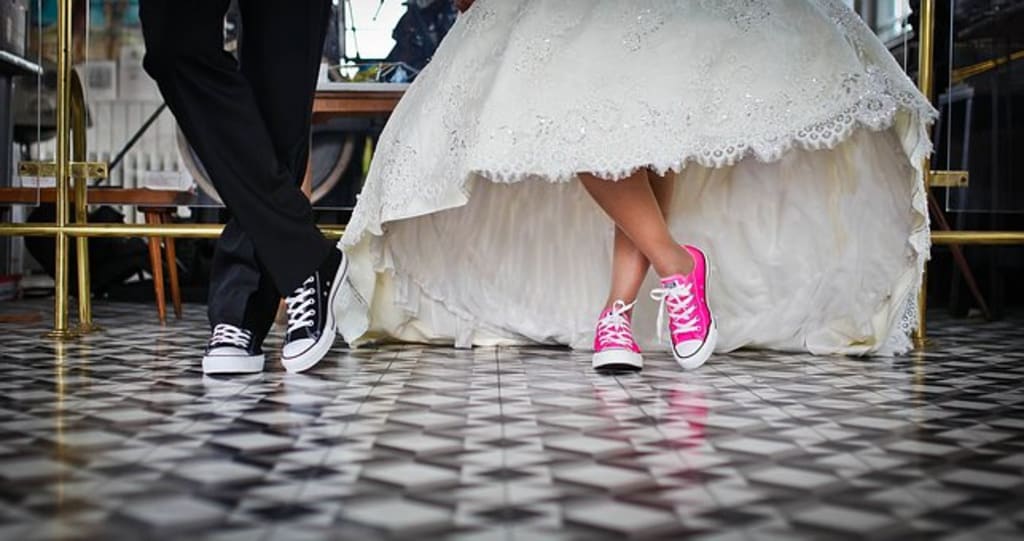
Wedding dresses are traditionally worn by brides during their wedding ceremony. They can come in a variety of styles, including white, off-white, and other colors, and are typically made from materials like silk, satin, and lace. Some popular styles include A-line, ball gown, and mermaid. Many brides choose to personalize their dress with elements like beading, embroidery, or a unique back or neckline. It is important for brides to consider their body shape, venue, and theme when selecting a wedding dress.
• Empire waist: This style features a high waistline that sits just below the bust, creating a long and flowing silhouette.
• Sheath: A slim, form-fitting dress that follows the natural shape of the body.
• Trumpet: This style is similar to a mermaid dress but with a flared skirt that begins at the knee.
• High-low: A dress with a shorter front hemline and a longer back hemline, giving the illusion of a train without the added weight and bulk.
• Boho: A bohemian style wedding dress often features relaxed, flowy fabrics and unique embellishments such as lace, embroidery or fringe.
• Beach: A light, airy dress that is perfect for a beach wedding, usually made of lightweight fabrics such as chiffon, linen, or cotton.
• Short: Short wedding dresses are becoming more and more popular, perfect for a more casual or non-traditional ceremony.
• Plus-size: plus-size wedding dress are designed to flatter a curvy figure, with corseted bodices, A-line skirts, and empire waists.
• Colorful: Some brides choose to break from tradition and wear a wedding dress in a color other than white. Popular choices include blush pink, champagne, and even black.
• Ballerina: A style of dress that features a full skirt that flares out from the waist, resembling a tutu worn by ballerinas.
• Asymmetrical: A dress with a hemline that is not symmetrical, where one side is longer than the other.
• Two-piece: A dress that consists of a top and a separate skirt, allowing for more versatility and the ability to mix and match different pieces.
• Off-shoulder: A dress with straps or sleeves that sit just off the shoulders, revealing the collarbone.
• Halter: A dress with a neckline that wraps around the back of the neck, leaving the shoulders and upper arms exposed.
• Cap sleeve: A dress with sleeves that are short, covering only the top of the shoulder.
• Strapless: A dress without straps or sleeves, exposing the shoulders and upper arms.
• Wrap: A dress that is designed to be wrapped around the body and fastened with a tie or a button.
• Detachable: A dress that has a removable skirt, train, or sleeves, for a more versatile look.
• Vintage: A dress that is inspired by styles from a previous era, such as the 1920s, 1930s, or 1950s.
• Lace: A dress made with intricate lace patterns, adding a romantic and elegant touch.
• Tiered: A dress with multiple layers or tiers of fabric, creating a full and voluminous skirt.
• Cold-shoulder: A dress with straps or sleeves that sit just off the shoulders, similar to off-shoulder but with a small cutout on the shoulder.
• Cut-out: A dress with cutouts on the bodice or back, revealing a hint of skin.
• Illusion: A dress with sheer or transparent fabric that gives the illusion of a bare neckline, back, or sleeves.
• Keyhole: A dress with a small cutout on the bodice, resembling a keyhole shape.
• Plunging: A dress with a low and deep neckline, revealing a significant amount of cleavage.
• Scalloped: A dress with scalloped or curved edges on the neckline, hemline, or sleeves.
• One-shoulder: A dress with one strap or sleeve, leaving one shoulder exposed.
• Peplum: A dress with an added flounce or ruffle at the waistline, creating a more defined waistline.
Conclusion
In conclusion, there are many different styles of wedding dresses to choose from, each with their own unique features and designs. Some popular styles include A-line, ball gown, and mermaid, while more unique styles include empire waist, two-piece, and asymmetrical. Brides can also choose to personalize their dress with elements like beading, embroidery, or a unique back or neckline. With so many options to choose from, it is important for brides to consider their body shape, venue, and theme when selecting a wedding dress.
About the Creator
Rudhra
I'm a Freelancer and Technical Support person which create contents on Nature and living lifestyle.
He Saved My Life With His Kidney… Then Asked Me to Pay Him Back
I still remember the day the doctor told me my kidneys were failing. The room felt smaller, the air heavier, and every word that followed sounded distant, like it was meant for someone else. Dialysis, waiting lists, uncertainty—it all came crashing down at once. I was terrified, not just of dying, but of what my life would become.
By Lukáš Hrdlička4 days ago in Families
Flower Bloom 369
FLOWER Bloom 2/25/26 Wednesday By Mariann Carroll Karen had been with Tony for 7 years. Tony started acting strangely after her surgery. He would mow the lawn in the rain and be on his cellphone. He started pushing Karen away. Tony came clean about seeing someone. Karen moved out two months later. Karen moved in with a friend. She felt betrayed.
By Mariann Carroll4 days ago in Fiction



Comments
There are no comments for this story
Be the first to respond and start the conversation.