
Wanted: Good Screen Writer for Teen Reality Shows about Drug Abuse on Social Media
Recent studies show that 75% of teenagers seeing photos on social networking sites of other young people smoking weed or drinking alcohol encourages them to experiment in the same way.

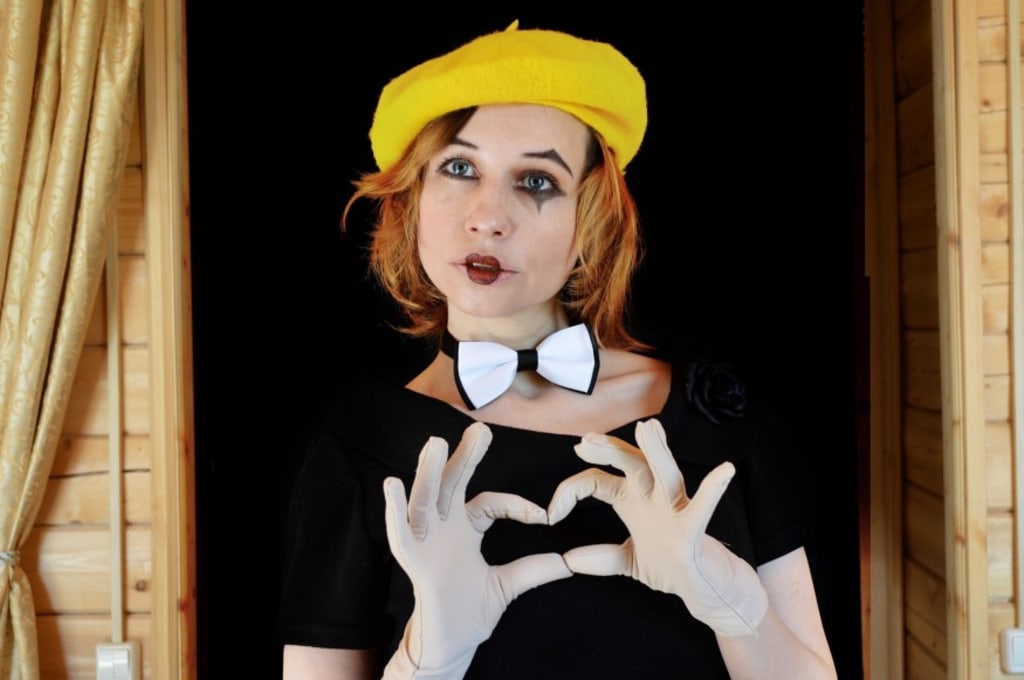
It breaks my teacher's heart to learn from a mother that her daughter, and one of my brightest students who loved Shakespeare and wanted t0 pursue fashion and theatre, was recently committed to a juvenile drug rehabilitation facility.
All her mother could say is, "I think the drugs ruined her ambitions...started so young with marijuana like her friends and nothing I said could make her stop."
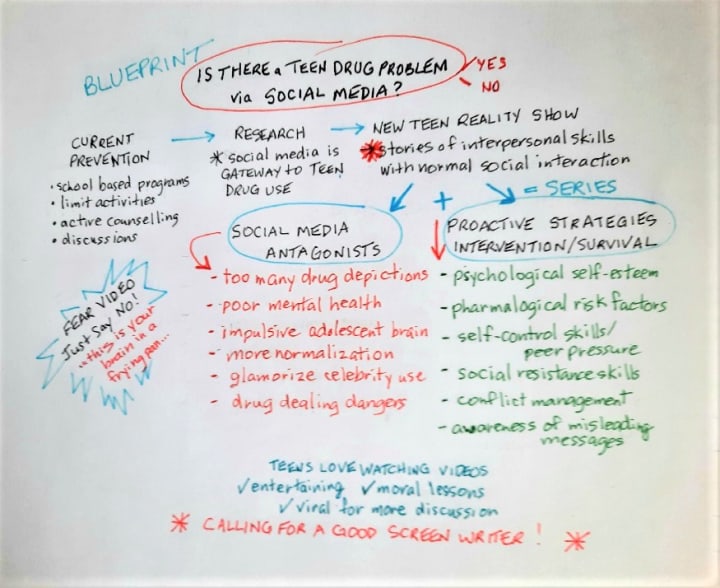
It’s a simple question: Do you think there is a Teen Drug Problem via Social Media? Yes or No? Can we do anything about it? Why not harness the teen’s greatest watched medium to more than to entertain but also to interact and educate?
If you say “Yes” perhaps we need to try harder as a society to find a solution for more and more teenagers at risk. We do not need more research to know that social media sites are only growing in popularity and number connecting to more drug abuse. There is nothing normative about teenagers underestimating the risks of smoking, drinking, and the use of certain drugs when their brain’s rational deductive reasoning does not develop until their early twenties.
Currently there doesn't seem to be much on a continuous agenda to reduce the risk. Of course, parents are concerned but there seems to be only a few things by which to mitigate these risks. Some possible ways are:
- Limit time online by monitoring internet use
- Practice open communication about dangers of drug and alcohol abuse
- Pay attention to behavioral changes and address problems early
What teens really need is to go beyond what adults tell them and become actively involved as peer spokespeople and practice scenarios where they can learn to say no. They need to relate to stories of interpersonal skills with normal social interaction over long term.
What more inclusive way, other than first person participation, to watch and relate to a TV reality show about teens, their struggles and redemptions on their favorite mediums?
Teens love watching videos as streamed on smartphones, tablets and laptops. The average tween, ages 8 to 12 for the purposes of this survey, spent four hours and 44 minutes with entertainment media on digital devices each day. For teens, it often could be seven hours and 22 minutes. That did not include the time using devices for homework, reading books or listening to music.
Just imagine what a platform like this can show a reality sitcom that tells a responsible story about the negatives of social media and positive interactions with a star character and his friends, family, school and community.
Each new story can focus on a specific social media antagonist and a proactive strategy all played within a social framework to learn and share with others. Imagine teen viewers as fans that begin to interact with compliments and complaints as they readily discuss each episode.
Suddenly, there are new affirmations, texting and talking about how to win against this social media assault against our young people heard around the country.
For example, one show can deal with an example of a drug depiction on Social Media. The main character (male or female) sets the challenge to make a list of times he sees drugs being used online … movies, music videos, games, etc. His friends discuss the findings with reference to their feelings about what images attract, what repels and best ways they can say “No” if in similar situations. Perhaps, a mystery element can be added by an unknown online druggie who texts them as a warning to beware. Who is it? Why?
Another show can deal with how celebrities are paid to promote drug and alcohol use on social media sites. The main character (male or female) talks with her friend who is all excited about her latest Instagram crush's clothes, make-up, her pet lizard, her parties where her popular friends smoke e-cigarettes ... "any flavours you want... no harm ... no drugs. My best friends have fun experimenting."
The mother overhears and calls a doctor friend to explain with video the dangers of e-cigarettes with negative stories of abuse. Her friend wins a contest to get a chance to video chat with her celebrity crush who explains how companies endorse her to advertise with music, attractive models and expensive looking studio sets.
"We're just digital TV ads who get paid to act like we like the product. Personally I don't smoke ... bad for older wrinkles they say."
Here's the point. If celebrity influencers can market to use a certain product, then there are so many situations for live actors to portray that substance abuse of any kind is not considered acceptable and is particular dangerous by highlighting strong anti-drug social norms and beliefs. Over and over they must be heard, even vicariously.
Several topics for shows are described in the article:
How to Script Teen Reality Series with Social Media Antagonists: Action
As a final word, Dr. Michael Rich, an associate professor of pediatrics at Harvard Medical School, explains the dire situation this way, “The technology isn’t the problem, we’re the problem. It’s the interactivity that draws some kids in … We are watching four manifestations of what are problematic interactive media use, including gaming (mostly boys), and social media (mostly girls). And then there is pornography, “which is touching kids younger and more profoundly than anyone imagines and finally there is “information bingeing,” with kids “disappearing down a rabbit warren of hot links.”
Perhaps it's time to turn teen's interactivity into an excellent drama series about social media struggles, regrets and survival strategies.
Perhaps, I'm missing the boat and there already is a TV / Netflix series. That would be awesome.
Annemarie Berukoff
About the Creator
Annemarie Berukoff
Experience begets Wisdom: teacher / author 4 e-books / activist re education, family, social media, ecology re eco-fiction, cultural values. Big Picture Lessons are best ways to learn re no missing details. HelpfulMindstreamforChanges.com
Keep reading
More stories from Annemarie Berukoff and writers in Families and other communities.
How to Script Teen Reality Series with Social Media Antagonists … Action!
Social media sites are only growing in popularity especially with teenagers with subsequent exposure to substance abuse, alcohol or drugs. They are the most at risk if only because they are the most active on the internet who might spend hours a day scrolling through pictures or making their next video hoping it may go viral.
By Annemarie Berukoff4 years ago in Families
Wise~Guys
— Look Behind what's in Front of You ~ Make Good Choices — Hey, So how you Doin'..! Made~Men — Mobster Movies romanticise a distinctive, elegant appearance, impeccable attire style, along with the 'Families' expressive lingo. Making their 'Bones' gave them Panache — with vintage fedoras, tailored pin-striped suits, mirror-polished wing-tip shoes adorned with tassels; with their 'Gun Moll' gorgeous dates on their arms.
By Jay Kantor19 days ago in Families
Filial Piety: Appreciating the Cycle of Asian Justice
Filial Piety is the central part of a Confucian value system concerned with the need to produce beneficial patterns from children who are expected to care for their parents. According to Confucius, a variety of virtues are needed to maintain a strong society: filial piety, righteousness, love, loyalty, sincerity, justice, tranquility, moderation, and harmony.
By WILD WAYNE : The Dragon King3 days ago in Families




Comments
There are no comments for this story
Be the first to respond and start the conversation.