
Virtual Medical Scribe Services: Redefining Clinical Efficiency
Virtual Medical Scribe Services for Efficient Healthcare

Introduction
The modern healthcare system demands both speed and accuracy, yet physicians often find themselves overwhelmed with endless charting, note-taking, and data entry. This administrative load consumes valuable hours that could otherwise be spent caring for patients. That’s where virtual medical scribe services step in, transforming documentation into a streamlined, efficient process. By using an online medical scribe, healthcare professionals can maintain precise patient records without sacrificing face-to-face interactions.
Unlike traditional models, medical scribe services today are digital-first, secure, and adaptable. They not only reduce workloads but also help improve compliance, minimize errors, and increase provider satisfaction.
What Is a Virtual Medical Scribe?
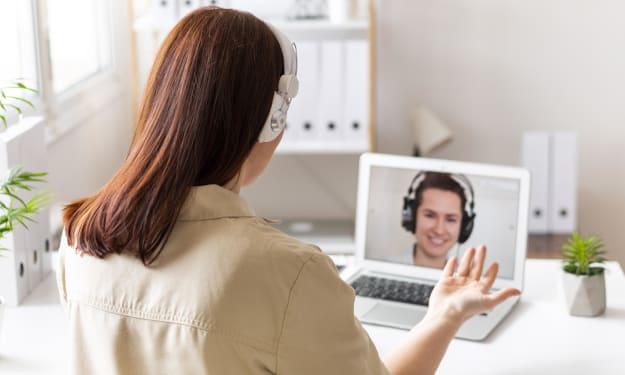
A virtual medical scribe is a trained remote assistant who joins patient encounters via secure audio or video connection. Their role is to listen in real time and input clinical notes directly into the electronic health record (EHR). Unlike transcription services that simply convert recordings, scribes actively capture context, patient history, diagnoses, and treatment plans—resulting in accurate, structured records.
In short, a virtual medical scribe functions as the physician’s digital partner in documentation.
Advantages of Virtual Medical Scribe Services
Time-Saving
Providers save hours each day by delegating EHR tasks to a virtual medical scribe, allowing them to attend to more patients.
Better Patient Experience
Patients prefer eye contact and conversation over watching their doctor type. With medical scribe services, physicians can focus entirely on the consultation.
Scalable for Any Practice
Whether it’s a single physician clinic or a multi-specialty hospital, virtual medical scribe services scale easily without physical space limitations.
24/7 Support
An online medical scribe can cover multiple time zones, providing flexibility for urgent care centers or after-hours telehealth practices.
Virtual vs. Traditional Medical Scribe: A Comparison
Feature Traditional Scribe (Onsite) Virtual Medical Scribe Services
Location Inside exam room Remote, HIPAA-compliant platforms
Cost Higher due to office overhead More affordable and subscription-based
Flexibility Limited to clinic hours 24/7 coverage, global workforce
Training & Specialization General, depends on staff Specialized scribes for multiple fields
EHR Integration Manual adjustments may be needed Seamless integration with digital records
Patient Comfort Some patients may feel observed Less intrusive, invisible to the patient
Who Benefits Most from Online Medical Scribe Services?
Primary Care Physicians – Reduce daily charting burden while maintaining continuity of care.
Specialists – Cardiologists, orthopedists, and psychiatrists benefit from tailored documentation.
Telehealth Providers – Virtual workflows make online medical scribe support a perfect match for remote visits.
Mental Health Practices – Secure, private scribing helps therapists and psychiatrists focus entirely on clients.
How Virtual Medical Scribes Work Step by Step
Connection Setup – The virtual medical scribe joins the physician through a secure online platform.
Real-Time Documentation – Notes are taken during the consultation, including symptoms, history, and physician observations.
EHR Integration – Data is entered directly into the patient’s chart.
Review & Approval – The provider reviews the notes and signs off before finalizing records.
Key Features of Modern Medical Scribe Services
HIPAA-compliant data handling for patient safety.
Custom templates tailored to different specialties.
AI-assisted workflows for faster data processing.
Bilingual scribes for diverse patient populations.
These features make virtual medical scribe services a long-term investment in efficiency and compliance.
Future of Virtual Medical Scribes
As AI and natural language processing (NLP) improve, medical scribe services will evolve into even smarter hybrid systems. Physicians may soon work with scribes who combine human accuracy with AI speed, creating a balance between automation and personal expertise.
FAQs
Q1. How does a virtual medical scribe differ from an online transcriptionist?
A virtual medical scribe captures details in real time and structures them into EHRs, while transcriptionists work only with recorded audio.
Q2. Is it safe to use online medical scribe services?
Yes. Reputable providers ensure virtual medical scribe services meet HIPAA and other compliance standards.
Q3. Can virtual medical scribe services be used in mental health practices?
Absolutely. They help psychiatrists and therapists maintain focus on patient dialogue while managing confidential notes securely.
Q4. Are online medical scribes affordable for small practices?
Yes. Many medical scribe services offer flexible packages that are far more cost-effective than in-house staff.
Q5. Do virtual scribes require special software?
Most providers integrate directly with popular EHR systems, so no additional software is usually required.
Conclusion
The future of healthcare lies in balancing technology with personal care. By adopting virtual medical scribe services, doctors can reduce burnout, enhance accuracy, and improve patient experiences. Whether through a flexible online medical scribe or specialized medical scribe services, providers gain the freedom to focus on what they do best—delivering exceptional medical care.
About the Creator
Keep reading
More stories from Frank j Monroe and writers in Families and other communities.
The Future of Healthcare with Virtual Medical Scribes
Introduction Healthcare providers are constantly searching for ways to reduce burnout, improve efficiency, and enhance patient care. One of the most effective solutions in recent years is the medical virtual scribe. By handling documentation tasks remotely, a virtual medical scribe allows physicians to focus entirely on patient interaction. Whether you are a solo practitioner or part of a large medical group, virtual medical scribe services are changing the way healthcare is delivered.
By Frank j Monroe5 months ago in Families
Wise~Guys
— Look Behind what's in Front of You ~ Make Good Choices — Hey, So how you Doin'..! Made~Men — Mobster Movies romanticise a distinctive, elegant appearance, impeccable attire style, along with the 'Families' expressive lingo. Making their 'Bones' gave them Panache — with vintage fedoras, tailored pin-striped suits, mirror-polished wing-tip shoes adorned with tassels; with their 'Gun Moll' gorgeous dates on their arms.
By Jay Kantor19 days ago in Families
The Lost Mind
I stand by the door, staring at Reema Aunty taking care of my Dadi**. Dadi can’t bathe herself anymore, Reema Aunty bathes her. Right now, she is combing Dadi’s hair, her once beautiful long hair is now short and full of white strands. Dadi peeps over and smiles, her eyes crinkling at the corners.
By Poonam Desai4 days ago in Families
My New Book is Finally Here
My poetry collection Beautiful and Brutal Things is done. It's actually done and finally published over 270 pages. Over a year of my life went into this book. More than a year, really. Long days at my computer, sometimes seven days a week because I couldn't stop even when I probably should have. Then two months of editing that felt harder than the writing itself. But it's finished, and I'm still standing, and the book is real.
By Tim Carmichael3 days ago in BookClub



Comments
There are no comments for this story
Be the first to respond and start the conversation.