
U.S. Housing and Homelessness Crisis and Its Impact on Single Parents
A closer look into today's homelessness


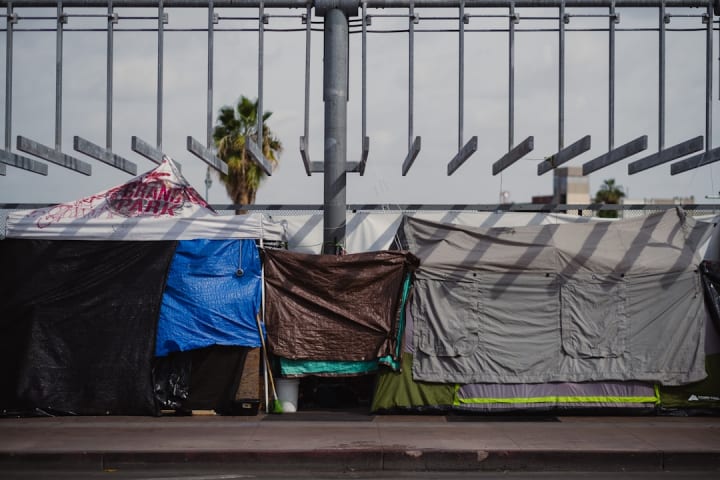
Homelessness has surged in recent years, reaching unprecedented levels. HUD’s 2024 report found the overall homeless population rose 18% from 2023, driven largely by families with children. Between 2023 and 2024, there were 39% more people in families experiencing homelessness on any given night. Nearly 150,000 children were homeless on a single night in 2024, a 33% jump in one year. All categories of homelessness (unsheltered, chronic, etc.) hit record highs in 2024 except veterans, who alone saw an 8% decline due to sustained federal efforts. Older adults (age 55+) now make up one in five homeless people, and nearly half of homeless seniors sleep rough. Black Americans remain disproportionately affected: although only 12% of the U.S. population, they are 32% of those experiencing homelessness. In short, homelessness is a national crisis impacting a broad swath of society – families, seniors, people with disabilities, and communities of color – exacerbated by stagnating incomes, soaring rents, and an underfunded safety net.
Who Is Affected and Why
Homelessness today most often strikes the poor and marginalized. The fastest-growing segment is families with children, especially single-parent households. Single mothers in particular face stark economic insecurity: they earn far less than married couples or single fathers, and face poverty rates around 28% (vs. 5% for married parents). Millions of children live in single-parent families, and those children have much higher odds of living in poverty and housing instability. One expert notes that “children in single-parent families may also deal with … health issues linked to parental stress and instability”. The failure of welfare and child-support systems has left many low-income parents unable to cover housing costs. For example, less than one-quarter of single-mother families actually receive any child support, and federal programs like TANF have strict eligibility that often bars needy working parents from aid. In practice, many single parents end up caught in a terrible bind: without affordable childcare, they cannot sustain regular work, and without steady income they cannot keep a roof over their children’s heads. One study found that one in five single mothers who lost childcare during the pandemic stopped working entirely – twice the rate of other parents. In short, single parents with young children are among the most vulnerable to eviction and homelessness when support systems fail.
Other high-risk groups include veterans (who thankfully saw declines thanks to targeted programs), people with mental illness or addiction, and victims of domestic violence. But even those with jobs can struggle: today’s labor market offers many jobs, yet wages for low-income workers have stagnated while housing costs have exploded. Millions of “working poor” renters spend well over half their pay on rent. As the Homelessness Law Center observes, stagnated wages and rising rents amid a weak safety net “have left millions of people homeless or at-risk”. In fact, a leading housing analyst notes that homelessness in America can largely be traced to one root cause: “the gap between incomes and rent.” She adds that rental assistance programs - which effectively close that gap - are “proven highly effective at both rehousing people experiencing homelessness and preventing future homelessness”. Yet federal housing aid is chronically underfunded: CBPP reports that only one in five eligible poor families actually receives a housing voucher, while just one in six eligible children gets subsidized child care. The shortfall of affordable homes is staggering: the National Low Income Housing Coalition finds a nationwide shortage of 7.1 million rental homes affordable to the poorest Americans.
Economic Forces Driving the Crisis
In recent decades, housing costs have climbed far faster than most incomes. According to the NLIHC, three-quarters of extremely low-income renters are “severely cost-burdened,” paying more than half their income in rent. Middle-class wages have barely budged, while rents in many cities jumped double digits. The result is a widening affordability gap: average apartment rents now exceed what low-wage workers can afford. This gap is the primary driver of homelessness, says budget-policy expert Anna Bailey: “we can solve homelessness if we address its primary driver: the gap between incomes and rent”. In practice, that means expanding income supports (tax credits, welfare), boosting wages, and adding rental subsidies.
Funding shortages make things worse. Unlike Medicaid or SNAP, housing and child-care assistance are not entitlements: their funding is capped yearly. As one analysis notes, federal child care and rental assistance programs “are not entitlement programs- they do not serve everyone who applies” because Congress controls the funding levels. In practice, this means massive waiting lists: a CBPP report found that among 50 major housing agencies, only two have voucher wait times under a year, and some families wait up to eight years to actually receive a housing voucher. Many public housing authorities temporarily close their waiting lists, leaving families nowhere to turn. Meanwhile, proposals to cut housing aid or limit SNAP/TANF loom every budget cycle. As NLIHC CEO Renee Willis warned, such proposals are “nothing short of attacks on our communities” given the existing “dire shortage of affordable housing.
In addition, restrictive land-use laws have limited new construction. Nationwide, the U.S. has only 37 affordable units for every 100 extremely low-income renters. In practice, this means there simply aren’t enough homes at the bottom end of the market. A coalition of Maryland housing advocates noted that their state- like many others- is “short more than 100,000 affordable homes,” making eviction a disaster for displaced families. In sum, a perfect storm of rising costs, stagnant incomes, and scarce aid has pushed millions to the brink.

Barriers in the System: Laws, Bureaucracy, and Discrimination
Legal and administrative hurdles further deepen the crisis. Many jurisdictions have enacted laws that effectively penalize homelessness. For example, local bans on camping, loitering or panhandling have proliferated in recent decades. The National Homelessness Law Center reports that hundreds of U.S. cities now punish people simply for sleeping on public streets or near storefronts – a reality it calls “punishing the presence of visibly homeless people in public space”. These laws force people into shelters or jails instead of addressing the housing shortage. On the flip side, even shelter space can be limited or hard to access, with long waits and strict rules that exclude many in need.
At the same time, programs that are designed to help low-income families are often underfunded or over-restrictive. As noted, only about 20% of those who qualify for housing vouchers get them .And for those who do get on waiting lists, the paperwork and requirements can be daunting. One CBPP analysis found that even after clearing years-long waits, families then endure further delays before housing opens up. Income rules are strict: many programs cut off assistance once even modest earnings are earned, creating a “cliff” that traps families in poverty. For instance, TANF (welfare) imposes work verifications and lifetime limits, leaving many single mothers “without economic security through employment or vital cash assistance”. Even Medicaid and SNAP have asset tests that exclude families with a few hundred extra dollars in savings. In effect, many struggling families fall into a bureaucratic crack: too poor to afford housing, yet unable to navigate or qualify for the complex aid system.
Systemic discrimination also plays a role. Studies show that Black and Native American renters are denied housing more often, and cities of color often have higher eviction rates. Redlining’s legacy means minorities are likelier to rent in neighborhoods with deteriorating housing stock and fewer social supports. Indeed, HUD data show Black Americans are “overrepresented” in homelessness statistics. Overburdened child-welfare and homeless services, often underfunded in poor neighborhoods, compound these disparities. In short, legal structures and administrative policies can inadvertently lock people into homelessness rather than help them out.

Single Parents and Children
Nothing illustrates the crisis more starkly than the struggles of single parents with young children. Facing low wages, child care crises, and scarce housing aid, many single mothers live one paycheck away from losing everything. Without child care, a parent cannot work regular hours, but without work, they cannot pay rent. As one report notes, child care and housing are “big expenses with too little help available” – only 1 in 6 eligible children receives federal child care assistance, and only 1 in 5 eligible families gets housing assistance. The result is heartbreaking: homeless shelters and motels full of mothers who work days and care for sick kids at night, with no stable home to raise them.
Program enrollment can be especially hard for single parents juggling job hunts and kids. For example, childcare subsidies often require tedious documentation and have long waiting lists. Even food assistance (SNAP) and Medicaid, though technically available, have reams of paperwork. A mother leaving an abusive partner may suddenly face homelessness, only to find shelters requiring counterproductive confidentiality or curfews that don’t fit her situation. In one anecdote (courtesy of homelessness advocates), a mother whose husband went to jail lost her only income and almost her home- a scenario repeated nationwide each year. et these are also stories of resilience. Many grassroots organizations (like The Drake House in Illinois) offer transitional housing to single mothers, and some states use HUD’s McKinney-Vento funds to help runaway or homeless youth. But on a systemic level, the failure to support working parents is acute. As one housing expert wrote, “homelessness among people in families with children…has skyrocketed” this year. Preventing such homelessness would require ensuring that no working mother is two missed paychecks away from the street, a goal far from reality today.

Solutions and Success Stories
Despite the crisis, experts emphasize that homelessness is solvable with political will. Diane Yentel of the National Low Income Housing Coalition describes homelessness as one of the country’s most urgent, tragic, and solvable crises. Evidence shows that Housing First strategies, giving people permanent housing before requiring sobriety or employment, dramatically cut homelessness. For example, the Biden administration’s House America initiative has helped over 140,000 people exit homelessness through Housing First and added tens of thousands of affordable homes. HUD Secretary Marcia Fudge lauds it as proof that communities have stepped up to get people off the streets and into homes. With sufficient resources, these methods can be scaled nationally. A Texas nonprofit leader stated that we know how to end homelessness by aligning rent costs with incomes and ensuring vouchers and supports reach everyone in need.
Internationally, there are inspiring examples. Finland, for decades plagued by homelessness like the U.S., embarked on an aggressive Housing First program. A broad coalition of national and local governments, non-profits, and construction unions built thousands of apartments and converted shelters into permanent homes. The result was that Helsinki’s emergency shelter beds fell from over 2,100 in 1985 to just 52 by 2016, while units for formerly homeless people increased tenfold. In effect, Finland has virtually ended homelessness through housing subsidies, strong tenant protections, and generous income support that covers any rent the low-income cannot afford. American advocates cite Finland as evidence that homelessness is not inevitable but a policy choice.
Closer to home, certain U.S. cities and states have achieved measurable success. Utah’s Housing First programs in the 2010s dramatically reduced chronic homelessness, especially among veterans, by coupling housing with services. More recently, coordinated national efforts during the COVID-19 pandemic, like ARPA-funded rental assistance and expanded tax credits, temporarily lowered family homelessness rates. Some cities now guarantee legal counsel to tenants facing eviction, cutting eviction numbers by over half in pilot programs. These examples show that with commitment and smart policy, gains are possible. As one homelessness advocate stated, we have the evidence and proven solutions; what is needed is bipartisan leadership and scale.

What Must Be Done
To reverse the crisis, a comprehensive, multi-pronged response is needed. Key actions include:
Massively expand affordable housing supply. This means new public and subsidized housing, as well as incentives or zoning reform to get private developers building more low-cost units. Congress must fully fund the National Housing Trust Fund and Low-Income Housing Tax Credit to cover the seven-million-unit shortfall. States and cities can mandate inclusionary zoning or fund housing trust funds.
Scale up rental assistance. Only one in four families who deserve a voucher have one. Funding for HUD’s Housing Choice Voucher program should be increased by billions so that everyone eligible can get aid. Administrative reforms can eliminate years-long waits and streamline eligibility. In practice, this means opening vouchers to all needy families and automating renewals, preventing thousands from falling through the cracks.
Invest in housing-first homeless programs. Every community should adopt Housing First: immediately house chronically homeless people and provide health and employment supports. Federal matching grants, like House America, should be expanded. VA Secretary Denis McDonough says of the veterans program that this is great progress, but it is just the beginning, and he pledges never to rest until the phrase homeless veteran is a thing of the past. That spirit must extend to all populations.
Support working families. Strengthen the safety net so that parents can work without risking homelessness. Raise the minimum wage; estimates suggest a $15/hour minimum would lift millions out of poverty. Restore and extend child tax credits and child care subsidies so families are not torn between rent and diapers. Reform TANF to remove arbitrary time limits and work requirements. Universal pre-K and expanded subsidized childcare can keep single parents in jobs. Providing real support for families stabilizes housing and childcare and produces benefits for families and the country.
Protect vulnerable renters and end criminalization. Strengthen eviction protections, guaranteeing legal aid in every eviction, and enact rent control or tax credits where needed. End laws that punish homelessness, and instead invest in shelters and tiny-home villages. Housing justice advocates call for treating housing as a human right, not a privilege. After a DOJ statement in Bell v. Boise, some cities halted jailing people for sleeping outside when no shelter is available. This principle should be national: if no housing exists, homelessness should not be a crime.
Coordinate federal leadership. The federal government must lead a unified strategy. HUD Secretary Fudge emphasizes that housing is a basic right: everyone deserves a safe, stable place to call home. Congress should avoid cutting housing aid and instead enact the President’s agenda: permanent emergency rental assistance, fully refundable tax credits for renters, and ending subminimum wages for youth and disabled. Bipartisan commitment is essential.
These examples show that decisive action works. By scaling proven solutions, the U.S. can dramatically reduce and eventually end homelessness. It will require sustained funding, legal reforms, and a shift in priorities. As experts note, the tools are already known; now it is a matter of will. Homelessness is not an intractable problem, but a solvable one, and failing to act risks leaving a generation of children and families without safe homes.
References
American Progress. (2024, August 7). The economic status of single mothers [CAP analysis of CPS data].
Bailey, A. (2024, June 12). Policymakers can solve homelessness by scaling up proven solutions: Rental assistance and supportive services. Center on Budget and Policy Priorities.
Center for Law and Social Policy & Center on Budget and Policy Priorities. (2019, April 29). Child care and housing: Big expenses with too little help available.
Homelessness Law Center. (2021). Housing not handcuffs: Ending the criminalization of homelessness in U.S. cities.
HUD User. (2020). How Finland ended homelessness. Cityscape, 22(2), 77–92. U.S. Department of Housing and Urban Development.
U.S. Department of Housing & Urban Development. (2024). Annual homelessness assessment report to Congress: Part 1 – PIT estimates.
National Low Income Housing Coalition. (2025, March 13). The gap 2025: A shortage of affordable homes.
National Low Income Housing Coalition. (2023, January 30). Biden administration helps end homelessness for 140,000+ people using Housing First approach.
Narang, A. (2019, July 22). Families wait years for housing vouchers due to inadequate funding. Center on Budget and Policy Priorities.
Urban Institute. (2021). Policy levers to support single-mother economic mobility.
About the Creator
Wise~Guys
— Look Behind what's in Front of You ~ Make Good Choices — Hey, So how you Doin'..! Made~Men — Mobster Movies romanticise a distinctive, elegant appearance, impeccable attire style, along with the 'Families' expressive lingo. Making their 'Bones' gave them Panache — with vintage fedoras, tailored pin-striped suits, mirror-polished wing-tip shoes adorned with tassels; with their 'Gun Moll' gorgeous dates on their arms.
By Jay Kantor19 days ago in Families
Men who eat nuts tend to have better quality sperm
Peak Potency: How a Daily Nut Habit Elevates Male Sperm Quality Male fertility rates have dropped in recent years. Many couples struggle to conceive, and men often overlook their role in this challenge. Your diet can make a big difference here. Nuts stand out as a simple fix. They pack antioxidants and healthy fats that support better sperm quality. Think of them as fuel for your reproductive system. Studies show men who eat nuts regularly see real gains in sperm health. If you're planning a family or just want peak vitality, adding nuts could be your smart move.
By Story silver book 3 days ago in Families




Comments
There are no comments for this story
Be the first to respond and start the conversation.