
Toxic Mindsets in a Hispanic Family: Acknowledgment and Effort Can End Them
Analysis on I Am Not your Perfect Mexican Daughter

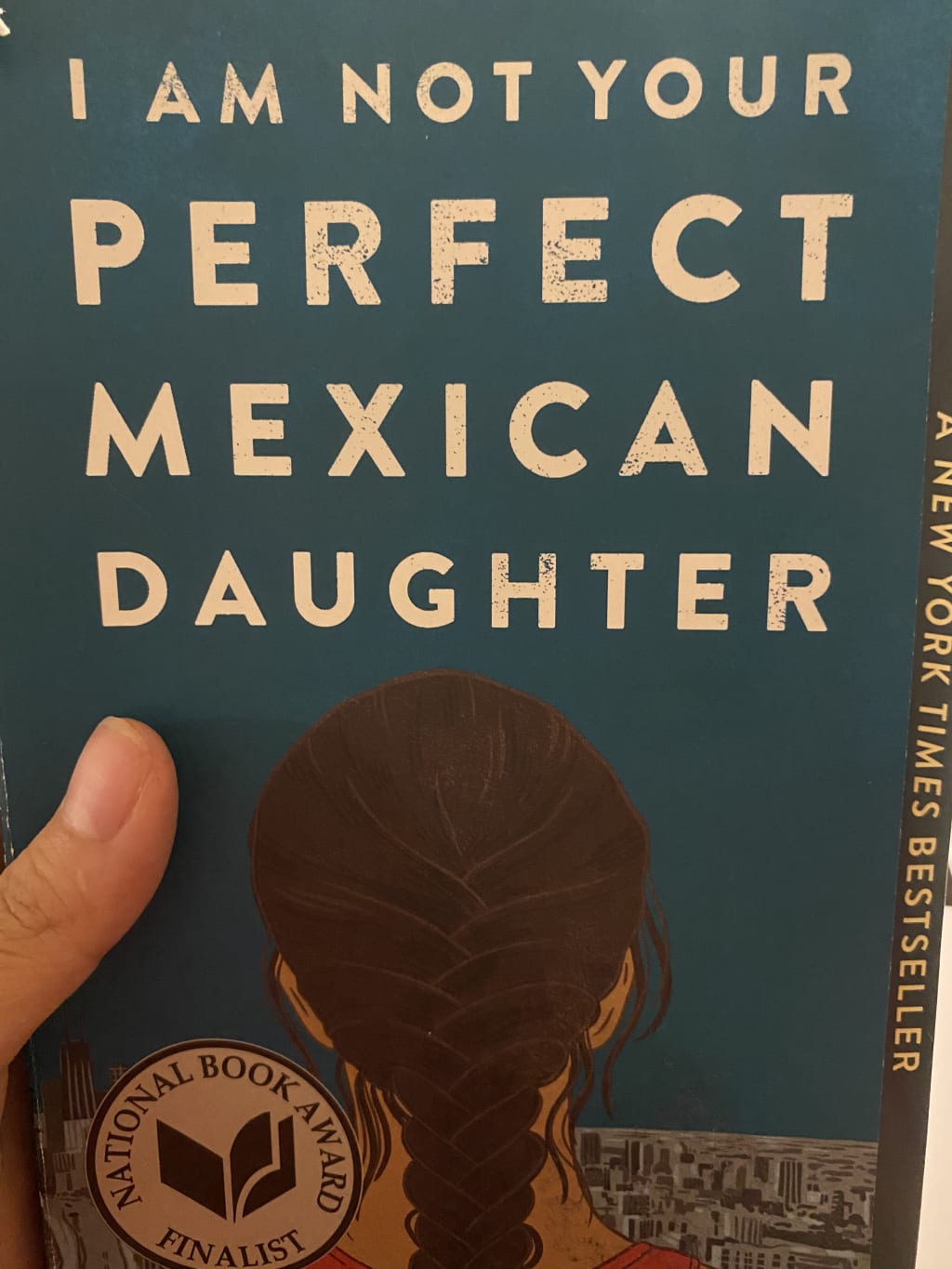
Sometimes, living in a Hispanic home can be too much to handle. In Hispanic culture, there may be toxic mindsets within family members. Some examples of these toxic mindsets would be parents telling their kids they have no right to privacy just because they are the parents and can take over, the husband expecting the wife to serve him in every way, girls being treated differently from boys, family members always having something negative to say, and being shamed for not having the same opinions on prominent issues such as abortion or education. In I am not your Perfect Mexican Daughter, by Erika L. Sánchez, readers get an insight into what Julia goes through since her mom never approves of her, this affect Julia deeply. She wants to be herself but being herself means being a disappointment to her mother. Toxic mindsets in Hispanic families need to end because it leads to a family falling apart. In order for toxicity in Hispanic households to end, there needs to be acknowledgement and effort.
Typically, grandmothers love their grandchildren, but in the case of two siblings, their grandmother was cruel to them, never apologising for the damage she caused them. “We were slaves” said the sister, explaining that their uncle never experienced suffering like they did. While the siblings were doing difficult labor or chores, the grandmother would clean the uncle’s room, spoiling him because he was her son. It was expected that they suffered because of a man in the family, but no, they suffered under their grandmother. This only proves that toxicity in Hispanic Culture can come from anyone. It may be that the grandmother suffered in her past, and she applied that suffering to other family members. This is like Julia’s mom in the story. She is not abusive, but she does lack understanding and is not willing to accept that Julia is different. She compares Julia to Olga, and that upsets her because she does not feel like a daughter to her mom. Instead of having a bond, there is this wall between them. This a true story, there is a lady in Mexico, and she is still being controlled by her family members, she is about 50 years old. This only proves that if people in Hispanic families continue to allow control over them, they will never speak up for themselves, it is like they are in a cave wishing they could leave, but they care too much about how they will be viewed by their family members. The two siblings were not allowed to feel what they felt, they had to bite their teeth. “One of the things I hate most in life is people telling me to calm down, as if I’m some out-of-control lunatic who isn’t entitled to have feelings” (Sanchez 160). There is an expression in Spanish that says “te calmas o te calmo,” In English it translates to calm down or I will calm you down. This is a warning type of expression. For example, if a kid will not stop being disruptive and his mom uses this expression on him, he knows that if he does not stop right away, he will regret it. The two siblings had to hear this expression from their grandmother not because they were disruptive, but because when they did not agree with something, their grandmother would not allow them to express their true emotions. Their true emotions would be seen as disrespectful if their grandmother did not agree with them. To this day, both siblings have not contacted their grandmother because they still remember everything, they went through by living with her.
Julia is nowhere like Olga, but why is her mom not proud of that? Why does she not think that having two daughters alike would be so boring? It is like she is only interested in having a bond with Julia if she pleases her, but where there is no satisfaction, there is no willingness to have a close relationship. It is shown on Hispanic tv shows sometimes, for example, the parents insulting their kids because they have different dreams, feeling like their kids will be a failure if they take their own path. Julia’s mom loves her, but she does not try to understand her at all, she does not understand that Julia is bright in her own way. Julia’s mom has an idea of Julia, and that is the issue because it demonstrates that she believes if her daughter is her own person, then she will be a failure. It is normal for parents to want their children to become successful, but it is not up to them to decide how they should be successful, rather than focusing on that, they should focus on being supportive and not letting them believe they will not achieve their goals. Julia wants her mom to be supportive of her.
Mental health is not taken seriously in most Hispanic families. If you get made fun of bullied, instead of getting support, you get a response like “be a man,” “learn how to defend yourself,” and “you are weak.” Therefore, Hispanic families are torn apart. In the book, Julia says: “How do we tie our shoes, brush our hair, drink coffee, wash the dishes, and go to sleep, pretending everything is fine? How do we laugh and feel happiness despite the buried things growing inside? How can we do that day after day?” (Sanchez 284). The fact that Julia must pretend like everything is okay because expressing her true feelings or her true self would make her be the bad guy is something most readers can relate to. In Hispanic households, speaking your mind is sometimes a bad idea because it just leads to constant criticism, if you are a Hispanic woman, and you do not believe that women should be submissive, you can expect to get judged for thinking that from members in your family who still believe that women should obey their husbands.
In chapter 23, there is a part where Julia and her mom are in a restaurant. Julia’s mom tells her that she is ignorant because she did not get to have an education due to having to put her family first. Even though Julia’s mom was never understanding of her, she still loved her. “I know I’m not the best mother sometimes...I don’t want you to have that kind of life. I want you to have a good job and get married” (Sanchez 284). Readers see acknowledgement from Julia’s mom. When people are aware of the damage they do or can recognise that they need to change things for the better, it only illustrates that they care about breaking the wall that separates them. Reading Julia’s mom say that she has been able to comprehend everything since talking to a priest just comes to show that she is making an effort to get rid of her toxic mindset that she has, she wants to have a bond with Julia, and this makes Julia want to be a better daughter. Not a perfect daughter because perfection does not exist.
To put it all together, I Am Not Your Perfect Mexican Daughter is able to demonstrate how people must lie for their families to have this positive image of them. Olga was portrayed as the perfect Mexican daughter because if she ever admitted to her family that she was seeing a married man, she would be judged and shamed; her mom would be devastated, but that does not exactly mean that she would stop loving her. Olga did not tell the truth because she felt that her mom’s happiness was more important even if it meant lying to her. Toxic mindsets in a Hispanic family can end if there is this willingness to try to accept that not everyone in the family wants to follow in the same pathway.
About the Creator
Diani Alvarenga
Writing will never be a waste of my time.
Note: feel free to leave tips if you liked my stories! Would be greatly appreciated!
Keep reading
More stories from Diani Alvarenga and writers in Families and other communities.
Traveling for the First Time to El Salvador
When my mom decided to move to the U.S, she had to leave my older sister with our grandparents. Because of this, I had only known her through calls and video chat over the years. However, in December of 2021, all that changed. I video chatted my sister to let her know I booked a flight for two weeks to be with her. She was beyond happy like I was. I was so worried that something bad may happen to me the first time traveling alone, but my sister told me to not think too many negative things. On the day of my flight, I sent my sister a picture of the clothes I had on so she could recognize me at the airport. I was able to locate where I needed to be when it came to boarding the plane. There was turbulence but it was not severe and I was really sleepy so I did not react much. My heart was pounding with joy when the airplane finally landed. I went to immigration area and answered all the questions, then at last I had went outside where people were waiting. I was walking around looking for my sister, after a couple seconds I see her running up to me and we both started to cry out of happiness. This was the first time we have ever met, I am 23 and she is 32. This was an unforgettable moment for the both of us. I had also met my niece and my brother in law. They took me out to eat breakfast which I enjoyed. To my luck, the food did not make me sick, so I did not need to take any medicine. We talked so much about life and the differences there are in living in the U.S and living in El Salvador. Coming to El Salvador helped me learn the difficulties my sister faces, but despite that, she never complains. She would cook for the whole family everyday I was there, she would ask me if I was okay and to not be shy to take whatever I wanted. I got along with her three dogs as well, and some of her cats. But what I was really excited about was the pet bunny. It had been a dream of mine to hold a bunny and it finally came true. He was so friendly and soft. They named him Melocotón, which I believe translates to peaches in English. The house they live in had also been renovated by my aunt. There had been more space and they did not have to shower outside anymore. My aunt requested there be two bathrooms each having a pila. A pila is basically like a tub that contains water. A pila in El Salvador can be used to wash clothes, or to take a bath. For me, I was a bit cold at first because I had never taken a bath that way, but the more I kept doing it, the more I got used to it. I actually enjoyed pouring cold water on myself. While being there, I also learned how to wash clothes by hand. Instead of using dryers. All the clothes are hanged outside and they just air dry. When you go to el Salvador, you can expect to see stray dogs walking around the restaurant, but it is normal and that is because the restaurants there are outdoors. What I loved most from being there was going to the beach. I went to a beach known as Playa el Cuco. The view is breathtaking, the water was at a good temperature and the sky looked amazing that day. My 9 year old niece actually took swimming classes at a very young age, therefore she was teaching me the different ways to swim. Overall, I am happy that El Salvador is the first country I visited. I am happy to have gotten to known what the lifestyle is like over there, and most importantly, my dream to meet my sister became a reality.
By Diani Alvarenga4 years ago in Families
In the End, Family Is Everything
"Family is not always about blood. It is about the people who choose to stand beside you when life becomes difficult." In a world that moves too fast, where everyone is chasing something — success, money, recognition — there is one place where we can still return without needing to prove anything.
By Zakir Ullah6 days ago in Families
Hottest in the Office
Dear Rafi, You’re very distracting to work around. For the first second I saw you the other day, I thought you were some type of executive. It took a moment to realize no, you were just the new guy, dressed up for the job he wants. Be still, my heart.
By Gabriel Shames6 days ago in Pride



Comments
There are no comments for this story
Be the first to respond and start the conversation.