
The World 1500 Years Ago: A Glimpse into 500 CE
The Fall of Empires and the Rise of New Powers

The World 1500 Years Ago: A Glimpse into 500 CE
Introduction
Around 500 CE, the world was in a period of transition. The Roman Empire had recently collapsed in the West, while the Eastern Roman (Byzantine) Empire was rising in prominence. In Asia, great dynasties shaped the future of China and India, while the Arabian Peninsula was yet to experience the rise of Islam. Africa had thriving civilizations, and the Americas saw the continued development of powerful societies. This era, often referred to as the early Middle Ages or the post-classical period, set the foundation for many modern cultures and nations.
The Fall of the Western Roman Empire
One of the most significant events around 500 CE was the fall of the Western Roman Empire in 476 CE. This event marked the beginning of the so-called "Dark Ages" in Europe. The empire, weakened by internal struggles, economic decline, and external invasions, finally collapsed when the Germanic chieftain Odoacer deposed the last Roman emperor, Romulus Augustulus.
With Rome no longer a dominant power in the West, Europe fragmented into numerous smaller kingdoms ruled by Germanic tribes, such as the Ostrogoths in Italy, the Visigoths in Spain, and the Franks in Gaul. The Eastern Roman Empire, later known as the Byzantine Empire, continued to thrive under Emperor Zeno and later Justinian I, who sought to restore Rome’s former glory.
The Rise of the Byzantine Empire
The Eastern Roman Empire, centered in Constantinople, remained a powerful force in the Mediterranean world. Around 500 CE, Emperor Anastasius I ruled the empire, implementing administrative and financial reforms that strengthened the state. Soon after, Justinian I (527–565 CE) would embark on ambitious military campaigns to reconquer lost western territories, including North Africa and Italy.
The Byzantine Empire preserved much of Roman culture, law, and traditions while also developing its distinct identity. It played a crucial role in maintaining classical knowledge, which would later influence the Renaissance. The Hagia Sophia, an architectural marvel, was one of many achievements of this era.
The Kingdoms of Western Europe
As the Western Roman Empire crumbled, new political structures emerged in Europe. The Franks, led by Clovis I, were one of the most significant groups during this period. Around 496 CE, Clovis converted to Christianity, aligning his rule with the Roman Catholic Church. This decision helped shape the religious and political landscape of medieval Europe.
Other Germanic kingdoms, such as the Visigoths in Spain and the Ostrogoths in Italy, adopted aspects of Roman administration and culture, blending them with their own traditions. This fusion laid the groundwork for the medieval feudal system that would dominate Europe in the centuries to come.
The Sassanian Empire in Persia
To the east of the Byzantine Empire, the Sassanian Empire (224–651 CE) was one of the most powerful civilizations of the time. Under rulers like Kavad I and later Khosrow I, the Sassanians engaged in frequent conflicts with the Byzantines. These wars shaped the political landscape of the Middle East and set the stage for the Islamic conquests a century later.
The Sassanians were known for their advancements in art, architecture, and governance. Zoroastrianism was the dominant religion, influencing Persian culture and politics. The empire also facilitated trade along the Silk Road, connecting China, India, and the Mediterranean world.
The Gupta Empire in India
In South Asia, the Gupta Empire (circa 320–550 CE) was in decline around 500 CE. The Gupta dynasty, often referred to as the "Golden Age of India," had overseen great achievements in science, mathematics, astronomy, and literature. Indian scholars like Aryabhata made significant contributions, including the concept of zero and advances in algebra.
However, by the early 6th century, the empire faced invasions from the Huna (possibly related to the Huns of Europe), weakening its control over northern India. This period saw the rise of regional kingdoms, leading to a more fragmented political landscape.
China Under the Northern and Southern Dynasties
China in 500 CE was divided between the Northern and Southern Dynasties, a period of political division that lasted from 420 to 589 CE. The Northern Wei Dynasty controlled much of northern China, promoting Buddhism and infrastructure development, including the construction of cave temples such as those at Yungang and Longmen.
Meanwhile, the Southern Dynasties ruled south of the Yangtze River, maintaining traditions of the earlier Han Dynasty. Despite the division, this era saw economic growth, cultural exchange, and the spread of Buddhism, which influenced East Asian societies for centuries.
The Arabian Peninsula Before Islam
The Arabian Peninsula in 500 CE was a land of tribal societies, with no central government or major empire controlling the region. The city of Mecca was already an important religious and trade center, housing the Kaaba, a sacred site for various Arabian tribes.
Trade routes connected Arabia to the Byzantine and Sassanian Empires, bringing economic prosperity to key cities. The region was a mix of polytheistic beliefs, Christianity, Judaism, and Zoroastrianism. Within a century, however, the rise of Islam under the Prophet Muhammad (570–632 CE) would dramatically change the region and the world.
Africa’s Kingdoms and Societies
Africa in 500 CE was home to numerous thriving civilizations. In North Africa, the Vandals controlled Carthage after their conquests in the 5th century. However, this kingdom would soon be reconquered by the Byzantines under Justinian I.
In sub-Saharan Africa, powerful trade networks connected regions through the trans-Saharan trade routes. The Kingdom of Aksum (modern-day Ethiopia and Eritrea) was a dominant power in East Africa, known for its impressive stone obelisks, trade with the Roman and Persian Empires, and early adoption of Christianity.
West African civilizations, including the early foundations of the Ghana Empire, were developing through trade in gold, salt, and other valuable commodities. Though written records from this period are limited, archaeological evidence suggests that complex societies thrived.
The Americas: Maya and Other Civilizations
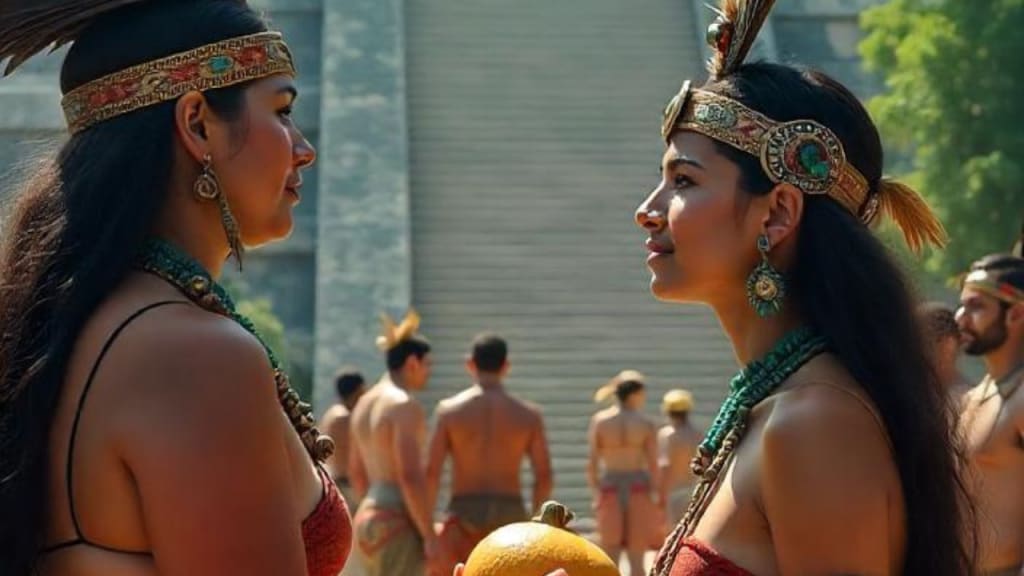
In the Americas, civilizations such as the Maya were reaching their peak in Mesoamerica. The Maya, known for their advanced knowledge of astronomy, mathematics, and architecture, built impressive cities such as Tikal and Palenque. They developed a complex writing system and a calendar that accurately tracked celestial movements.
Further south, the Nazca civilization in present-day Peru continued to create the famous Nazca Lines, massive geoglyphs etched into the desert. The Moche culture, known for its intricate pottery and monumental structures, flourished in the Andean region.
In North America, indigenous societies were developing complex social structures, trade networks, and agricultural techniques. The Mississippian culture, which would later build large earthen mounds, had yet to fully emerge but was beginning to take shape.
Conclusion
The world around 500 CE was a time of transformation. The collapse of the Western Roman Empire reshaped Europe, while the Byzantine and Sassanian Empires vied for dominance in the Middle East. In Asia, China and India experienced cultural and scientific advancements, and in the Americas, civilizations continued to thrive.
This period laid the groundwork for the medieval world, shaping political structures, religious movements, and cultural developments that would influence history for centuries. Although much of this era was marked by warfare and political change, it was also a time of intellectual growth and cross-cultural exchange, setting the stage for future civilizations.
About the Creator
Kazi Mirajul Islam
I am expert in digital Marketing .I am also E- book writer & story writer. I am committed to delivering high-quality content.Also create social media account like Facebook,twitter account ,Instagram ,you tube account create and mained.
Keep reading
More stories from Kazi Mirajul Islam and writers in Families and other communities.
YouTube Monetization Strategies You Need to Know in 2025
In 2025, YouTube monetization has evolved into a multi-stream ecosystem that allows creators to earn money through ads, fan funding, merchandise, affiliate marketing, and more. The YouTube Partner Program (YPP) now has more accessible entry requirements, enabling smaller creators to start earning sooner. Monetization options include ad revenue, channel memberships, Super Thanks, merch shelves, and direct product tagging in videos.
By Kazi Mirajul Islam9 months ago in Families
Wise~Guys
— Look Behind what's in Front of You ~ Make Good Choices — Hey, So how you Doin'..! Made~Men — Mobster Movies romanticise a distinctive, elegant appearance, impeccable attire style, along with the 'Families' expressive lingo. Making their 'Bones' gave them Panache — with vintage fedoras, tailored pin-striped suits, mirror-polished wing-tip shoes adorned with tassels; with their 'Gun Moll' gorgeous dates on their arms.
By Jay Kantor17 days ago in Families




Comments
There are no comments for this story
Be the first to respond and start the conversation.