
The Warmth in Her Shawl
A Grandmother’s Love That Wrapped Generations in Comfort and Courage

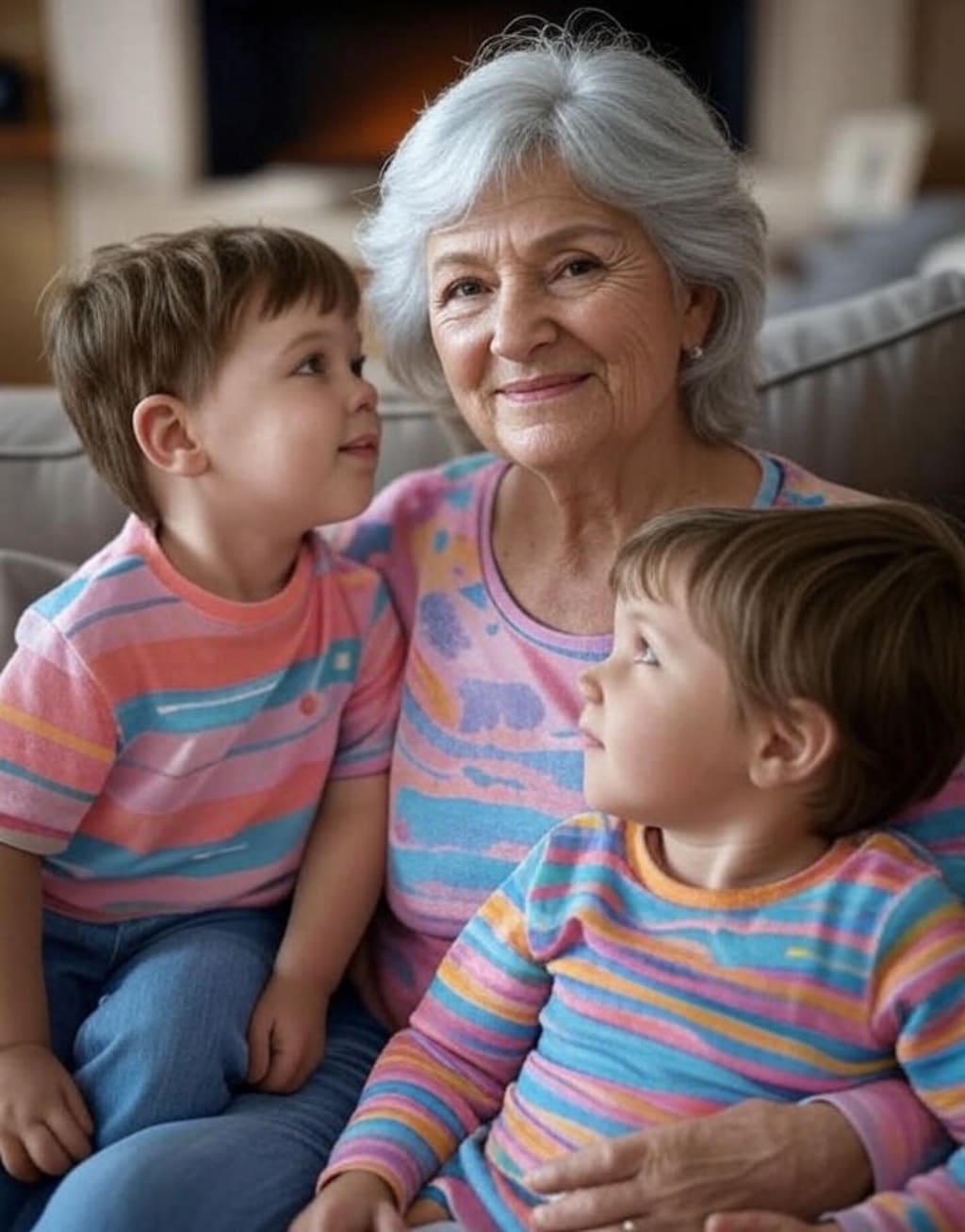
In the heart of a small village, where the sky blushed orange at dawn and the birds sang as if they knew every household secret, lived a woman called Nani Amma. Her real name was Fareeda Begum, but to everyone—family, neighbors, shopkeepers—she was simply Nani Amma.
She was short and slightly hunched with age, always wrapped in a thick, faded shawl, no matter the season. Her silver hair peeked out from beneath her scarf, and her eyes held a softness that made even strangers feel safe. Her house smelled of fresh roti, rosewater, and the faintest scent of clove and cardamom. But more than anything, her home smelled of love.
Nani Amma had five grandchildren. They came to stay with her every summer, their bags full of clothes but their hearts fuller with excitement. Her home was their wonderland—a place of soft beds, mango trees, secret attic stories, and most importantly, her.
Every morning, before the sun had fully risen, Nani Amma would already be in the kitchen, preparing breakfast with soft murmurs of prayers on her lips. She made parathas shaped like hearts and eggs with smiley faces. She remembered who liked sugar in their tea and who didn’t. She always seemed to know when someone was sad, hungry, or hiding a broken toy.
One rainy evening, the children returned home from playing, soaked to the bone. Their parents scolded them gently, worried they’d catch a cold. But Nani Amma just smiled, warmed water for their baths, and then wrapped each of them in her big, woolly shawl, sitting them by the stove and humming old lullabies. That shawl—patched at the corners, smelling faintly of sandalwood and flour—was her magical cloak. In it, all pain disappeared. Arguments, scrapes, even fever seemed to melt away.
But Nani Amma’s love wasn’t only in the way she pampered. It was also in her stories.
Every night, after dinner, she would sit by the window, her grandchildren gathered around her like stars around the moon. She’d tell stories of her own childhood—how she walked miles to school, how she sewed her first dress, how she stood up to injustice in a time when women were told to be silent.
“There is more strength in softness than in steel,” she’d say. “But never confuse kindness with weakness.”
Her granddaughter Zara once asked, “Nani Amma, were you ever afraid?”
Nani Amma looked at her hands, weathered with time, and said, “Yes, many times. But fear is just a visitor. If you treat it with tea and dignity, it eventually leaves.”
The children carried her wisdom with them as they grew. When Zara faced bullies in college, she remembered Nani Amma’s calm. When Saad failed his first job interview, he thought of her voice telling him, “Even the moon disappears some nights—but it always comes back.”
One summer, when they all returned home as adults—busy with life, some married, some studying abroad—they found Nani Amma slower, thinner, and often staring out the window in silence. But her shawl was still on her shoulders, and when she saw them walk in, her face lit up like Eid morning.
That visit turned out to be her last summer with them.
One early morning, she passed away in her sleep, her fingers loosely clutching the edges of her shawl, as though still wrapping the world in comfort.
Her funeral was attended not just by family, but by neighbors, grown children she once taught to read, and even strangers who said she had once fed them when they were hungry. Her kindness had echoed far beyond her home.
Afterward, as the grandchildren sat in her quiet room, they found her shawl folded neatly on the edge of her bed. It carried her scent. Her warmth. Her memory.
They didn’t argue over who would keep it. Instead, they decided to pass it around—each year, one of them would keep it in their home. Not to wear it, but to remind themselves of the woman who had taught them how to live with grace, patience, and a heart big enough to hold an entire family.
---
A grandmother’s love is like her shawl—soft, warm, and always ready to wrap around you in the moments you need it most. She teaches not through lectures, but through the way she lives: gently, wisely, and with an unshakable love that shapes you long after she’s gone.
About the Creator
Raza Ullah
Raza Ullah writes heartfelt stories about family, education, history, and human values. His work reflects real-life struggles, love, and culture—aiming to inspire, teach, and connect people through meaningful storytelling.
Keep reading
More stories from Raza Ullah and writers in Families and other communities.
Whispers of the Old Oak
In a quiet village lined with ancient trees and red clay rooftops, lived a man known to everyone as Baba Jan. His real name was Haji Ghulam Qadir, but to his grandchildren, he was simply their story-keeper, tree-climber, mischief-defender, and secret friend.
By Raza Ullah7 months ago in Families
Wise~Guys
— Look Behind what's in Front of You ~ Make Good Choices — Hey, So how you Doin'..! Made~Men — Mobster Movies romanticise a distinctive, elegant appearance, impeccable attire style, along with the 'Families' expressive lingo. Making their 'Bones' gave them Panache — with vintage fedoras, tailored pin-striped suits, mirror-polished wing-tip shoes adorned with tassels; with their 'Gun Moll' gorgeous dates on their arms.
By Jay Kantor18 days ago in Families
Becoming a sleeve snake
The Treacherous Minister A long time ago, in the land of Greece, there was a wise and just king who ruled his kingdom with fairness. The king trusted all of his ministers and often consulted them on matters of governance. Among all his ministers, there was one whom the king favored above the others—a man named Faisal. The king valued Faisal’s advice and often sought his counsel for important decisions.
By Sudais Zakwan4 days ago in Families




Comments (1)
Grandmother love