
The Voice That Echoed Peace: Remembering Maulana Khan Zeb Shaheed
A fearless scholar, peacemaker, and Pashtun icon—Maulana Khan Zeb's assassination on July 10, 2025, is a deep wound to Bajaur and all who believe in peace.

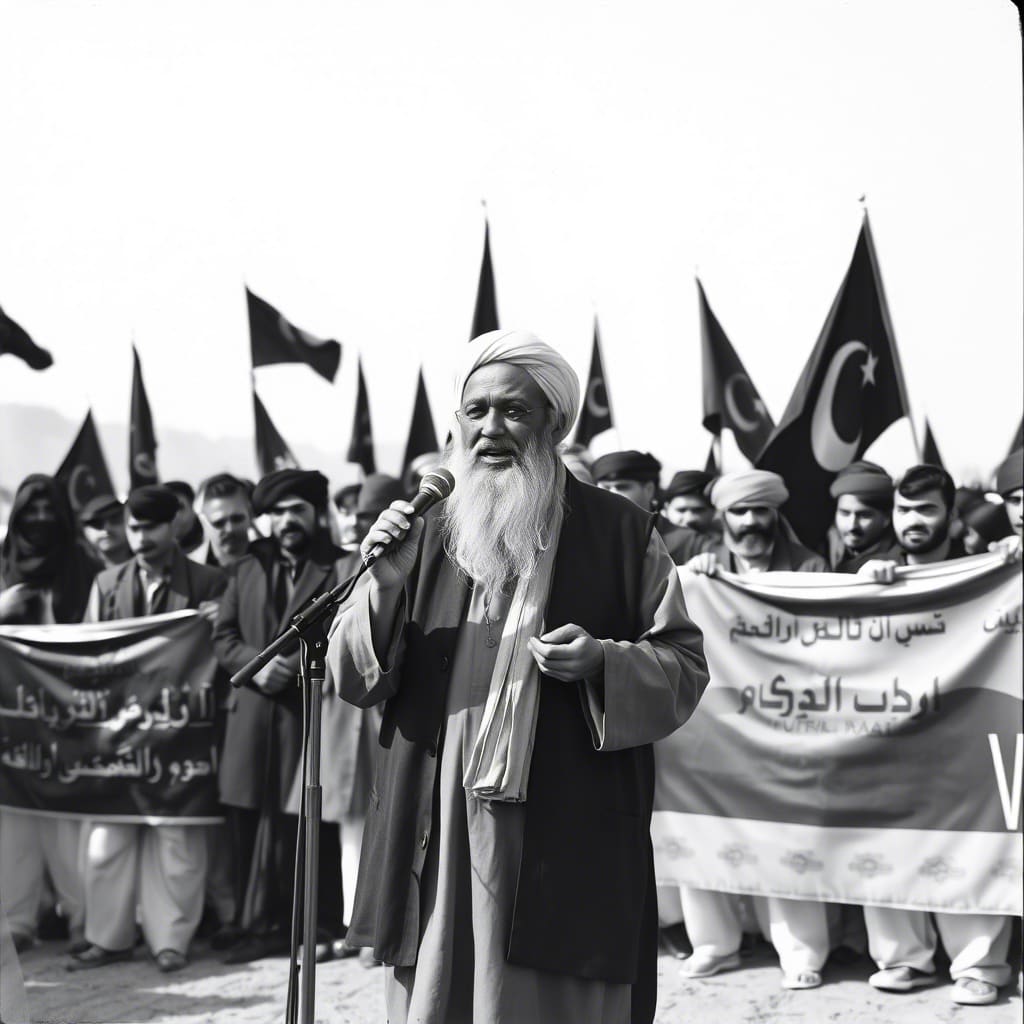
On July 10, 2025, just after 3 PM in Bajaur’s Khar Tehsil, gunshots rang out in the shadows of security checkposts, silencing a voice that had long spoken for peace and justice. Maulana Khan Zeb, a respected religious scholar, politician, and peace advocate, was assassinated in broad daylight while campaigning for a non-violent future.
The brutal killing sent shockwaves through Bajaur and beyond. But Maulana Khan Zeb was not just another political figure. He was a man of deep conviction, blending religious values with a secular dream for a peaceful Pashtun society.
---
A Scholar Turned Soldier of Peace
Born in Nawagai, Maulana Khan Zeb dedicated his early life to religious scholarship. After completing his Dars-e-Nizami in 1999, he emerged not only as an Islamic scholar but as a voice of unity among divided communities. His writings, speeches, and passion for cultural preservation set him apart from many of his contemporaries.
But it was his transition into politics that defined his legacy. He joined the Awami National Party (ANP), known for its secular, democratic stance and commitment to non-violence. Despite threats, intimidation, and even previous attacks on his home, Maulana never backed down from his mission.
In the 2023 general elections, he contested the NA-8 seat in Bajaur and secured over 12,000 votes—a clear message that the people stood with his vision.
---
The Peace March That Never Happened
On July 13, 2025, Maulana was set to lead a massive peace march—"Aman Pasoon"—to counter the growing influence of violence and extremism in the region. He believed that Bajaur could be a symbol of hope rather than fear.
But three days before that historic event, bullets took away the leader who had organized it.
Eyewitnesses say he was still raising slogans of peace moments before being attacked. Riding with his companions—including his police guard Sepahi Sher Zada—his vehicle was ambushed near the district headquarters, close to military and paramilitary checkposts. Two of his companions were killed on the spot, and three others were critically wounded.
It wasn’t just an assassination; it was a message. A warning to those who dare to dream of peace in war-torn areas.
---
A History of Resilience
Maulana Khan Zeb was no stranger to danger. During Operation Sherdil, a military offensive in Bajaur, mortar shells damaged his home and injured his family. He had already survived two missile attacks—one barely ten feet from him.
But perhaps what defined him best was his unwavering defiance. When militants banned funeral prayers for the poet Islam Armani, Maulana led them anyway. He refused to bow to tyranny—whether from terrorists or silence from the state.
He was a historian, too, authoring books in Pashto to preserve Bajaur’s culture and contributing to national media like Daily Shahbaz and Pakhtun Magazine. He was a scholar with a pen and a soldier of peace with his voice.
---
The Aftermath and Public Outrage
As the news broke, residents of Bajaur carried Maulana’s body through Khar Bazaar in protest. Cries for justice filled the air. The ANP declared three days of mourning. Its leaders, including Aimal Wali Khan and Mian Iftikhar Hussain, demanded justice—and openly blamed the state for allowing extremism to resurface.
They filed a First Information Report (FIR) not just against unknown gunmen, but against institutions they accused of turning a blind eye to the growing danger.
In his funeral in Nawagai, black flags fluttered, and hearts mourned a man who had become a symbol of peaceful resistance.
---
Why His Death Matters to Us All
The killing of Maulana Khan Zeb is not just a local tragedy—it’s a national alarm. In a region where voices of peace are already rare, his assassination leaves a deafening silence.
He was a bridge between religious and secular values, between tradition and progress, between suffering and hope. His life proved that you can be a scholar and still stand in the political battlefield with courage.
His death is a reminder that those who walk the path of peace are often the first targets. But it is also a call to continue that path—to not let his sacrifice go in vain.
---
In Memory and Resolve
Maulana Khan Zeb Shaheed is no longer among us, but his voice still echoes. In his speeches, in his writings, and in the hearts of thousands who followed him.
Let us remember him not just with sorrow, but with commitment. A commitment to fight ignorance with knowledge, violence with peace, and fear with faith.
Let his memory ignite in us the same courage he carried every day of his life.
About the Creator
Atif jamal
I write heart-touching stories and thought-provoking articles inspired by nature, emotions, and everyday life
Keep reading
More stories from Atif jamal and writers in Families and other communities.
The Unseen Cost of War
When the Dust Settles: A Child's Silent Cry from the Rubble The ground is cold. The air is filled with dust. The silence is deafening—broken only by the distant wail of a mother or the soft crumble of debris. Among the rubble lies a child. His eyes are open, but they carry a weight no child should ever bear. His face, smeared with dust, does not cry anymore. He has already cried too much.
By Atif jamal 7 months ago in Families
Wise~Guys
— Look Behind what's in Front of You ~ Make Good Choices — Hey, So how you Doin'..! Made~Men — Mobster Movies romanticise a distinctive, elegant appearance, impeccable attire style, along with the 'Families' expressive lingo. Making their 'Bones' gave them Panache — with vintage fedoras, tailored pin-striped suits, mirror-polished wing-tip shoes adorned with tassels; with their 'Gun Moll' gorgeous dates on their arms.
By Jay Kantor18 days ago in Families
The Farmer and His Three Sons
In a quiet village surrounded by wide fields and dusty paths, there lived a hardworking farmer. His hands were rough from years of working the land, and his face carried the marks of long days spent under the sun. Farming was not just his work; it was his life. Before the sun rose each morning, he would already be walking toward his fields, and after sunset, he would return home tired but grateful.
By Sudais Zakwan7 days ago in Families
Ludacris and Nelly draw backlash over bookings at MAGA-coded music festival
Ludacris and Nelly headlining a mostly right-wing event is good for them. It’s also great for the genre of hip hop. The two rap veterans have showcased their talents on other stages. Why can’t they perform for mostly MAGA folks and grab that bag?
By Skyler Saunders4 days ago in Beat



Comments
There are no comments for this story
Be the first to respond and start the conversation.