
The village that built itself
a story of unity, change, and hope.

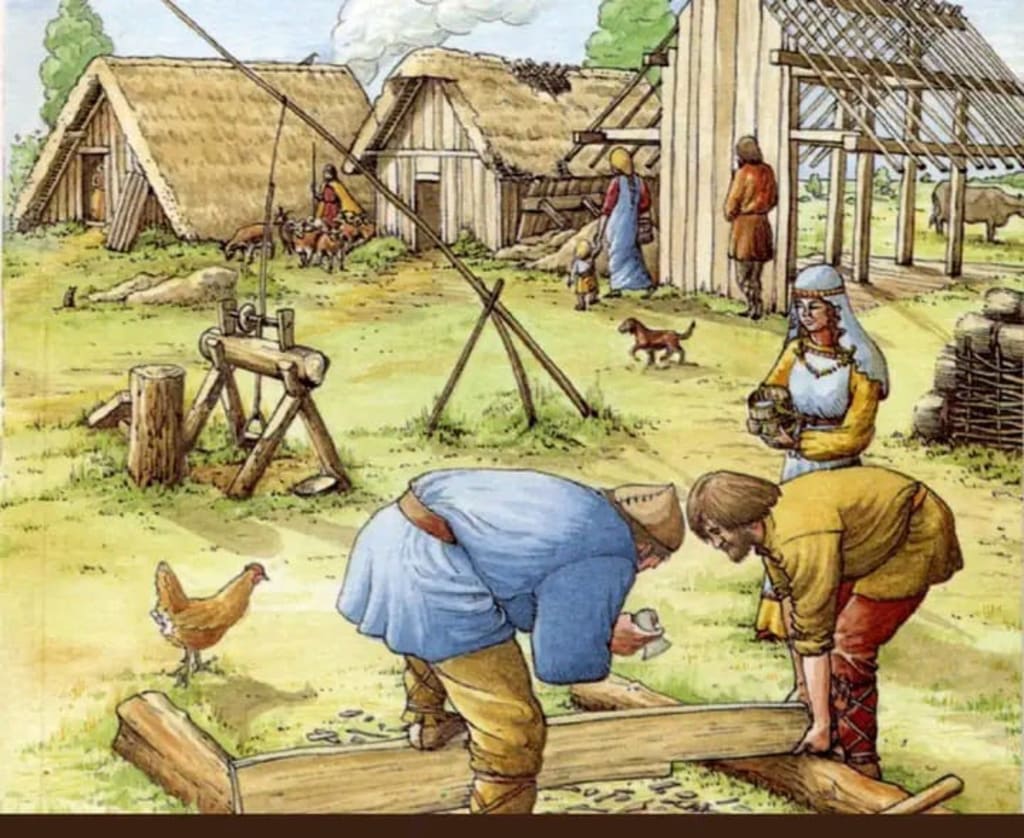
Once, in a land of rolling green fields and whispering trees, there was a small village nestled between hills. It was not marked on any grand map, and no rich king ever ruled it. But it had something far greater — unity. The people of this village lived simply, but they lived together. They built their homes from wood, straw, and stone, not with machines but with hands that were rough, calloused, and full of love.
Every morning, the village awoke not to alarms or glowing screens, but to the gentle clucking of chickens, the soft mooing of cows, and the rising sun peeking over the rooftops. Smoke curled from chimneys as mothers stirred pots over fire, preparing meals not just for their own, but often for neighbors and wandering workers.
Men gathered in the square, ready to build, mend, and create. They would lift beams together, singing songs that echoed off the hills. Tools were shared, meals were exchanged, and laughter was the only wealth anyone cared about. Children played barefoot in the grass, running between workshops and gardens, learning not from books alone but from the wisdom of their elders.
Among these villagers was an old carpenter named Ealdred. His hands were gnarled from years of carving wood, but they were steady and strong. He often said, “We do not build houses. We build homes. And we build each other.” Young men and women gathered around him, learning not just how to saw or hammer, but how to live with care and kindness.
In one corner of the village, a new house was being raised. No one asked whose it was or how much it cost. Everyone came to help — mothers brought bread and water, children fetched nails and held lanterns, and old men shared stories while guiding younger hands. In this place, work was not duty; it was devotion.
The village thrived — not because it had much, but because it lacked nothing that truly mattered.
---
But time, as it always does, moved forward.
The world beyond the hills grew louder and faster. Roads of stone became highways of metal. Letters became instant messages. The quiet whisper of trees was drowned by the constant hum of machines.
The village changed.
The sons of carpenters went to cities to work in glass buildings. Daughters of weavers became secretaries, typing on keyboards instead of spinning thread. The houses still stood, but the laughter faded. Where once the people built homes together, now they built fences.
No one gathered in the square anymore.
Ealdred, now gray and slow, would sit by his wooden bench, waiting. “No one comes to watch the wood anymore,” he would whisper. His tools lay still, not because they were broken, but because the bond they symbolized was.
One day, a young man named Thom returned from the city. He was Ealdred’s grandson, who had left years ago to find a “better life.” He had a good job, a car, a smart phone. But no warmth. No joy. No time. The city had given him everything — except peace.
He sat beside Ealdred, who simply smiled and said, “Welcome home.”
As they talked, Thom looked around — the once-lively village was quiet, tired. The old workshop was full of dust. The house that once echoed with voices was now still.
“What happened, Grandfather?” he asked.
Ealdred looked up at the sky. “We stopped needing each other, lad. Or thought we didn’t.”
Thom stayed that night. Then another. Days turned into weeks. He started cleaning the old workshop. Sharpening the tools. Fixing broken benches. At first, the villagers watched from windows. Then, curious, some joined in. An old neighbor brought wood. A woman brought her son to learn. A child offered drawings for decorations.
Soon, the hammer’s sound returned to the village air.
They began rebuilding a community — not just houses. They started a school again, where children learned to write letters, plant seeds, and sing songs from the past. They cooked together. Played together. Prayed together.
One day, Thom gathered everyone and said, “The world outside is fast. But we don’t have to be. We can grow, yes — but not without our roots.”
---
The village became alive once more.
It didn’t reject the future, but it didn’t forget the past. They used phones, yes — but also spoke face to face. They bought tools online — but used them together. They watched videos — but also told stories by the fire.
People from other towns began visiting, curious about this “backward” place where people still greeted each other, still shared meals, still worked side by side.
Thom built a board outside the square. It read:
“This village was built with hands, held together with hearts.”
Conclusion:
In the past, people worked hand in hand, not just to build walls, but to build lives. They shared burdens and joys alike. Today, in our world of screens and speed, we often forget what we truly need: connection, care, and community.
Let this village remind us — that while progress is good, it is unity that makes us human.
About the Creator
shah afridi
I have completed my bachelor’s degree in English, which has strengthened my language and communication skills. I am an excellent content writer with a keen eye for detail and creativity.
Keep reading
More stories from shah afridi and writers in Families and other communities.
The Girl Who Heard the Wind
The Girl Who Heard the Wind “A tale of whispers, courage, and the secrets carried on the breeze.” In a quiet valley cradled between tall, whispering mountains, there lived a girl named Elia. She was no different from the other children in her village—except for one strange gift. Elia could hear the wind speak.
By shah afridi6 months ago in Fiction
Wise~Guys
— Look Behind what's in Front of You ~ Make Good Choices — Hey, So how you Doin'..! Made~Men — Mobster Movies romanticise a distinctive, elegant appearance, impeccable attire style, along with the 'Families' expressive lingo. Making their 'Bones' gave them Panache — with vintage fedoras, tailored pin-striped suits, mirror-polished wing-tip shoes adorned with tassels; with their 'Gun Moll' gorgeous dates on their arms.
By Jay Kantor16 days ago in Families




Comments
There are no comments for this story
Be the first to respond and start the conversation.