
The Value of Tradition
"Passing Down Family Values"

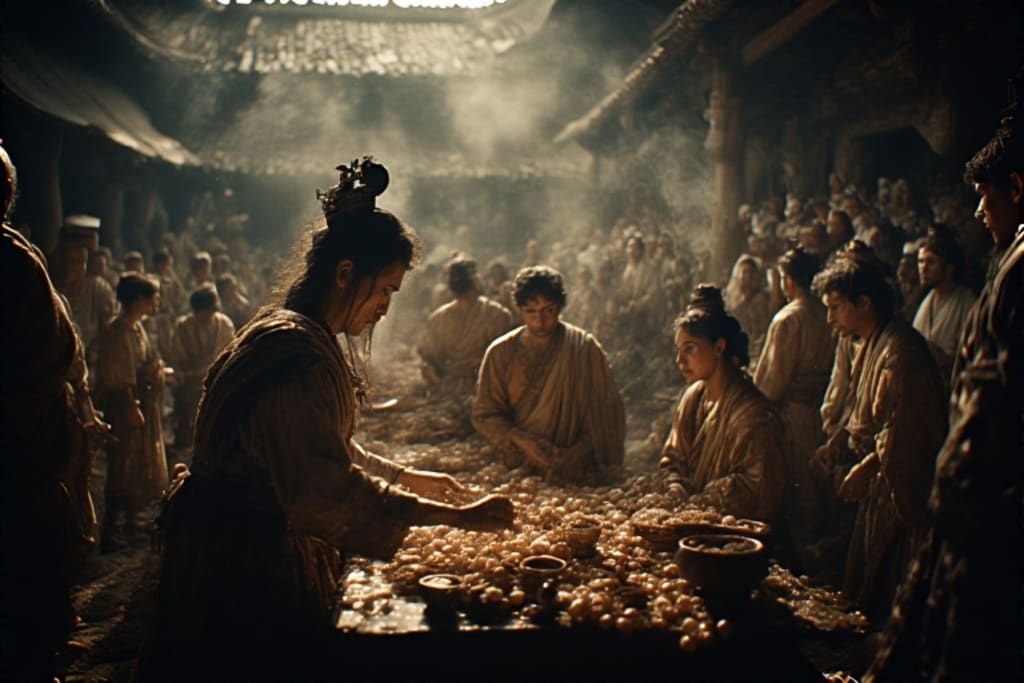
In the peaceful valley of Noorabad, time seemed to move with the sun—slow and steady. Birds chirped in the early morning mist, oxen plowed the soil while farmers sang old songs, and every evening, the smell of wood fires and spiced lentils filled the air. It was a village wrapped in rhythm, rituals, and stories passed from generation to generation.
At the heart of Noorabad lived an elderly woman named Bibi Amina, respected and loved by all. Her home was a living museum—walls lined with family portraits, cupboards filled with hand-woven shawls, copper pots polished like gold, and a small, sacred corner where she lit oil lamps every morning without fail. For decades, she had been the keeper of the village’s traditions—the guardian of recipes, songs, dances, and prayers. To the children, she was a storyteller; to the adults, a counselor; and to her grandson Aryan, she was simply Bibi.
Aryan had left Noorabad as a boy to study in the bustling city of Lahore. Years passed, and he returned as a young man with degrees, ambition, and city habits. He wore crisp shirts, checked emails on his phone, and drank espresso instead of chai. The village, in contrast, felt slow and outdated to him.
One evening, as the sun dipped behind the wheat fields, Aryan sat on the verandah with Bibi Amina, who was preparing shakarparay, a traditional sweet.
“Bibi,” Aryan said, watching her roll the dough, “don’t you think it’s time the village moved on from all these old customs? I mean, the world has changed. Why do we still light clay lamps, wear itchy wool shawls, and dance around a fire like it’s a hundred years ago?”
Bibi smiled gently and said nothing. She finished her work, wiped her hands, and walked into her room. A moment later, she returned with a small leather-bound journal. Its pages were yellowed and frayed at the edges.
“This,” she said, handing it to him, “was your great-grandfather’s diary.”
Curious, Aryan opened it. Inside were recipes written in delicate Urdu script, folk tales scribbled in poetic form, family trees, festival records, and even pressed flowers between some pages. He flipped through it slowly, fascinated.
“This book holds the soul of our family,” she whispered. “Everything we know—our food, our language, our prayers, our celebrations—it’s all here. These traditions aren’t chains, Aryan. They’re roots. And a tree without roots doesn’t stand for long.”
That night, Aryan couldn’t sleep. The words echoed in his mind. As he wandered outside, the village seemed different. He saw elders sitting under the banyan tree sharing stories, children flying homemade kites, women singing while making pickles, and men fixing tools with quiet concentration. Everything had meaning. Everything had history.
The next morning, the village began preparing for Bahaar Mela, the Spring Festival that had been celebrated in Noorabad for over 200 years. Bibi Amina had always organized it, making sure the rituals were followed—dancing around the sacred neem tree, making flower garlands, cooking the ceremonial zarda, and lighting 101 clay lamps around the village.
This year, however, things changed. Aryan offered to help.
At first, the villagers were surprised. But soon, he was in the thick of it—decorating the central square, recording the elders' songs with his phone, and even designing a stage that combined traditional wood carvings with modern sound systems.
“Let’s show people that tradition can walk with time,” he said with a smile.
On the night of Bahaar Mela, the village shimmered with lanterns and laughter. The air was filled with the sound of dhols, children ran around in colorful kurtas, and families sat together sharing stories and sweets. On a screen set up in the center, Aryan played a short film he’d made about Noorabad’s heritage, featuring old photos, village music, and interviews with elders—including Bibi Amina.
When it ended, the crowd was silent for a moment—and then erupted into applause.
As the festival wound down, Aryan sat beside Bibi near the neem tree, both watching the flickering lights.
“I think I understand now,” he said softly. “Tradition doesn’t mean refusing change. It means carrying our identity into the future.”
Bibi smiled, her eyes glistening. “Exactly. When we lose tradition, we lose memory. And when we lose memory, we forget who we are.”
________________________________________
Moral:
Traditions are more than customs—they are the living legacy of our ancestors, binding generations together. While we must grow and change with time, it is our traditions that guide our steps and remind us of the values, love, and stories that shaped us.
About the Creator
Keep reading
More stories from Najeeb Scholer and writers in Families and other communities.
"The Gift of Time"
In the heart of a busy city, where the buildings reached high into the sky and the streets buzzed with cars and crowds, lived a little girl named Amaya. She was eight years old, curious and bright, but often alone. Her father, Mr. Ravi, was a successful businessman who always seemed to be in a hurry—on calls, in meetings, or rushing off to catch a flight. Her mother had passed away when Amaya was very young, and though her home was filled with toys, books, and beautiful clothes, it often felt empty.
By Najeeb Scholer7 months ago in Families
I Married the Love of My Life… But Somehow Ended Up Living With Her Mother Instead
When I got married, I thought I knew exactly what I was signing up for—love, partnership, shared dreams, and building a life together. What I didn’t expect was that my marriage would gradually start to feel like a three-person arrangement… and that I would be spending more time with my mother-in-law than with my own wife.
By Lukáš Hrdlička8 days ago in Families
Money-Saving Baby Hacks
In the beginning, baby's can be so expensive. You need so many things like a crib, bassinet, clothes, diapers, wipes, bottles, binki's, breast pump, toys, blankets, etc. Things add up and sometime's new parent's or even veteran parent's need ways to stay in budget and make life just a tad more frugal.
By Rich Burton7 days ago in Families




Comments
There are no comments for this story
Be the first to respond and start the conversation.