
The True Meaning of Sacrifice
A poor father’s heartbreaking Eid teaches the wealthy what real sacrifice truly means.
The True Meaning of Sacrifice
By Sajid Kamboh
Eid was near. Excitement filled the air. Children waited for new clothes, delicious food, and Eidi money. For the rich and the poor alike, Eid was a festival of joy.
During the smaller Eid, people celebrated with sweets, laughter, and outings. But the bigger Eid — Eid-ul-Adha, the festival of sacrifice — carried a deeper meaning. It was the time when Muslims around the world sacrificed animals such as cows, goats, sheep, or camels in remembrance of Prophet Ibrahim’s devotion to God.
However, not everyone understood the true purpose of this act. Many performed it merely as a ritual — to fill their freezers, to enjoy meat for months, to share pictures on social media — forgetting that the real essence of sacrifice lay in sharing, caring, and empathy for those in need.
I once saw a wealthy man, returning from Hajj, carrying a piece of lamb leg to the butcher. His freezer was full, yet he wanted to prepare more meat. That sight made me realize how far we have drifted from the real meaning of Qurbani.
This story is for all those who are financially well-off, yet stingy at heart — those who offer multiple animals but forget their less fortunate neighbors.
---
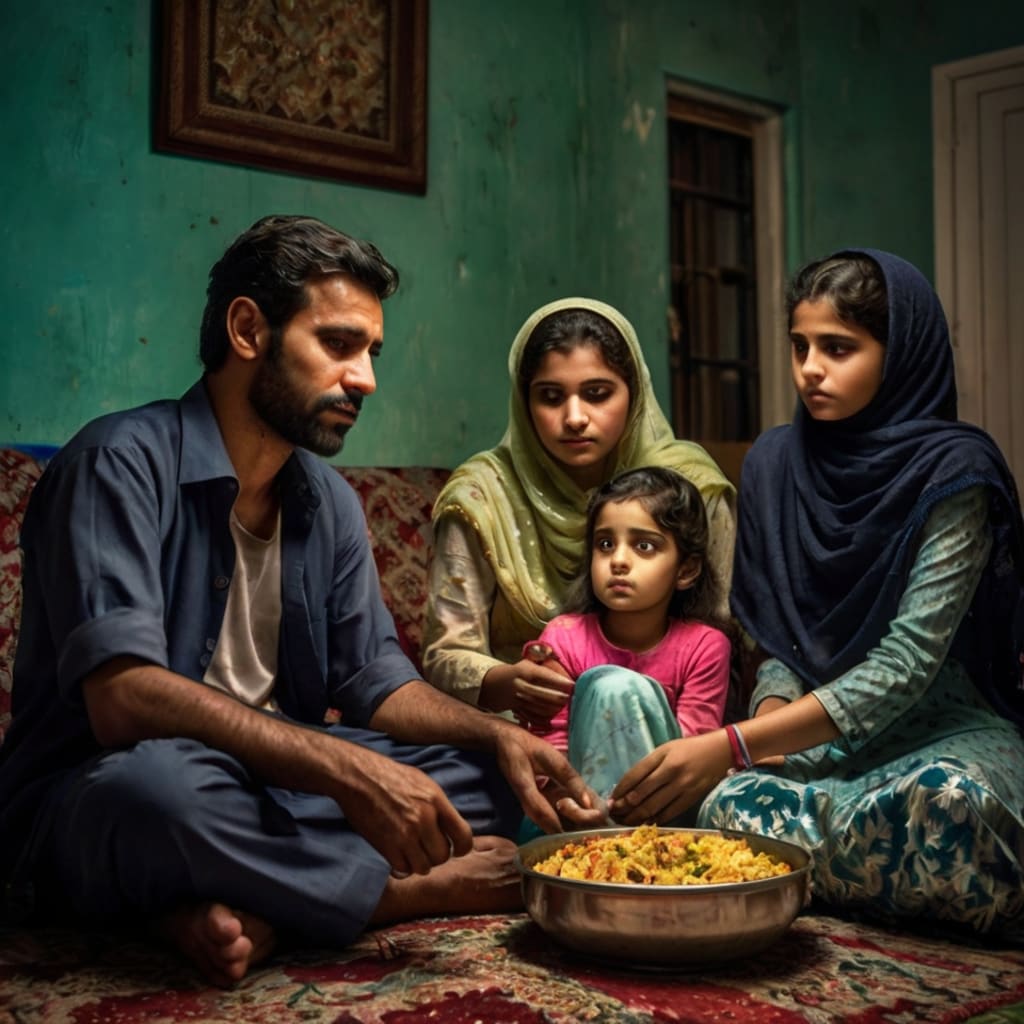
In a small neighborhood lived Anwar, his wife, and their two daughters, Afiya and Sobia. Life was difficult, but they were thankful for what they had.
“Baba, Eid is only three days away!” Sobia said, her eyes shining with hope. “Will we get to eat meat this time?”
Her father smiled softly. “Of course, my dear. Many people around us offer sacrifices. Surely, we’ll get some.”
“But last year, no one sent us anything,” she said, her voice low.
“Don’t worry, Sobia,” he replied gently. “Allah never leaves anyone hungry. We should always be thankful.”
He remembered the sermon at the mosque that morning. The Imam had spoken about the rights of the poor and the true spirit of Eid-ul-Adha — that no one should be forgotten on this sacred day. Anwar’s heart was filled with hope that things might be different this time.
---
Eid day arrived. The air was filled with the scent of barbecue and the sound of laughter. Anwar returned home early after the Eid prayer, expecting someone might soon knock with a bag of meat.
Hours passed. Noon turned to afternoon.
His wife, cutting onions and tomatoes, looked at him quietly. “Should I start cooking, or wait? It’s getting late. Maybe you could go and ask someone?”
Anwar sighed. “You know I’ve never begged anyone. Allah will make a way.”
But by evening, his daughters were hungry, and Sobia’s little eyes brimmed with tears. Her pain was too much for him to bear.
At last, he gathered his courage and went to the house of Dr. Saeed, a well-known physician who charged a thousand rupees just for a consultation.
“Doctor Sahib,” he said humbly, “would it be possible to get a little meat for my family?”
The doctor’s expression hardened. “People like you… every year you show up begging for meat!” he snapped, and slammed the door.
Anwar stood there, humiliated, his heart breaking. But his daughter’s face flashed before his eyes, and he moved on to Sheikh Sahib’s house — another wealthy man in the neighborhood.
Sheikh Sahib stared at him silently, then went inside. After a long wait, he returned with a plastic bag. Without a word, he handed it over and shut the door.
Anwar walked home in silence. When he opened the bag, it contained only fat and bones.
Tears rolled down his face. His wife and daughters tried to comfort him. “Don’t cry, Baba,” said Sobia softly. “We can cook onions, or make chutney. I don’t even feel like eating meat today.”
Her innocent words tore through his heart. Soon, all three were weeping together — not from hunger, but from the pain of being forgotten.
---
As dusk fell, there was a knock at the door. Standing outside was Akram, their neighbor — a poor vegetable vendor who sold greens on a cart.
“Anwar bhai, how are you? My brother just came from the village with fresh meat. Take this,” he said, handing over several bags.
Anwar hesitated. “No, no, Akram. You keep it. You have your own family.”
But Akram smiled. “Brother, don’t refuse. I know how this neighborhood is. Here, people act like Pharaohs, not humans. You are my brother — this is not charity.”
He pressed the bags into Anwar’s hands and left.
That night, Anwar’s home was filled not only with the aroma of food, but also with gratitude and tears of joy. They prayed for Akram and his family long after they had eaten.
---
The next evening, heavy rain and wind swept through the city. Power went out, and the streets flooded. Days passed, and the electricity still hadn’t returned.
On the fourth day after Eid, while walking with Sobia, Anwar saw a shocking sight: Dr. Saeed and Sheikh Sahib were throwing away bags of rotten meat into the garbage bins. The meat from their freezers had spoiled. Stray dogs were fighting over it.
Sobia looked up at her father and said quietly,
“Baba… does that mean they sacrificed their animals for the dogs?”
Anwar turned to her — and in that moment, the two men froze, their faces pale with shame.
---
Moral:
True sacrifice is not in the slaughter of animals, but in the generosity of the heart. The real Eid belongs to those who share their blessings with others.
About the Creator
In the End, Family Is Everything
"Family is not always about blood. It is about the people who choose to stand beside you when life becomes difficult." In a world that moves too fast, where everyone is chasing something — success, money, recognition — there is one place where we can still return without needing to prove anything.
By Zakir Ullah3 days ago in Families



Comments
There are no comments for this story
Be the first to respond and start the conversation.