
The Sound of Empty Rooms
What remains when the walls no longer listen
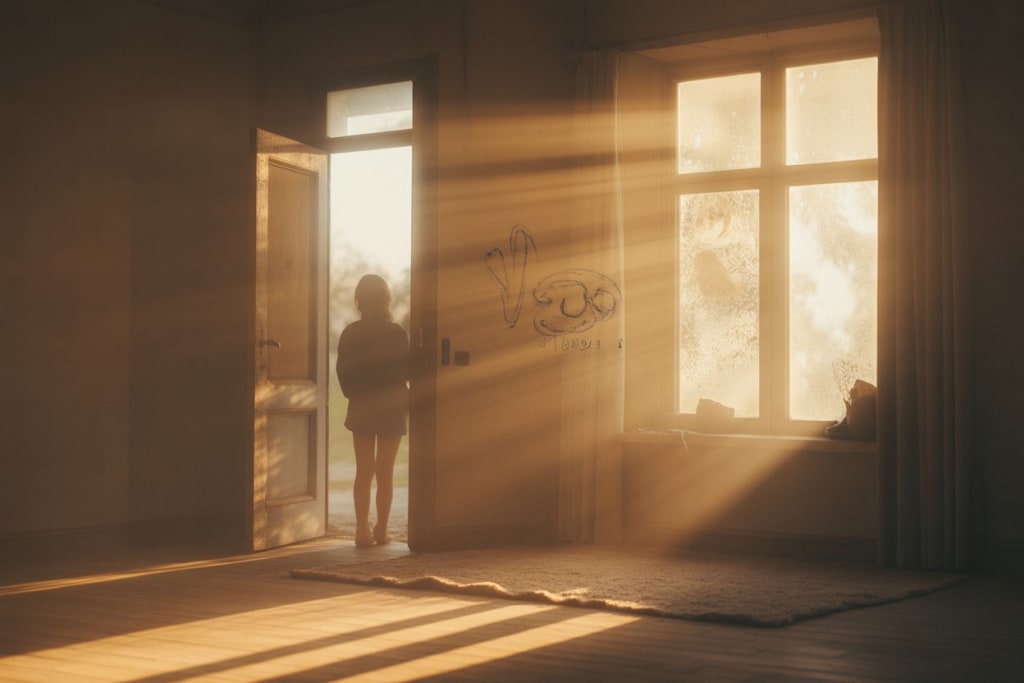
The key turns stiffly in the lock, one last time.
I push open the door, and it groans in protest—just as it always did, like a grumpy guardian that never quite warmed to strangers. The scent of dust and old wood clings to the air, mingling with something fainter—familiar, elusive—like the ghost of cinnamon toast on Sunday mornings or my mother’s lavender soap.
The house is empty now.
No rugs to muffle footsteps, no pictures on the walls to tell stories with their silent smiles. The rooms echo, not with sound, but with memory.
I step inside the living room, and suddenly I’m seven again. My feet barely graze the carpet as I leap from couch to couch, pretending the floor is lava. My father’s voice echoes from the kitchen—half stern, half amused—as he warns me not to knock over the lamp. I did anyway. The crack is still there on the base, faint but real, like a memory made tangible.
I run my fingers along the bare windowsill. It’s chipped on the corner where my brother once balanced his toy soldier army. He swore the windowsill was a perfect cliff—strategic, high ground. We spent entire afternoons there, making explosion sounds with our mouths, declaring victory in a world we ruled with our imaginations.
But now, it’s just wood. Just paint. Just silence.
The kitchen hums with the ghosts of birthday candles and burnt toast. I can almost hear the chaotic clatter of my mother’s cooking, the way she would hum off-key to the radio, the radio that always lost its signal in the middle of the good songs. She said it had character. We said it was broken. But we listened anyway.
There, by the fridge, is the spot where we all danced once—spontaneously, stupidly, joyfully—on New Year’s Eve. No music. Just laughter, arms flailing, and my dad spinning me around while my mom clapped off rhythm. It was the last time I remember all of us together like that, untouched by time, unburdened by growing pains.
The sound of that laughter still lingers, like a smile you remember in the dark.
Upstairs, the rooms seem smaller than they once were. Isn’t that always the way? Childhood stretches walls wide with wonder. Age brings them back in, tighter, neater, colder.
My room is a hushed museum of my former self. The pale patch on the wall where the posters used to hang—pop stars, space maps, doodles on sticky notes. The drawer in the closet that always stuck. The scratch on the floor from dragging furniture around in a desperate teenage attempt to "redefine my space." I never liked how it turned out.
I sit on the floor. The silence presses in—not heavy, but full. Full of things I never said, things I wish I could say again.
This house saw my first steps. It heard the door slam when I stormed out in anger at seventeen, convinced no one understood me. It felt the quiet ache of the nights I cried into my pillow over things I now struggle to remember. And it heard the whispered secrets between friends, the midnight confessions under the blankets, the dreams I once carved into the ceiling with my eyes wide open.
It held them all.
And now it waits, empty.
People say houses aren’t alive. That they’re just wood and nails, drywall and foundation. But they’re wrong. Houses listen. They absorb. They carry us in ways we don’t notice until we’re about to let them go.
The hallway creaks one last time as I walk toward the front door. I pause, hand on the frame, and look back. Sunlight filters through the dusty windows, making the air shimmer like something holy.
“I’ll miss you,” I whisper.
Not loud enough for the neighbors to hear, but just loud enough for the walls.
They’ve always listened.
And just for a moment—before I close the door—I think I hear something in return.
Not a voice. Not an echo. But a warmth. A presence.
The sound of empty rooms is not silence. It’s the sound of having lived.
And of being remembered.
About the Creator
Keep reading
More stories from Muhammad Nasir and writers in Families and other communities.
Where the Quiet Lives
The house smelled the same. That was the first thing I noticed. It had been nearly twenty years since I’d stepped into my childhood home in Marlow Creek. The scent of old cedar walls, worn leather chairs, and the faint trace of my father's aftershave still lingered like time had paused somewhere behind the curtains.
By Muhammad Nasir8 months ago in Families
Wings of a Lioness: The Geology of Inherited Pride
People often ask me where I get the strength to pack my entire life into two suitcases and head into the unknown. Where do I get that step that never falters, neither in the cold Canadian North nor under the elegant skies of France? The answer doesn't lie in geographic maps, but in an old photo album, my mother's oversized ring, and that blue flight attendant's cap that is worth more to me than any crown. My courage is not my own doing – it is the dowry left to me by my mother, a woman who conquered heights with airplanes, and the earth beneath her feet with her unwavering character.
By Magma Starabout 18 hours ago in Families



Comments
There are no comments for this story
Be the first to respond and start the conversation.