
The Silent Father
A child learns why his dad never speaks of war — and what patience truly means.

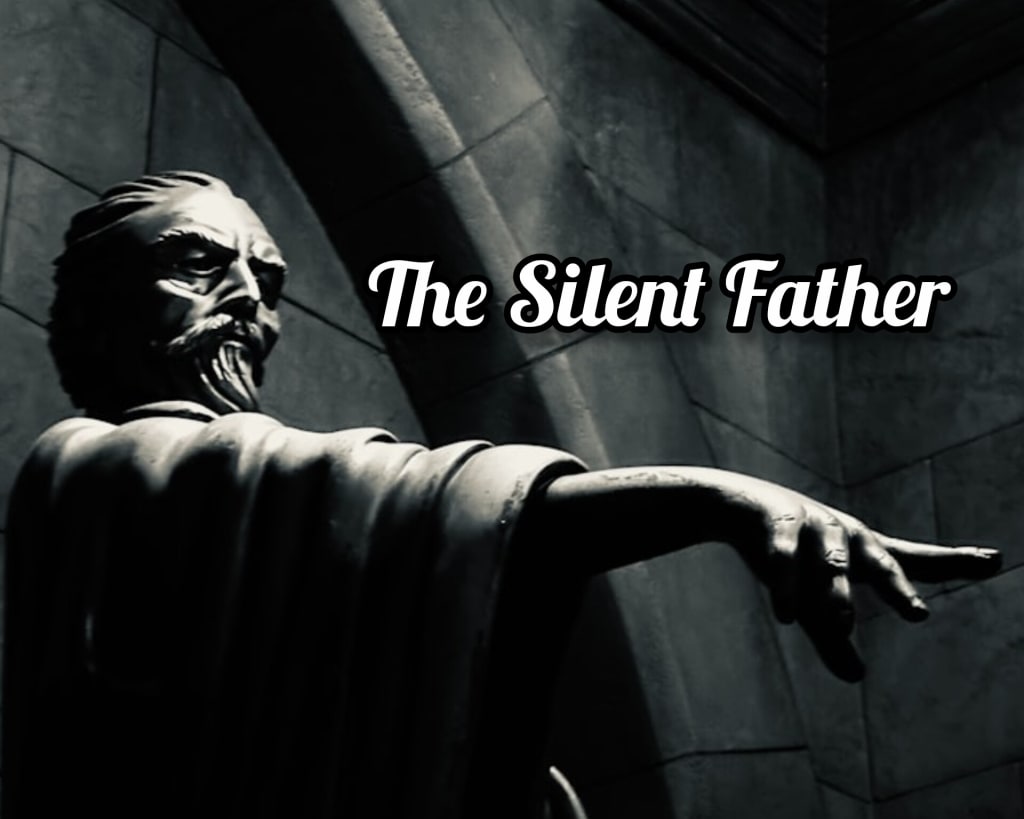
I was eleven when I asked my father, “Baba, why don’t you talk much?”
He looked at me for a moment, then smiled — the kind of smile that carries years. It wasn’t sadness. It was something deeper. Something like sabr.
My father never raised his voice. Never shouted. He worked silently in the garden every morning, prayed all five salah at the masjid, and fixed things around the house without being asked. He taught me Qur'an with gentle patience and never once got angry when I stumbled over verses.
But he never spoke of his past.
All I knew was that he had once been a soldier. Before I was born. Before we moved to this quiet corner of the world.
“Did you fight in a war?” I asked again one day.
He didn’t answer — just patted my head, stood up, and went to his small room where he often sat alone. On the shelf inside was a single black box, always locked.
I grew curious over the years. That silence — it wasn't empty. It felt… heavy.

The Day I Opened the Box
When I turned sixteen, my curiosity turned into temptation. One day while he was at the masjid, I opened the black box.
Inside, I found old medals, a torn flag, a faded photograph of his old unit… and a notebook.
The first page read:
“Bismillah. May Allah forgive me for what I’ve seen, what I’ve done, and what I couldn’t stop.”
I didn’t finish reading. I closed the box and cried.
That evening, I told him.
He didn’t scold me. He didn’t speak.
He just looked at me with the same quiet eyes and said, “Now you know why I stay silent.”
And that was the first time I heard pain in his voice.
The Patience of the Prophet ﷺ
Later that week, he took me to the garden and handed me a small book. “Stories of the Prophets,” it said.
He opened it to the chapter on Prophet Ayyub (Job, peace be upon him). We read together.
“You see,” my father said, finally breaking his usual silence, “sabr is not about staying quiet when things are easy. It’s about holding your soul together when everything is falling apart — and still turning to Allah.”
I realized then that my father wasn’t silent because he was broken. He was silent because he had healed. Slowly. With dhikr. With sujood. With tears no one saw.
The Real Battle
He never shared the details of what happened during the war. He didn’t have to. His silence taught me what many loud men never learn — that true strength is restraint.
Not shouting when angry.
Not hurting when hurt.
Not blaming when wronged.
And not abandoning Allah when tested.
My father had fought in a battlefield once — but his real war was afterward. Against his memories. Against regret. And perhaps most of all, against despair.
And he won that war with sabr.
Years Later
Now, I am a father myself.
When my children ask why their grandfather is so quiet, I smile and say:
“Because silence is sometimes louder than words — and in that silence, he found Allah.”
They don’t fully understand yet.
But one day they will.
And when they do, I hope they, too, learn that silence can be a form of worship — when it carries patience, remembrance, and peace.
Father’s Truth
The letters told a story not of victory or glory, but of pain. His father had been a medic during the war—not a fighter. He had seen children burned, villages erased, and friends beg for life while holding their last breath.
He wrote:
> "I never wanted to tell you these stories because war is not a tale for children. It is not a badge to be worn. It is a wound that never heals."
He had carried those memories not because he was weak, but because he wanted to protect his son’s innocence.
The Power of Silence
His father’s silence wasn’t cold—it was merciful.
> “Silence is not the absence of words,” one letter read. “It is the presence of wisdom.”
Amin wept. For years, he had thought his father was distant. Now he realized: his father had sacrificed not just his peace, but his ability to express it. He had bottled his sorrow so his child could smile freely.
A Man Transformed
With the letters in hand, Amin walked to the mosque his father once cleaned every Friday. It was quiet. Peaceful.
He sat in the same corner his father used to sit. And for the first time in his life, he understood what sabr—true patience—meant.
Not just waiting. But enduring without bitterness. Remaining quiet not because you have nothing to say, but because you choose to protect others from the weight of your pain.
A New Legacy
Amin didn’t let the letters collect dust again.
He compiled them into a simple book titled “The Silent Father” — not to gain fame, but to preserve the wisdom of a man who had lived with quiet courage.
He printed only a few copies. One for the local library. One for the mosque. One he mailed anonymously to a veteran’s rehabilitation center.
The last one, he placed on his own shelf. Beside it, a note: “For my children, when they are ready.”
Final Reflections
Years later, when Amin became a father, he often sat quietly with his own children.
Sometimes they’d ask, “Baba, why don’t you talk about serious things much?”
He’d smile softly and say, “Because sometimes, the kindest things are never spoken.”
But when the time was right, he would hand them the book—not to scare them, but to show them that silence, too, can be love.
About the Creator
Kaleem Ullah
hi
Welcome
Keep reading
More stories from Kaleem Ullah and writers in Families and other communities.
A Mother’s Silence Was Louder Than Her Words
The Quiet in Our Home Growing up, our home was not filled with loud laughter or long conversations. My father was a hardworking man who came home late, tired and silent. My mother, too, was not a woman of many words. She cooked, cleaned, prayed, and cared for us with unwavering routine. Her silence wasn’t cold, but consistent. As a child, I often wondered why she never said much.
By Kaleem Ullah7 months ago in Families




Comments
There are no comments for this story
Be the first to respond and start the conversation.