


There was a time when I hadn’t been home in something like 3-4 years. I was truly the sojourn traveler, the hopeless victim of wanderlust. Around the 4th or 5th year of my expat life, people started to look at me with that look of awe and wonder, as if I were some sort of superman when I told them how long I had been gone. “You’ve been in China that long!”, they’d say. It all seemed perfectly normal to me, being the traveler’s life has always been a part of my personality and moving abroad and staying away for so long was simply a natural progression for me.
I once heard an old Native American tale about a man who walked outside of his home one day, saw a bird in a tree and became curious about the its origins. The bird flew away to another tree farther off and the man followed it. Next, the bird flew to another tree, and then another and another. The man followed it as it went along and after a while the man never came home, so his wife had to live out her days in solitude before finally dying. Once she reached the afterlife, she met her husband and asked him why he never returned home. His reply was “Well, the bird kept flying.” I am the man, the man is me because I had very little to ground, tether or root me to my familial home. When a man isn’t grounded, he becomes too heady and drunk, in a sense, allowing his mind to create delusions and morph reality into something it isn’t.
Distance and time idealize things, places and people. Being gone for so long, I had forgotten what people were actually like. Unpleasant memories dissipated and I tended to remember only the good in people and places. Perhaps, this can be a sign that I’ve healed in some ways, but when I returned home reality came back to hit me in the face, no one was as I remembered them, old wounds opened and I was forced to accept that I had more healing to do, I had to come to terms with the reality of what I had forgotten. I had to heal my own wounds, wounds that I had forgotten were there. I had to mend my own malfeasance, remember who I truly was and turn my own poison into medicine. This herculean task had to be handled, for if it wasn’t, the cracks in the castle would only cause it to fall later.
Initially I had to take the hit to the ego of moving back into my childhood home with my parents, which is a huge blow to the psyche for an American. Our worship of individualism and money renders moving back in with your parents a retrograde operation, an existential failure, a retreat from the battle. Letting go of my income and job title, was in a sense, giving up my identity, giving up my adulthood and my ability to call myself “a man.” Releasing my independence and my sense of self that was derived from my job title and my income was reneging on my self-worth and having to move back in with mother dear was me releasing “my manhood.” But the blessing within the curse was that with the delusions stripped, I could now find out who I truly was, with no illusory sense of self-worth I was forced to find my real, actual self-worth.
A person does not become what they are meant to be, that which is within them unfolds like a flower. The first thing I noticed was that the house seemed stagnant—the energy seemed old and dense, as if it was bloated with the weight of unfulfilled dreams, ignored desires and repressed resentment that had gone unspoken for decades. I didn’t remember people seeming so unhappy, so non-communicative and so zapped of life. My arrival rejuvenated the whole house, resurrected the dead and forced conversations to come to the forefront. Because of my new found cooking skills, the food they were eating got better, my desire to revisit old sites and old friends resuscitated their social lives. I am a galvanizer, who electrifies every situation I enter.
I also had to come to terms with my country. It went completely over my head how parochial Americans could be, how they care little about how things are done differently in other places. And not only was I returning to the U.S, but the American South at that. Known for its backwardness and lack of intellectualism, the South prided itself on its food, music and ole’ time traditions. Overseas, I stuck out because I was foreigner, here I stuck out because I didn’t think like everyone else, I didn’t dress like everyone else and I wasn’t a Christian. I used words that people didn’t know, and compared everything to how it was in my expat home. I thought thoughts that others wouldn’t think and approached situations from angles that others don’t see. Going through the process of reverse culture shock posited me within the that fire of transformation that burns away everything that I wasn’t. What remained was my true self. I am an outlier with unorthodox approaches to every facet of life.
Within a few weeks of my return, I was inundated with others’ expectations. People who had never walked my path, who had never walked in my loafers, now wanted to tell me where they felt I should go and how I should do it. Though I had just returned from a whopping six-year stint in a foreign country, folks where asking me what plans I had or what I wanted to do. Without time to decompress and relax from one crazy, long adventure, I was being pushed to get back onto the rat race, racing where, I had no idea. Eventually, the depressing truth crept in. People wanted me to meet their expectations of getting this job or that job, doing this or that, making this much or that much, not because they were concerned with my personal happiness but because they concerned with the social façade of the family. When friends and aunts called, my parents wanted to be able to brag about the fancy new job title I had acquired, there was no bragging about the person I had become or the experiences I had accumulated.
The final front was to be fought within the family. There was much about my parents that I had forgotten, distance and time change their character in my mind. Returning forced me to flesh them out in their whole selves, seeing them in their entirety while analyzing the ways and history of how they possibly became who they were. I realized that my family had become polarized, I found them to be two opposites and that I would have to resolve their differences within me and blend the absolutes of my bloodline. My father looked much older than I remembered, with a body that was stiffer and more bent than I had recalled. As the fog cleared, I saw how he had sacrificed his personal power at the altar of peace of mind, long ago. He relegated himself to his easy-chair, hoping to coast through the remainder of his life. His joy, his hope and his pizazz had been gone, leaving him ever the procrastinator, waiting for problems to solve themselves. He talked at me, not to me, and always brought the conversation back to himself—forever in competition with me when I never meant to compete with him. Non-communicative, his support of me was conditional. He had always been a dreamer, yet he didn’t seem to see the worth in my new dreams. It felt as if he was a setting sun who was fearful of his rising son, not a drop of praise dripped from his lips, as if all that he was would be eclipsed by me if he acknowledged my own potential. His positive, calm demeanor and strategic approach to life remained, thankfully. My mother, was louder and fussier than I remembered. Her energy emitted a tight, noxious vibe that made me want leave the room. Suddenly, I remembered her—bossy, domineering and controlling, an absolute authoritarian who tolerated no criticism. Much like the Chinese Communist Party. She was impulsive, often not thinking things through while not allowing others to take leadership and do things according to a different timeline. Her impulsiveness clashed against his procrastination, her extraversion against his introversion, her lack of boundaries against his too hands-off approach. She was way more supportive and far more communicative. I realized looking back that I had told tall tales about their great traits and how grateful I was for having parents like them only to be embarrassed at how some of it wasn’t exactly true. There is much power in this, much poignancy in resolving these opposites; I have become the great harmonizer, who opens the way to transforming opposites into a powerful whole.
This isn’t a bashing session, but as the fog cleared, I could see clearly now. Returning home forced me to see my parents and everyone around me as parts and aspects of my own self. Others might have been projecting their fears, unmanifested potential and desires on to me but I had to make the very hard decision to not project onto the human canvasses without me, but to turn to the depth within and realize my own magnum opus. This wasn’t about them, this was about me finding what bothered me about them, within me. Scientist state that for humans the whole world is holographic, yet they mean it in a quantum way, I mean it in the sense of Zen, where all the world is mirror reflecting back to us our very selves. My return home was really a return to myself. I am the wounded healer, healing myself before I dares heal others.
About the Creator
Robert Burton
A world traveler and student of life, people and the human mind. I've been molded by my origins in The American South, six years of life in The People's Republic of China and my passion for life. I live, I learn and then I write about it.
Keep reading
More stories from Robert Burton and writers in Families and other communities.
Planting People
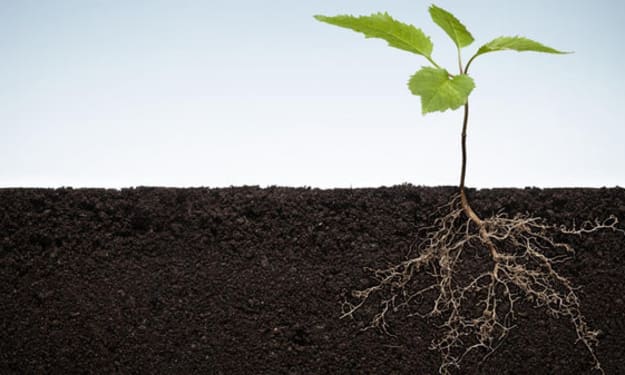
This is about people, planting people. Growing plants turns out to be a lot like raising human beings, because in many ways they need the same things and have nuanced requirements. If these needs aren’t met the final product is affected immensely. Therefore, the fruit that is born of the tree is directly influenced by the circumstances present in the nascent period of its life. In layman’s terms, this applies to human beings in such a way as to imply that the mental, emotional and spiritual health of an adult human is directly impacted by the childhood and relationship with the caretakers. This overall health, or lack thereof, is then a direct influence of how said adult takes care of the next generation when they are a caretaker. So, the process repeats itself and the effects, if not healed become generational. A forest is full of trees, and the health of the forest is dependent upon the health and plentitude of factors such as soil, sun and water in a way where every tree can stand as an individual, but what effects one tree can affect the whole forest. So, you have this collective called a forest and individuals called trees, yet the whole and the sum parts are connected, the health of the trees becomes the health of the forest. I think you could say the same about a farm and its separate seeds and plants. I like to further this analogy to humanity and its societies, families and individuals. That’s why I’ve named this piece “Planting People.”
By Robert Burton3 years ago in Families



Comments
There are no comments for this story
Be the first to respond and start the conversation.