
The Night My Father Saved Me Without Knowing
How one night changed everything between a father and his son

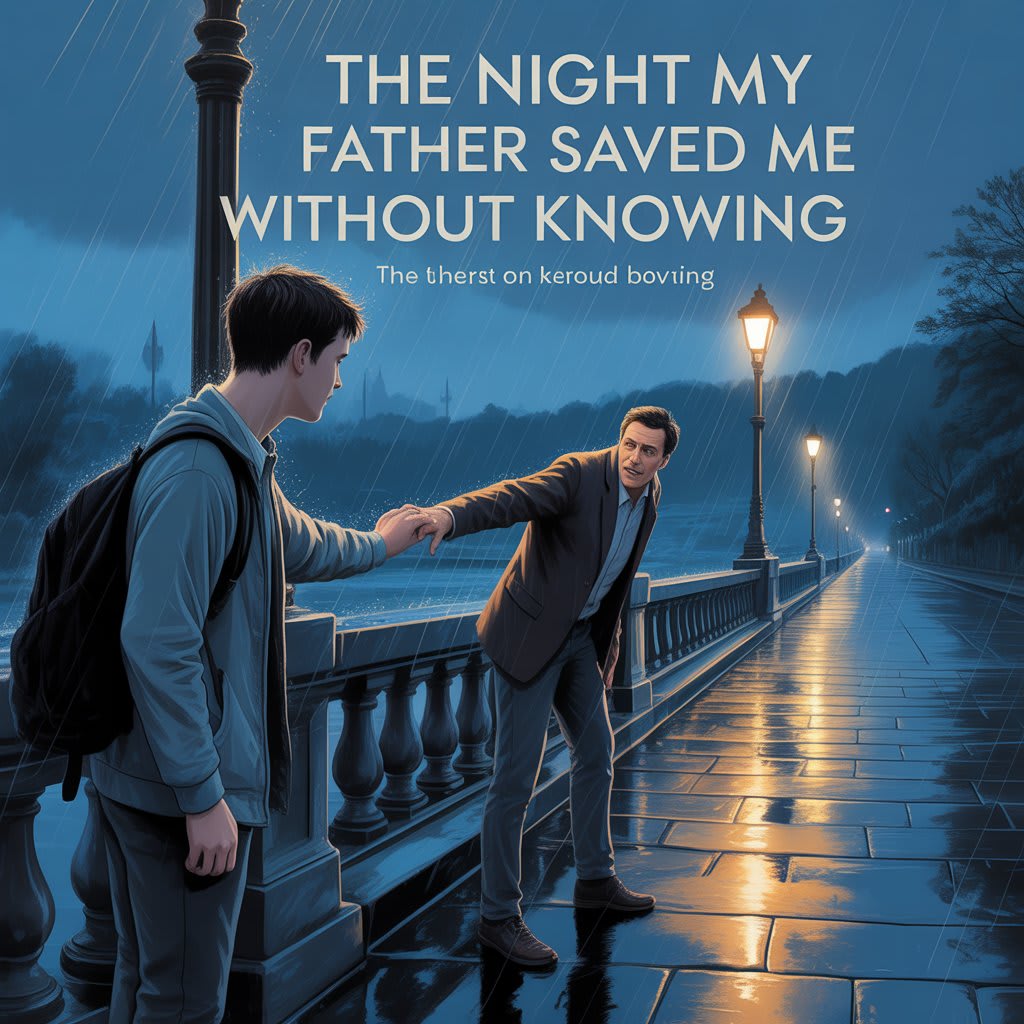
used to believe silence was the natural language between fathers and sons. In our house, words were tools for survival—used sparingly, only when necessary. My father, Kareem, was a man of early mornings and tired eyes, of rough hands that smelled like engine oil and cold winter air. He worked at the railway depot, fixing machines that carried other people forward while he stayed rooted in the same small life.
I was seventeen the night everything almost ended.
School had become a battlefield. Not the kind with bruises and broken noses—though there were a few of those too—but the kind where you slowly learned to feel invisible. My grades had dropped, my friends had drifted away, and the girl I thought liked me had laughed when someone joked about my secondhand clothes. It felt like the world had decided I was easy to overlook.
At home, my father noticed nothing. Or so I thought.
He’d come in late, wash his hands in silence, eat quietly while my mother spoke about bills and groceries, then retreat to the small balcony where he drank tea and stared at the city lights. I assumed his quiet meant disinterest. That he didn’t care enough to ask how I was doing.
I was wrong.
But that night, I didn’t know it yet.
It was raining—hard, cold rain that soaked through jackets and shoes in seconds. I told my mother I was going to meet a friend, which wasn’t entirely a lie. I was meeting someone, just not a friend.
There was an old bridge on the edge of town, no longer used since a new highway had been built. Trains no longer passed beneath it, but the drop was still high enough.
High enough to end things.
I didn’t want to die.
I just wanted the pain to stop.
Each step toward the bridge felt heavier than the last. My phone buzzed twice—messages from my mother asking where I was, but I ignored them. I didn’t want anyone to stop me. Not tonight.
When I reached the bridge, the streetlights flickered weakly, casting long shadows across the wet concrete. Water dripped steadily from the railings, like the bridge itself was crying.
I stood there for a long time, listening to the rain, watching cars pass in the distance. My hands shook, though I wasn’t sure if it was from the cold or fear.
I thought about my childhood—how my father used to lift me onto his shoulders so I could see over crowds, how he once stayed up all night when I had a fever, cooling my forehead with a damp cloth.
Then I remembered all the quiet years.
All the times he didn’t ask.
The loneliness rushed back like a wave.
I climbed onto the railing.
And that was when I heard it.
My name.
Soft at first, almost lost in the rain.
“Yusuf…”
I froze.
Then louder.
“Yusuf!”
I turned around, heart pounding.
My father stood a few meters away, soaked from head to toe, his chest rising and falling like he’d run the whole way.
“Get down,” he said—not shouting, not angry—just steady. “Please.”
“How did you know I was here?” I whispered.
He swallowed hard. “Your shoes were gone. And your jacket. You always take it when it rains.”
I had never noticed he paid attention to things like that.
“I wasn’t sure,” he continued, stepping closer slowly. “But my heart told me to check the bridge.”
Tears burned my eyes. “You don’t even care about me.”
That hurt him more than any shout could have.
He shook his head. “You think silence means I don’t love you,” he said quietly. “But silence is the only way I was taught to love.”
He reached into his pocket with trembling hands and pulled out something folded and worn.
A piece of paper.
“I’ve carried this for five years,” he said.
It was a letter.
My letter.
One I had written at twelve years old in school—a project about our heroes. I had written about my father. About how strong he was. How safe I felt when he walked beside me. How I wanted to be like him when I grew up.
“I found it in your old books,” he said. “Whenever I feel like I’m failing you, I read it.”
My knees weakened.
“You were never invisible to me,” he whispered. “I just didn’t know how to talk.”
I slid off the railing, sobbing into his chest as he wrapped his arms around me—strong, warm, real.
“I’m tired, Baba,” I cried. “I’m so tired of feeling like I don’t matter.”
“You matter more than my breath,” he said fiercely. “If you leave this world, it will take me with you.”
We stood there in the rain for a long time, holding each other like we might disappear if we let go.
That night, my father saved me.
Not with a lecture.
Not with anger.
But with love I had failed to see.
Later, as we walked home slowly, he told me stories about his own youth—about being bullied, about wanting to run away, about nights he cried alone because he didn’t want his father to think he was weak.
“I promised myself I’d be strong for you,” he said. “But I forgot that sometimes strength is speaking.”
From that day on, things changed.
Not perfectly. Not instantly.
But slowly.
We started talking—about school, about life, about fears we’d both hidden. Some nights were awkward, others emotional, but all of them real.
And I learned something important:
Love doesn’t always look the way we expect.
Sometimes it works quietly.
Sometimes it waits.
Sometimes it runs through rain to a broken bridge and calls your name.
My father saved me without knowing he had been saving me all along—every time he worked late, every time he worried in silence, every time he loved me in the only way he knew how.
And I’m still here because of it.
Because of him.
Because one night, when I thought I was alone, I discovered I never truly was. 💙
About the Creator
Wise~Guys
— Look Behind what's in Front of You ~ Make Good Choices — Hey, So how you Doin'..! Made~Men — Mobster Movies romanticise a distinctive, elegant appearance, impeccable attire style, along with the 'Families' expressive lingo. Making their 'Bones' gave them Panache — with vintage fedoras, tailored pin-striped suits, mirror-polished wing-tip shoes adorned with tassels; with their 'Gun Moll' gorgeous dates on their arms.
By Jay Kantorabout a month ago in Families




Comments
There are no comments for this story
Be the first to respond and start the conversation.