
The Miracle With Two Heads: A Story of Survival, Science, and Unbreakable Hope
How a Couple Expecting Twins Faced One of the Rarest Births in the World and Chose Love Over Fear

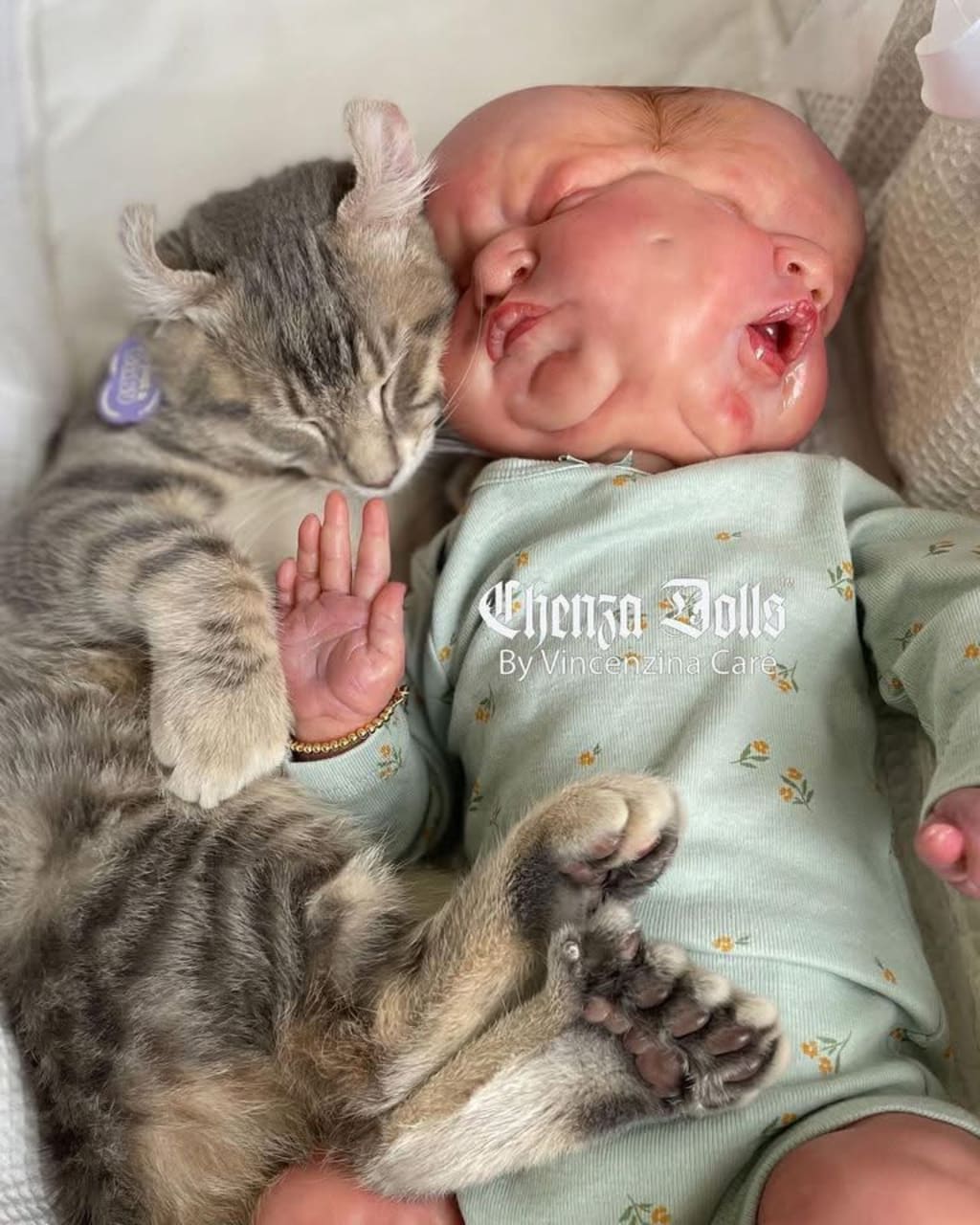
On March 28, in the quiet town of Ratlam in Madhya Pradesh, India, a birth stunned not only the family involved but also the entire medical team present. Shaheen Khan and her husband Sohail had been told throughout the pregnancy that they were expecting twins — two separate, healthy babies. But destiny had prepared something far more complex, challenging, and extraordinary.
What arrived that day was not a pair of twins but one baby with two heads, three arms, and two hearts — a rare condition known as dicephalic parapagus, a form of conjoined twinning where two infants are fused side-by-side and share a single torso. The room fell silent as doctors processed what they were seeing. Shaheen, exhausted but hopeful, asked the only question a mother can ask in moments like these:
“Is my baby alive?”
The answer, against all odds, was yes.
⸻
A Condition So Rare, Most Cases Never Survive
Dicephalic parapagus is unbelievably uncommon, occurring in roughly one in a million births. Sadly, many such infants are stillborn, or they pass away within minutes or hours due to the immense strain placed on shared organs. But this case was different. Doctors quickly realized that these conjoined twins possessed two functioning hearts — a factor that significantly increases their chances of survival.
Though physically joined, the twins have two separate brains, two spines, two sets of vital nerves, and independent thought. They share a torso but possess an extra arm between them, making a total of three. This extraordinary physical structure presents both complications and possibilities.
Understanding the complexity, the medical team arranged immediate transfer to a specialized facility in Indore, where experts could monitor their condition more closely. The journey was risky, but the twins remained stable — something doctors described as nothing short of a miracle.
⸻
A Family Caught Between Shock and Devotion
For Shaheen and Sohail, the emotional shock was overwhelming. Expecting to welcome two independent newborns, they instead found themselves facing a medical reality they had never imagined. Yet, within hours, the shock transformed into acceptance.
“They are our children. However God has sent them, we will love them,” Sohail reportedly said, holding back tears.
Their reaction reflects the resilience of many families who face such rare and difficult births. While society often views such cases with fear, curiosity, or disbelief, for parents, the only truth that matters is simple: these babies are theirs.
⸻
Doctors Grapple With Medical Decisions and Ethical Questions
The medical team in Indore now faces one of the most delicate challenges in pediatric care. The central question is whether these twins can — or should — be separated.
Separation surgeries for dicephalic parapagus twins are among the most complicated in the world. Unlike twins joined at the abdomen or chest, dicephalic pairs share too many organs to separate safely in most cases. Even when attempted, survival rates are extremely low.
Doctors have stated that the priority for now is stabilization, monitoring their breathing, heart activity, nutrition, and neurological responses. They must observe how the shared organs function under stress, and whether both infants show equal strength.
One pediatric specialist commented that decisions about separation are not only medical — they are deeply ethical. Because the twins have two heads and two consciousnesses, doctors must consider the individual life of each child. For now, it is far too early to determine what the future holds.
⸻
A Story That Captured International Attention
When news of the birth spread, messages of support poured in from around the world. Many expressed amazement at the survival of the twins; others sent prayers and blessings to the family. The story sparked conversations about medical miracles, genetic mysteries, and the enormous strength some families must find in the most unexpected moments.
Although the world may view this case through the lens of biology or rarity, for Shaheen and Sohail, it is simply the story of their children — children they want to protect, nurture, and love, regardless of how long their journey may be.
⸻
A Future Full of Challenges — But Also Possibilities
The road ahead will not be easy. These twins will need constant medical observation, specialized care, and a supportive environment. They may face breathing challenges, digestive issues, or heart complications. Their development will require careful tracking, and their mobility will likely be different from typical infants.
Yet history has shown that conjoined twins — even those with dicephalic structures — can survive, grow, laugh, learn, and form deep emotional connections with the world around them. Some have lived into adulthood. Their lives may not follow a conventional path, but they can still be meaningful, joyful, and full of human warmth.
For now, what matters most is that these rare twins are alive, fighting, and responding to care. That alone is nothing short of miraculous.
Author’s Note
This story is completely my own, written in my voice and style. I only took a little help from AI for improvement and structure.
About the Creator
Izhar Ullah
I’m Izhar Ullah, a digital creator and storyteller based in Dubai. I share stories on culture, lifestyle, and experiences, blending creativity with strategy to inspire, connect, and build positive online communities.
Keep reading
More stories from Izhar Ullah and writers in Families and other communities.
🌍 The World’s Smallest Mother: The Unbreakable Courage of Stacey Herald
The Truth Behind the World’s Smallest Mother: The Unbelievable Journey of Stacey Herald In a world where physical strength is often measured in height, size, and power, there lived a woman who proved that the true meaning of strength comes from the heart. Her name was Stacey Herald, known around the globe as the world’s smallest mother — standing at just 71 centimeters tall. Her story is not just extraordinary… it is a reminder that love can defy fear, and courage can rewrite destiny.
By Izhar Ullah2 months ago in Families
Wise~Guys
— Look Behind what's in Front of You ~ Make Good Choices — Hey, So how you Doin'..! Made~Men — Mobster Movies romanticise a distinctive, elegant appearance, impeccable attire style, along with the 'Families' expressive lingo. Making their 'Bones' gave them Panache — with vintage fedoras, tailored pin-striped suits, mirror-polished wing-tip shoes adorned with tassels; with their 'Gun Moll' gorgeous dates on their arms.
By Jay Kantor18 days ago in Families
Becoming a sleeve snake
The Treacherous Minister A long time ago, in the land of Greece, there was a wise and just king who ruled his kingdom with fairness. The king trusted all of his ministers and often consulted them on matters of governance. Among all his ministers, there was one whom the king favored above the others—a man named Faisal. The king valued Faisal’s advice and often sought his counsel for important decisions.
By Sudais Zakwan5 days ago in Families




Comments
There are no comments for this story
Be the first to respond and start the conversation.