
The Letter in the Sewing Box
Buried beneath years of thread and buttons, a letter waited to mend more than just fabric — it was meant to stitch a family back together.

After Grandma Noor passed away, the house felt too quiet. Not the peaceful kind — the hollow kind, like the house itself was holding its breath.
Everyone had returned to their own routines. My uncles stopped calling each other again, my father rarely spoke during dinner, and my younger sister Noor (named after Grandma) spent most of her time alone. Grief does that — it separates people before it binds them.
One humid Saturday afternoon, I was assigned the task of clearing Grandma's sewing room — the only room no one had dared enter since the funeral.
The air inside was musty, laced with the scent of old wood, cotton, and rose water. Her favorite rocking chair still faced the window. A half-stitched cushion cover sat on the table like it had been waiting for her hands to return.
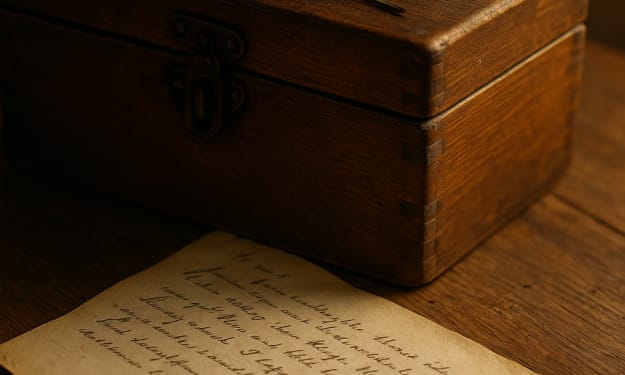
I opened the drawers one by one, organizing needles, ribbons, and ancient scissors. Just as I was about to close the final drawer of the old sewing box, something caught my eye — a small, yellowed envelope sealed with a faded blue thread instead of glue.
It was addressed:
“To whoever finds this — when the time is right.”
I hesitated. My heart thudded the way it does when you're about to open something sacred. And then I opened it.
---
Dear One,
If you are reading this, then I am likely gone. I hope I went with peace. I hope the jasmine bloomed that day.
You see, I sewed more than clothes in this room. I sewed silence and held together broken things. Many of them were not fabric.
There are things I never told your father and his brothers. And for that, I carry regret. Your grandfather and I had a falling out no one ever knew the full truth about. Everyone assumed he left us out of anger. That’s what I let them believe.
But truth has weight. And after a while, it wants to be free.
He didn’t leave. He was ill. He didn’t tell me until it was too late. He was ashamed of being a burden. He left quietly, not out of anger — but out of fear. He passed away alone, but not unloved. He wrote letters. I kept them all. They’re under the floorboard, beneath the window where the morning light always falls.
Please read them. And please forgive me for letting pride become a lock between hearts. If you can, share the truth. Maybe it’s not too late to mend what was torn.
Love, always,
Grandma Noor
By the time I looked up from the letter, my eyes were wet and the silence in the room felt different — more like a hush than a void.
I went to the window and found the loose floorboard she had mentioned. Beneath it were four neatly folded letters, brittle but still legible. One for each son. Including my father.
That night, I sat my father down. I didn’t say much — just handed him the letter with Grandma’s words.
He didn’t cry, not in the way you'd expect. But he held that letter the way he once held me when I broke my arm — tight, trembling, like something precious he thought he had lost forever.
The next week, for the first time in years, all my uncles came over. Not for an occasion. Not for an argument. Just to read, remember, and sit together again.
In the weeks that followed, I saw something begin to return. My sister started talking more. My father started humming old tunes. The rocking chair didn’t face the window anymore — it faced the room, as if waiting for someone to sit and listen.
And every now and then, when the air felt heavy, I would go back to the sewing room, sit quietly, and read that letter again.
Because sometimes, the things we leave behind are not things at all. They are chances — to heal, to speak, to begin again.
And Grandma, in her quiet way, had given us just that.
About the Creator
Keep reading
More stories from Ahmad Khan and writers in Families and other communities.
The Silence at the Dinner Table
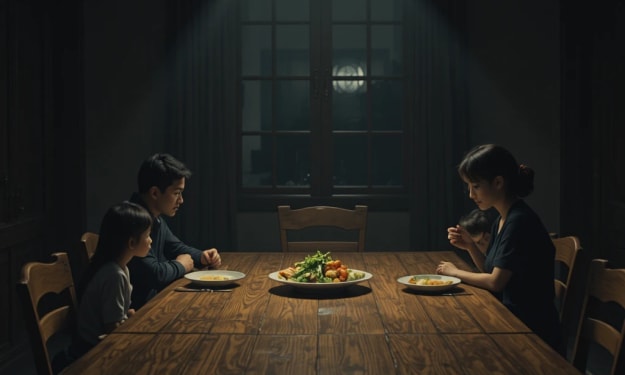
The Silence at the Dinner Table When Silence Speaks Louder Than Words The house was never truly quiet. The television hummed in the living room. The refrigerator rattled every few minutes. Cars passed outside, their headlights brushing across the curtains like wandering ghosts. But at 8:00 p.m. every evening, when the family gathered around the wooden dinner table, a different kind of silence filled the room — one that felt heavy enough to press against the chest.
By Truth words 7 days ago in Families


Comments
There are no comments for this story
Be the first to respond and start the conversation.