
THE LAST EMPEROR
Spider-web shadows crept across the silent rooms of the sleeping house... It is amazing how much can be learned about a place by just dragging your fingers and your eyes across the floor, looking for patterns and imperfections layered and layered over time in a palimpsest of life's residual traces. If examined closely, the floor in the corner of the living room between the west and south facing windows revealed a seemingly habitual pattern of scratches, indicating something had been consistently moved in or out of the spot time and time again...

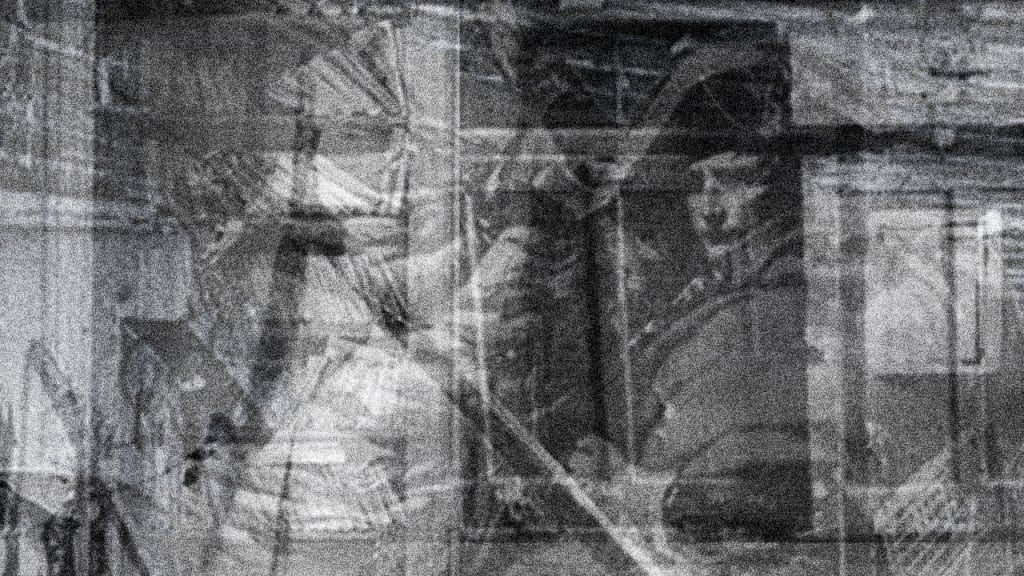
Similar to when a pounding rain breaks against the fast clip of a windshield, exploding in radial bursts of thin lines, the cracks in the windows were so many raindrops catching and throwing the morning light. Spider-web shadows crept across the silent rooms of the sleeping house. It was vacant now, and steadily falling into greater and greater disrepair. The little house stood last in a row of similar structures, lining the gently bent, dead-end street. The street too, was becoming more and more derelict. Among all the houses, nearly every other one showed signs of neglect. Paint chips scattered in odd piles like little heaps of strange white, blue, and green snow around the weed ridden dirt lawns. Missing shingles left bald patches on the rooves as the dandy lions tangled and tied them to the ground. The absence of scattered newspapers and phonebooks on the doorsteps marked the inhabited ones, crisscrossing ruts in the dirt indicating that someone had at least tried to tame the rampant weeds. Large amebic patches, slightly off from the original colors, struggled to hide the houses’ molting skins.
The little house was a bright yellow, back when it was freshly coated, over eighty years ago or so, but was now faded nearly to white, the pale of chilled butter. The front door opened directly into a small living room. There were no furnishings in it now save a striped armchair in the corner. It was stained and torn, and one of the legs was missing, tilting it severely forward, its overall appearance wounded and defeated. At one time the room had been happily appointed and although challenged for space, it had held an air of elegance and comfort. A pale grey sofa and chairs faced each other around a simple, snow-white square coffee table. A few deep yellow pillows subtly embroidered with abstract patterns of popping marigold buds had sat neatly spaced atop the grey cushions. The walls have been repainted several times, each consecutive coat with less care than the previous. At the time of the yellow pillows the walls were a rich navy blue, they were now a muddled taupe.
Streaks of glue residue irregularly traversed the dark wood floors, suggesting that someone had tragically covered it with carpet, and someone else years later had excitedly unearthed the hidden gem, but the damage was done, and the scars never fully healed. In the kitchen, four identical dents marred the floor in even succession. The first tenant in the little house was the older sister of the original landlord, an elderly woman; she had lived there for five years until she could no longer care for herself. No one has treated the house quite as well since. Every Saturday she would go shopping and stack red and silver cans two high in perfect rows on the lower cabinet shelves. It is possible that upon returning home one Saturday morning, a bag of canned sweet peas and black olives escaped her weakening grip and fell to the floor, leaving behind the four half crescent pocks. One can imagine she would have been terribly upset with herself. Luckily, the marks were not in the center of the room, but at certain times of day the light from the window over the sink hit them just right, making them rather noticeable. Every time she entered the kitchen around mid-morning or early evening, she must have cringed and refreshed her irritation with the silly mishap.
A young woman had lived there a few years after the elderly lady and it is also a reasonable to surmise that upon entering the kitchen and leaning against the counter to try on a new pair of heels, four quick steps had left the dents before she realized the damage. She would throw them off, dropping to her hands and knees to rub the divots as if she could smooth them out through sheer force of will. She most likely sat there for a while in her crimson dress, her head resting against the oven door as she stared past the ceiling. Wondering, while her fingers aimlessly explored the newly formed craters, if they were worth trying to fix. The phone startled her from her musings; the voice on the other end asking if half an hour was alright to pick her up for the party. That would be fine, but she wished the voice on the phone had been some dreamy gentleman, asking her out to dinner and dancing in the city. It had been a long time since any sort of romantic evening, and company parties were always so dull with endless talk of figures, and the weather, and nothing. Giving one last glance at the dents in the floor, she set her shoes aside and waltzed with herself in triangles from the sink to the stove to the fridge and back to the sink again, pretending to be in the arms of the imaginary man on the phone.
Had she been dancing in the kitchen in the same manner just a week later, she would have thrown herself into the arms of the new tenant as he turned from the sink looking for something to dry his hands and trying to remember which box had packed away his towels. He was not dreamy, per se, but he had been a gentleman once, even considered quite the catch. Now he drank too much and spent many precious hours on meaningless distractions. She might have been able to pull him out of his self-appointed malaise and bring him back from the brink, but no one can know for certain, and they would never meet. He had been engaged once, many years before, but his fiancé broke the engagement along with his heart and gave her love to another. His career had been promising, but it too spiraled out of his control and his life landed in the little house, reduced to a pile of boxes and a green and gold striped armchair.
The young woman in the crimson dress had decided to buy the grey furniture from the landlord and take it with her on to bigger and better things, and so the striped armchair found its way into the living room, awkwardly sitting alone in the corner against the blue walls, never to leave. Even then, the chair tilted weakly to one side looking as if it too would like a spot to collapse and sit down, but that was not its purpose, and everything about its bearing hinted at resentment.
A large stain on the opposite wall marked where the man might have thrown a beer bottle on one of his many lonely and bitter nights. It would have happened in a split second, a flash of bursting glass and flying lager, yet the outline on the wall was incredibly intricate. The delicate imprint braided as if the running liquid had carefully picked intertwining paths for its fingers to follow from the middle of the wall to the floor; much like tree sap slowly and deliberately finding its way down a matrix of bark until it is an elaborate amber lace, frozen in its tracks. The landlord may have tried to wipe it away, but too much time had passed, and the stain was already firmly set. It was smudged and smeared in places, distracting from its former gracefulness. The trim below was yellowed and tacky, but the drinking man may not have been the guilty party.
Over the years children had also lived in the little house, and any one of them was unquestionably capable of rashly lifting a tumbler of juice or lemonade above their head in some sudden fit of excitement, smashing it against the wall, and leaving behind a sugary waterfall. The mother would have undoubtedly given a startled cry and rushed for paper towels or a damp dish cloth, dabbing and blotting as best she could, but the stain just worsened. Defeated, she had only one option, and she never liked how dark the blue was anyway. So, the living room saw its first coat of repainting, a light sage green. Her husband had died in a driving accident leaving her a modest amount of money, and she was determined to make it last. Searching and searching for a reasonable apartment she had stumbled across a newspaper ad for the little house. It was not in the most convenient location, but nowhere else this close to the city could you rent a two-bedroom house for so fair a price. She hurriedly called the landlord and asked to see the property.
To most of the people that had ever lived there, the little house was nothing special. It was full of odd imperfections, the trim was different sizes in different rooms, things did not quite line up, the ceilings sagged slightly, and no two light bulbs were the same. When all of them were switched on they washed the rooms in a patchwork of uneven radiance and inconsistent hues, not so unlike a handful of mismatched stars waxing and waning in their tousled constellations. Some of the walls leaned in, some leaned out, and the disparity was just enough that fine cracks and fissures began to branch out from every corner. The little house was only twenty years old at this time and it was already in need of much repair, but to the widow it was a palace, a place she finally felt her feet were on the ground again since the accident. She had a grand vision in her mind of all the things she could do with the place, but she would have to take it slow, one step at a time, she decided to start with her son’s bedroom. He was a sweet boy of seven years and looked just like his father. Every time he laughed, she could see her husband, he was there smiling at her through his son’s eyes and it broke her heart every time, but she would wish it no other way.
The boy’s father was a good man, full of love and life and interesting hobbies bordering on obsessions. He had been a history professor and was a prolific writer, hoping to publish a book on the Napoleonic Wars and their consequence on a then developing United States economy, but he would never finish it. His great grandparents had moved to the states from a little town in Normandy and he had grown up nostalgic for anything French. When he was younger, he traveled the world and collected a great number of little treasures. Books and books and albums of stamps and trinkets and figurines had filled his study. His most prized possession, however, was a stuffed doll of Napoleon Bonaparte that had been his great grandmother’s constant companion as a little girl. The doll was weathered and worn, covered in dirt splotches, and nearly thread bare in places. The depiction of the mighty French king was quite comical. It wore a soft blue military jacket with gold trimmings and the doll’s right hand was stitched into the fabric between the first and second pearl buttons. His puckered lips were embroidered in bright red and an oversized black bicorn hat sat crooked upon his pale cheesecloth head.
The boy’s mother painted his room sky blue, just as it had been when in his old room, when his father was alive. The space was snug, but she managed to mount three white shelves on the wall opposite his bed filled with his father’s riches. She did not want her son to forget him. Every night as she pulled his covers tight, she would tuck in the little Napoleon next to him and tell stories of how the brave doll had crossed an ocean with his father and been at his side on many fantastic adventures.
* * *
A tattered and crumpled report card was still precariously lodged between the refrigerator and the wall, threatening to fall at any moment. Who knows how long it had been lost in the dark, waiting for someone to remember the triumphant news it was meant to announce. It might have been the little boy’s, and his mother smiling and proud had taped it to the refrigerator door. Then again maybe not, he was not the only child that had ever lived there. A little girl may have run it home to her parents from the school down the next block. She was a clever girl for her ten young years and always excelled in school, but she was the new kid, and children can be cruel. They would jeer and jest, asking which one of her dads was her mom, laughing harder as her eyes began to water. Her third new school in six months, she had no friends yet, and every day she would sprint home after the final bell to escape before hearing about the sleepovers and birthday parties she was never invited to.
Her dads had both lost their jobs, and consecutively their home, and had moved to the little house to regroup and start over. She had a younger stepsister, not yet in school, and they shared the smaller bedroom with a full-size mattress on the floor running lengthwise along the wall under the narrow double hung window. The room was still sky blue and the girls’ pink sheets and bright dresses completed the fairytale spectacle. They had never had much, but they did not notice, and though times were even leaner now while their parents looked for work, they were loved and happy. Each morning at breakfast their fathers would scan the newspapers and exclaim cheerily that all they lacked was a little luck and they could feel it just around the corner. This would make the girls laugh and the four of them would chase each other in circles around the small kitchen table. They both wore brave faces, but she could see the worry in her fathers’ eyes, and she would quickly smile so they would not notice it reflected in her own.
Christmas was drawing near and each night as they lay in bed the girl would hear her little sister finish her night prayers by asking for luck for their fathers and a new doll for her and her sister to care for. Every year the girls would each get a new dress and under the tree would be a gift for them to share. While her parents were out shoveling the drive, she explored the house looking for clues of what they might have gotten them. On one particular expedition through her fathers’ room, she noticed a tiny cloth hand poking out from behind one of the nightstands. The furniture in the room had been there when they moved in – heavy, ornately carved pieces left by the previous tenant. She remembered overhearing the landlord telling her parents that the old man had passed away in the bed, and if they did not want the mattress, he would have it removed. They did not have the money for a new one so it remained. They did ask if the carpet could be torn out, as it was heavily stained and smelled badly. The old man had installed it shortly after he first moved in and its removal revealed a wooden floor riddled with a curious matrix of screws and nail heads. As such, they were not allowed to play in this room and cautiously she approached the nightstand. Tugging on the little hand she jumped back as the Napoleon doll fell to the floor. Her parents must have known her sister wanted a doll, and she carefully put it back in its hiding place, smiling at the success of her reconnaissance.
The little doll waited all night for the girl to come back, but she did not. The next day, the State returned for her and she was removed from her foster family’s care, their current financial hardship deemed untenable for both girls to remain. Her father knelt in front of her the water welling near to breaking. You will always be part of our family and we will always be here for you. Her other father covered his eyes to hide the tears he could not stop. The broken family moved the following week.
* * *
It is amazing how much can be learned about a place by just dragging your fingers and your eyes across the floor, looking for patterns and imperfections layered and layered over time in a palimpsest of life's residual traces. If examined closely, the floor in the corner of the living room between the west and south facing windows revealed a seemingly habitual pattern of scratches, indicating something had been consistently moved in or out of the spot time and time again. The scratches wove a tight pattern of thin and thick lines, almost like blades of wild grasses hopelessly crossed and tangled on some forgotten patch of windswept prairie. One can imagine new gashes were added each year from the four metal legs of a Christmas tree holder as it was moved forward and back and nudged to this side or that side until it was positioned just right. The sunny corner was the most natural place for a tree, visible to the neighborhood and passersby from the windows, while basking in full light without crowding or cutting off the room.
The legs of the tree holder were most likely accountable for the finer markings, but the broader strokes may have come from other legs – such as those of a massive, burgundy lounge chair. The seat and back cushions were unreasonably plush, and the diamond array of leather buttons were sewn so tightly down they formed cavernous depressions, each deep enough to hide their own shadows and secrets. The carved walnut legs had feet fashioned after lions’ paws and the arms were furled eagles’ wings. It had belonged to a tenant in his late seventies and he would often shift its position in the corner of the living room turning it to face either the north wall or the east wall, both windowless and completely covered floor to ceiling in priceless oil paintings.
Apart from the paintings, his lavish chair, a striking Persian rug, and a small tea cart for his whiskey, the only other thing in the room was the striped armchair slumped next to his and looking worse than ever in its newly refined setting. He had intended to throw it out but had decided not to on account of how grand his looked next to it. The few guests he had were given a seat in the old, dumpy chair, while he sat upon his throne wrapped up in the unreasonable and glorious sense of importance and power it gave him. While he lived in the little house, his chair was never replaced by a tree. He did nothing special to celebrate Christmas, except maybe pour a glass of particularly fine Scotch. In his mind it was his reward for putting up with all the roofs dripping with lights, all the windows brimming with red and green cut outs, and all the shops flooded with the same horrid holiday songs.
The old man was a devoted collector of art, and now expanding his collection was all he lived for. During his years there it was more of a museum than a home. He no longer desired to see any more of the world, he had seen enough, and he distrusted and resented it. He did not care for the countryside, and he did not care for the city and all its foolish people bustling about, so he settled in the little house somewhere in between. With his back to the windows, he would sit day after day on his throne, the only sound in his silent kingdom the gentle clinking of ice against glass and his pen scratching against off white pages. Sipping his Scotch, he would gaze through the picture frames onto perfect landscapes and magnificent scenes of battle with horses reared on two legs and great generals, swords extended, the mighty noise of war a clamor in his ears. Or he would stare bitterly into the soft pale face of a young woman as she lay in silky gowns stretched across a chaise lounge, a child buried in her chest. He had always wished his life could be like his paintings, a series of perfect moments captured in time, untarnished and incorruptible – powerful and important. But he had somehow managed to poison every aspect of his life, through his pride or obstinacy he had pushed away everyone he ever cared about and estranged himself from his wife, his two sons, and five grandchildren.
Layers of paint can hide many things, but if scanned closely, slight depressions betrayed the locations of a myriad of holes that had punctured the injured walls. The living room showed the most evidence of this, which is not surprising, but the breakfast nook in the kitchen belied only three, arranged in a stretched-out triangulation. A peculiar wire model of the Eiffel Tower had hung anchored to the center of the wall. The mother of the fatherless boy had made it. She was very creative and had bent and twisted an impressively accurate replica out of hundreds and hundreds of paper clips. The tower had once proudly displayed photos and notes and torn maps with red marker trails highlighting all the places she wanted to show her son in his France when she had finally saved enough to take him to meet his father’s family.
They had been in the little house seven years now. It had not been easy, she never remarried and worked two tiring jobs, but she had poured her heart and soul into raising her son there. Through her eyes the house glowed warm with blown out birthday candles and pillow forts and paper planes and scuffs and scrapes and tears and giggles. A big part of her hated to say goodbye, but her brother-in-law had offered for them to come live with his family every year since they moved in, and he could not wait to meet his nephew. A change would be good, she could feel her husband’s memory slowly fading from their lives and she hoped the move would in some way bring him back. The boy was fourteen now and had outgrown and forgotten all about the little Napoleon doll. As they packed up their things, it was helplessly trapped between the bi-fold door and the wall in the closet. The doll could see them through the crack, but they could not see him, and he watched as they moved on and left him behind. He sat there in the dark for almost a year, waiting with the little house for a new tenant to save them from the silence.
Eventually the old man moved in with his paintings and his fine things and as he surveyed the rooms he happened upon the little doll in the closet. This is no place for a king, he thought, laughing at the odd little Napoleon. He sat the doll in a place of honor upon a little black book atop the night stand next to his bed. Many mornings he would make his breakfast and bring it back on a silver tray to his room. With no one to talk to, he would talk for hours to the little doll of all the great things his two sons had accomplished, and how he was sorry he never told them how proud he was. Wiping tears from his tired eyes, his regret soon reversed to rage, and he would lecture the doll on how they should be the ones saying sorry, not him. He had not talked to his boys in years and going on his eighty-seventh birthday he died in the little house, all alone in his bed, the doll sitting by his side, his only companion.
In the kitchen, the first tenant, the elderly woman, had covered the strips of wall above the counters and below the cabinets with sunshine yellow tiles. Sadly, she had only enjoyed them for a few short months before a sharp decline in health. The tiles together with the white clapboard cupboards made the kitchen exceedingly bright and cheery, and together they are the only things that have never changed. It is a curious thing, how the circle closes, the last tenant to live in the little house was the elderly woman’s granddaughter. She lived all on her own, and during her time in the house the rooms were especially sparse and bare. On the dresser across from the bed in the larger room was a jewelry box she had inherited from her mother, but without any of the jewels. Her father had sold them, disappeared, and left her on her own. She was only eighteen years old. Despite her shaky start in life, she was intent on making something of herself, and the jewelry box was a promise. A promise that one day she would be able to fill it with the things she had never had, but for now it was filled with odds and ends, buttons and pins and trinkets from a past she did not care to remember. The objects were uncomfortable and out of place in the velvet lined casing of the ivory box, like underdressed guests at a posh dinner party with no hope of escape.
Sitting in the kitchen the yellow tiles would remind her of visits to grandma’s house as a child and playing on the grey sofa surrounded by marigold pillows. They were some of the only fond memories she had. Her grandmother had passed away when she was younger and after her mother died; she had no place to go. The current landlord of the little house was the son of the original, her grandmother’s nephew, and her uncle. She barely knew him, yet he kindly offered her the place free of rent. She was grateful but would’ve much rather been offered a family than a house. Her stay there was short however, as she soon left for college and never looked back.
* * *
The little house was now vacant once again, waiting for someone new to break the arresting calm and bring life back within its walls. For nearly a decade it patiently watched as potentials came and went. They would walk around the little house, peering through all the windows, and never come back. Before long they ceased coming at all. . .
* * *
The past tenants all had one thing in common – they were terribly alone; one thing or another just had not worked out in their lives: love lost, dreams broken, chances missed, and they landed here in this little house, where the rent was cheap and there was just enough space to keep the walls from closing in for a few months. The lawn was mostly dust and thistle, but at least grass grew between the cracks of the narrow sidewalk leading up to the three front steps. They had all filled it with their things and their thoughts and their memories, trying to piece together the fragments of their lives into a home.
It is hard to comprehend such a quiet death for a place filled with the ghosts of so many lives. As the house sat empty, children threw rocks through the windows, the door was kicked in, and a fine layer of dust began to grow into a monstrous blanket. Rain had patiently worked its way through the crumbling layers of the roof. Mice made homes in the deepest corners of the cabinets and mourning doves made nests in the holes in the ceiling. Spider webs began to drape like majestic tapestries over the lights and the broken chairs. The little doll of Napoleon lay sprawled beneath the splintered bed frame in the larger bedroom.
Rats moved in next, scouring every inch for anything they could eat. They would take one or two bites at the little doll and realizing he was not food quickly dart to the next room. Their grabbing and pulling had propped him up, slouched against one of the battered bedposts. As the passing days and nights relentlessly erased memories of the little house page by page, the last emperor sat stoic and still, watching the world crumble around him, utterly alone in his exile.
* * *
Years he sat there, the house was now surrounded by temporary chain link fencing, marked for demolition. As chance would have it, the circle strove to close another loop. The fostered girl had recognized a photo of the little house in a recent article on the old man who had lived there, hidden away with his priceless art. His sons had recently donated some of the more significant pieces to various museums and the local papers jumped at the chance to claim their slice of the story. Masterpieces hanging so unceremoniously for so long right in their back yard. It was such a long ago that she had lived there, she would never have remembered the address. She could not ask her foster fathers. They had both passed, one of cancer not too many years after her separation from them, the other from unknown natural causes, but she knew it was grief, a whole lifetime’s worth. Her younger stepsister had also been shuffled from home to home, it was not until sometime afterwards they were able to reconnect, and they tried to stay in touch. Reading of the impending demolition, she couldn't shake the urge to visit one last time before it was too late. Maybe she hoped it would spark some long-buried recollection of her their brief happiness there.
Squeezing through a gap in the chain link, she carefully entered the door-less entry, listening intently for signs she was truly alone. She moved room to room, gliding her fingers through the dust in places. It was fainter now, but it smelled the same. In the master bedroom she could not believe the same furniture was there, badly broken and collapsed from vandals jumping on the bed frame and mattress, torn and black with dirt and damp.
She froze in her tracks. A long-lost memory flooding back as if no time at all had passed. A little cloth hand barely visible, poking out from under the bed frame. Gingerly she reached for it, as she pulled it the little Napoleon doll appeared, bringing with it a little black book.
She smiled at him, as if to say, see I came back for you, and set him softly aside. She opened the little black book and across its pages were lists of abbreviations and numbers, she thumbed through it curiously, wondering what was recorded so meticulously. Every parallel line filled with hard to decipher, slanting cursive.
The lists were broken in places, replaced with short paragraphs:
James birthday today, fortieth, I lost his number, and he has not called in nine years. Wishing him well here instead. As a kid he always asked for angel food cake with strawberry ice cream on his birthdays, I do not know about now, but I’ll picture it that way still.
They were all like this, notes from a father to long estranged sons, then her first clue to the paired letters and figures:
The last of it, with the last Emperor. If you find yourself here in this house like me, with no one left, use it better than I did.
She puzzled for a moment and then, picking up the doll again noticed a little torn paper folded and tucked tightly into the seam of his jacket behind his hand...
The floorboards.
She looked back at the lists of letters and numbers and she had a feeling she new what they meant. A leger of treasures hidden beneath her very feet. A whole world began to open before her eyes, and she flushed with excitement. She would find her sister, and together they would rebuild their home.
About the Creator
Jeffrey Wigen
Designer living in LA with my husband.
I moved to the city from a small town in the middle of Montana to attend the College of Architecture at IIT – where I now teach.
Writing, for me, is drawing with language, enjoy!
Keep reading
More stories from Jeffrey Wigen and writers in Families and other communities.
Wise~Guys
— Look Behind what's in Front of You ~ Make Good Choices — Hey, So how you Doin'..! Made~Men — Mobster Movies romanticise a distinctive, elegant appearance, impeccable attire style, along with the 'Families' expressive lingo. Making their 'Bones' gave them Panache — with vintage fedoras, tailored pin-striped suits, mirror-polished wing-tip shoes adorned with tassels; with their 'Gun Moll' gorgeous dates on their arms.
By Jay Kantor23 days ago in Families
How to Succeed at the Benson Directory®
Congratulations and welcome to the Benson Directory® employee #22391! As our newest call handler, you will have the privilege of speaking with dozens of unique and interesting people on a daily basis as well as the opportunity to earn bonuses for high performance. Contained within this handbook you will find a set of ease to follow instructions designed to help you settle in to your new role and begin paving the way to success.
By S. A. Crawford6 days ago in Fiction




Comments
There are no comments for this story
Be the first to respond and start the conversation.