
The Last Bench in the Park
A place where grief turned into goodbye and love stayed forever.

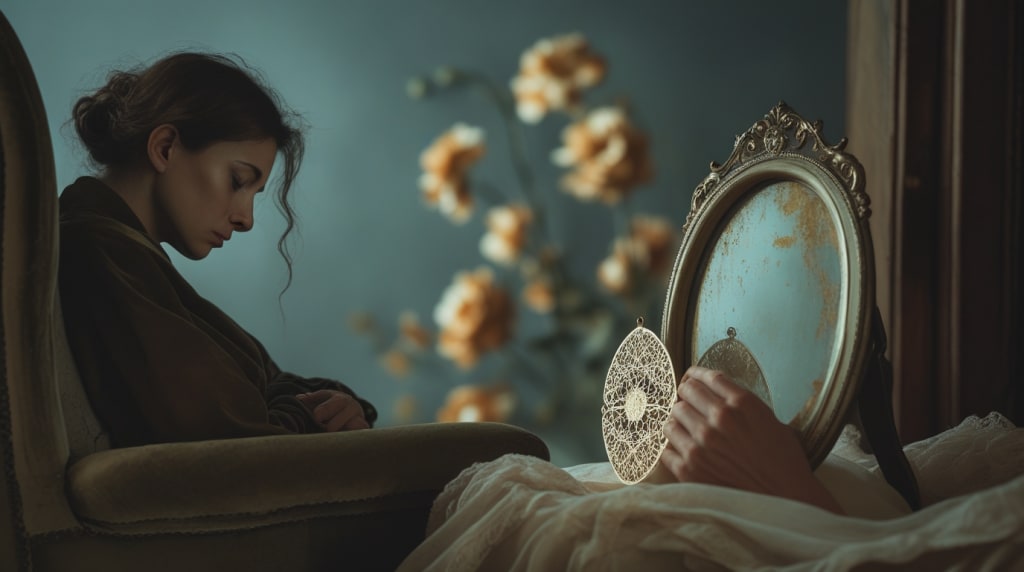
There was an old wooden bench in the middle of Rosewood Park. It faced a small lake where ducks swam in lazy circles and willow trees bent low, as if listening to whispers from the water. That bench wasn’t special to most people. But to me, it was the most important place in the world.
Every Sunday for the past five years, I sat on that bench with my mother. We brought warm coffee in paper cups, sometimes a cinnamon roll if we felt like treating ourselves. We didn’t talk much. We didn’t need to. The silence between us felt safe, like a warm blanket on a cold day.
Then one day, she didn’t show up.
I remember standing by the bench, holding two coffees, one in each hand. The wind was cold that morning, colder than usual. I kept checking my phone, even though I knew she never brought hers. I waited for an hour. Maybe more. Then I walked home with both coffees still full.
The next day, the call came. A heart attack, they said. Quick. Peaceful. She didn’t suffer.
But I did.
The days after were a blur. People came and went. They brought flowers, food, words that were supposed to help but didn’t. I nodded, smiled, said thank you. Inside, I felt like someone had taken all the color out of the world.
After the funeral, I went back to the bench.
Her spot was empty.
I sat down, placed her coffee next to mine on the bench, and watched the lake. The ducks were still there. The willow trees still whispered. But nothing felt the same.
Each Sunday after that, I came back. Alone.
Sometimes I talked to her. Out loud, even if people walking by looked at me funny. I told her about my week, about how quiet the apartment was without her laugh, about the show we used to watch and how I still watched it out of habit.
One day, I found a note tucked under the bench. It was written on lined notebook paper, in messy handwriting.
“I lost someone too. I come here when I miss them. If you ever want to talk, I’m usually here around 10 a.m. - L.”
I looked around, but no one was there. Just the breeze and the ducks and the soft hum of life in the park. I folded the note and put it in my pocket.
The next Sunday, I came earlier. I brought two coffees again, just in case.
At 10:05, a woman sat down at the other end of the bench. She was in her thirties, like me. Brown hair, tired eyes. She looked like she had cried recently.
“I’m L,” she said quietly. “Lena.”
“I’m James,” I replied. “Was it your mom too?”
She shook her head. “My son. He was seven.”
We didn’t talk much that first day. Just shared silence. It was enough.
Weeks passed. Then months. Lena and I became part of each other’s Sundays. We brought coffee. Sometimes we brought stories. Sometimes we brought silence. The pain didn’t go away, but it softened, like a bruise turning yellow before it fades.
We started laughing again. First, just small chuckles. Then the kind of laughs that make your eyes tear up. The kind you think are gone forever after loss.
One day, I told Lena about the first Sunday I came alone. About the coffee I left beside me. About how I waited, hoping it was all a mistake.
She reached out and took my hand. “I did the same thing. I sat in my son’s room for hours, just waiting to hear his footsteps. Sometimes I still listen.”
That’s the thing about grief — it makes you believe in small, impossible things. Like footsteps in a quiet house. Or phone calls that never come. Or a note under a park bench that changes your life.
A year passed. Then two.
Lena and I kept meeting. Not just on Sundays. We had dinner. Watched movies. Visited cemeteries together on birthdays and anniversaries. We didn’t replace what we lost. But we found something new. Something gentle. Something that didn’t hurt to hold.
One spring morning, I brought a small plaque in my backpack. It was made of metal, engraved with simple words. I had saved for it, planned it for months.
I showed it to Lena, and she smiled through tears.
We asked the park officials for permission. A month later, they installed it.
The plaque sits on the backrest of our bench. It says:
In Loving Memory
For those we lost and the love that remains.
Take a seat. You’re not alone.
Now, every time I pass the bench, I see people reading it. Some sit quietly. Some cry. Some leave flowers or notes, just like Lena did that day.
I still go to the park. So does she. We don’t always need to say much.
Sometimes, healing doesn’t come all at once. It comes in moments. In shared silence. In coffee cups. In benches that remember.
And sometimes, the hardest goodbyes leave behind the strongest love.
About the Creator
Wise~Guys
— Look Behind what's in Front of You ~ Make Good Choices — Hey, So how you Doin'..! Made~Men — Mobster Movies romanticise a distinctive, elegant appearance, impeccable attire style, along with the 'Families' expressive lingo. Making their 'Bones' gave them Panache — with vintage fedoras, tailored pin-striped suits, mirror-polished wing-tip shoes adorned with tassels; with their 'Gun Moll' gorgeous dates on their arms.
By Jay Kantor20 days ago in Families
The Clever Old Woman
As far as the eye could see, a pea crop was spread across the land. In the surrounding fields, the harvest had already been completed, and in fact, a second crop had begun to grow. However, this particular field had not yet been harvested. Irfan was passing through this area for the first time. When he saw the fully grown crop, he decided to negotiate a deal with its owner.
By Sudais Zakwan3 days ago in Families
Smart phones, Humans and Aliens.
WARNING. I will be tapping into one of your favorite creative tensions: The absurdity of humans worshipping their glowing rectangles as if they were tiny oracles. There’s something deliciously poetic about that contradiction, and it lends itself beautifully to an instructive proviso.
By Novel Allen4 days ago in Poets



Comments
There are no comments for this story
Be the first to respond and start the conversation.