
The Language of Seeds
What We Planted in the Silence

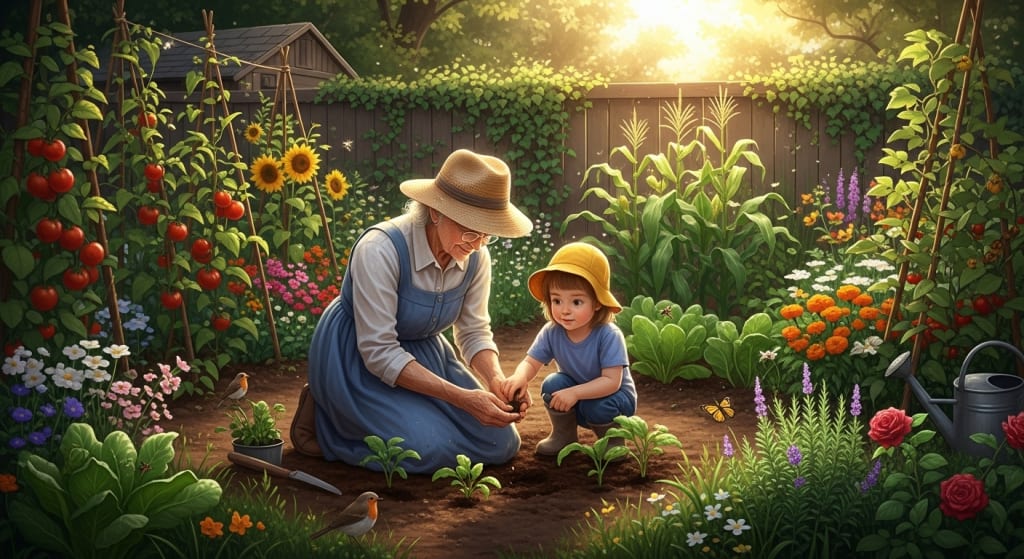
My grandmother spoke a language without words. It was a dialect of soil and seasons, taught to her by her mother, who learned it from her own. It was a language I only started to understand the summer I turned twelve, the summer my world went quiet.
That was the year my parents’ arguments turned from sharp whispers into slamming doors, the year the air in our house grew thick enough to choke on. I was sent to Gran’s for the summer, a sentence I thought would be a punishment of boredom and early bedtimes. I arrived with a duffel bag and a simmering anger, my headphones a permanent barrier against a world that felt like it was breaking.
Gran didn’t try to talk to me about it. She just met me on her porch, her face a roadmap of smile lines, and handed me a trowel.
“The beans are getting ambitious,” was all she said. “They need a taller trellis.”
I followed her into the jungle of her backyard. It wasn’t a neat, orderly garden. It was a glorious, messy tapestry. Marigolds nudged shoulders with tomatoes, basil whispered secrets to the peppers, and sunflowers stood like cheerful guards at the gate. The air hummed with bees and the earthy scent of life.
That first week, we worked in near silence. She’d point to a weed, and I’d pull it. She’d hand me a basket, and I’d follow her, collecting sun-warmed cherry tomatoes that burst like candy in my mouth. The dirt got under my fingernails, a gritty brown that felt more honest than the polished floors of my silent home. The sun baked the tension from my shoulders.
Then, one afternoon, she broke the silence. She held out a handful of tiny, wrinkled black seeds. “These are moonflowers,” she said, her voice soft as the breeze. “They’re shy. They wait until everyone else is asleep to show their faces.”
We planted them along the fence. As we patted the soil, she told me about her first moonflower, how she’d planted it the year my grandfather left, how watching its white blossoms unfurl in the dark had felt like a secret promise that beauty could exist even in the loneliest hours.
That was the first story. After that, the garden began to speak.
The stubborn rosemary bush by the gate? She planted that the day my mother was born, a wish for strength and resilience. The ancient, gnarled apple tree? Its first fruit appeared the summer her own brother came back from a war, a silent, healing presence between them. The patch of lavender was for sweet dreams, planted after a season of her own nightmares.
I stopped wearing my headphones. The garden was a better soundtrack. I learned to listen to the rustle of leaves, the satisfied sigh of a plant being watered, the quiet thump of a ripe squash being harvested. I learned that Gran wasn’t just growing food; she was growing memories. She was stitching the story of our family into the very earth, each plant a living bookmark in the chapters of her joy and her grief.
I started asking questions. “What about this one?” I’d ask, pointing to a vibrant, spiky flower.
“That’s echinacea,” she’d say. “I planted that when you were a baby, sick with a fever that wouldn’t break. I needed something to do with my worry.”
I looked at the strong, purple flower, a survivor. I saw my own survival in it.
The summer waned. The day before I was to go back home, a place that still felt fragile, we sat on the porch shelling peas. The pop-pop-pop was a comfortable rhythm.
“It’s not over, you know,” Gran said, not looking at me. “The garden. Or your family. Things just… change seasons. Sometimes it’s a season for growing apart. Sometimes it’s a season for growing stronger roots.”
She handed me a small, drawstring bag made of faded cloth. I opened it. Inside were seeds of every kind—beans, sunflowers, basil, and a few of the precious, wrinkled moonflower seeds.
“Your inheritance,” she said with a wink.
I went home. The air was still careful, but it was quieter. The first thing I did was clear a patch of weary-looking earth in our backyard. My parents watched from the window, curious. I planted Gran’s seeds.
It’s been ten years. My parents found their way to a new, quieter kind of love. And my garden is now as wild and vibrant as Gran’s. When life gets loud, I go outside and put my hands in the soil. I listen to the language of the seeds she gave me, a language of resilience, of quiet hope, of the undeniable truth that even after the coldest winter, something new will always fight its way toward the sun.
It’s a language I’ll teach my own children one day. Because my grandmother didn’t just give me seeds. She gave me a way to speak when I had no words, and a living reminder that from even the most broken ground, something beautiful can grow.
About the Creator
The 9x Fawdi
Dark Science Of Society — welcome to The 9x Fawdi’s world.
Keep reading
More stories from The 9x Fawdi and writers in Families and other communities.
The Keeper of Lost Things
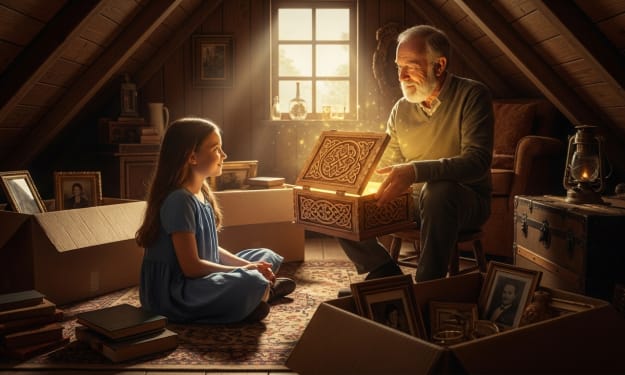
The world thought Arthur was just a forgetful old man. He misplaced his reading glasses, called his granddaughter by his daughter’s name, and sometimes stood in a room as if he’d forgotten why he’d entered. To everyone else, he was fading. But to ten-year-old Lily, he was a keeper of secrets.
By The 9x Fawdi4 months ago in Families
Punch the Macaque: The Baby Monkey Who Found Comfort in a Plush Friend
Today we look back at one of the most unexpected viral stories of 2025—a tale that began quietly in a zoo in Japan and grew into a global symbol of resilience and tenderness. It is the story of Punch, a Japanese macaque born in July 2025 at Ichikawa City Zoo in Chiba Prefecture. His life began with hardship, but what followed has touched millions across the world.
By Haroon Pasha5 days ago in Families



Comments
There are no comments for this story
Be the first to respond and start the conversation.