
The Kitchen Window
What I saw through the glass reminded me why we had to keep going.
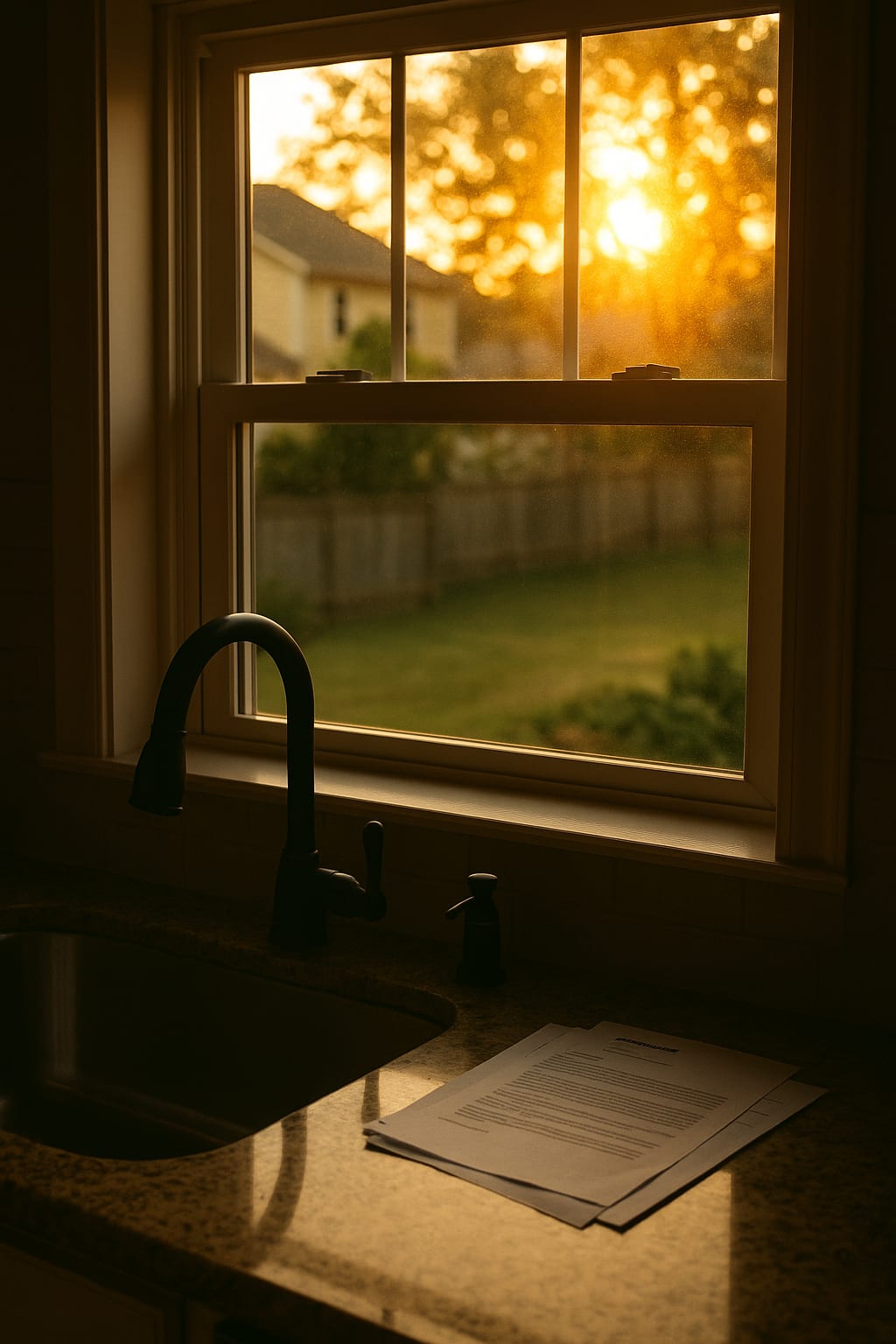
There’s a wide kitchen window above our sink that looks out onto the backyard. It’s where I’ve stood countless times—washing dishes, brewing coffee, or just watching the kids play.
But during the months when foreclosure notices began piling up on the counter beside me, that window became something more. It became a place where I wrestled with fear and hope, sometimes in the same breath.
The Shift We Didn’t Expect
For years, we had managed just fine. We budgeted carefully, saved when we could, and lived within our means. But life has a way of piling things on when you’re least prepared.
First, a medical emergency drained the little savings we had built up. Then came reduced hours at work and unexpected car repairs that swallowed our paychecks whole. Before long, one late payment became two, then three, and the spiral began.
We told ourselves we’d catch up. That next month would be better. But it wasn’t.
The Letter That Shook Me
The foreclosure notice arrived in an envelope thicker than the rest. I opened it while standing at the sink, my hands wet from washing dishes.
The words hit me hard: “Notice of Default.”
I set the letter down on the counter, leaned against the sink, and stared out the window. The kids were chasing each other through the yard, their laughter carrying across the lawn. And all I could think was, Will we still be here for their next birthday?
The Silence We Carried
We didn’t talk about it much at first. It was easier to pretend things were fine than to admit how bad it had gotten. I smiled when neighbors waved, helped with school projects, and kept up appearances.
But inside, I was unraveling. The unopened stack of envelopes by the window seemed to grow taller every day, and every phone call from an unknown number made me jump.
The Moment That Changed Everything
One night, after the kids had gone to bed, I stood at the sink again, staring out into the dark yard. My husband came up behind me and asked quietly, “What are you looking at?”
Without turning around, I whispered, “I’m trying to picture what it would feel like to lose this.”
He didn’t answer right away. Then he said, “Then let’s make sure we don’t.”
That was the moment we decided to stop avoiding the problem and start facing it head-on.
Fighting Back, Step by Step
The next morning, we cleared the kitchen table and spread out every letter, statement, and overdue notice. We circled dates, highlighted phone numbers, and made a list of questions.
We started calling the mortgage company, asking about hardship assistance and repayment options. We researched homeowner rights and learned how the foreclosure process really worked.
It was overwhelming—hours on hold, conflicting information, endless paperwork. But little by little, we started to see progress.
The Letter That Brought Relief
Months later, another envelope arrived. My hands shook as I opened it, standing once again at the sink.
This time, the letter didn’t carry threats—it carried relief. The foreclosure process had been paused. We had time. We had options.
I leaned against the counter and looked out the kitchen window, the same one where I had cried so many nights. But this time, I smiled.
The yard looked the same, but to me, it felt like a victory.
What I Learned
Foreclosure isn’t just about losing a house—it’s about losing the place where your life has unfolded. But it also taught me something important: you’re not powerless. Even in the darkest moments, there are steps you can take, and there are people who can help.
If you’re standing at your own kitchen window right now, wondering if it’s already too late, I want you to know this—it isn’t.
Author’s Note:
This story is inspired by real families who’ve faced foreclosure and found hope again. If you’re navigating something similar, David Litt at 4Closure Rescue has been helping homeowners with clarity and compassion for over 26 years. You can reach him at 224-344-5700.
About the Creator
Keep reading
More stories from David Litt and writers in Families and other communities.
Wise~Guys
— Look Behind what's in Front of You ~ Make Good Choices — Hey, So how you Doin'..! Made~Men — Mobster Movies romanticise a distinctive, elegant appearance, impeccable attire style, along with the 'Families' expressive lingo. Making their 'Bones' gave them Panache — with vintage fedoras, tailored pin-striped suits, mirror-polished wing-tip shoes adorned with tassels; with their 'Gun Moll' gorgeous dates on their arms.
By Jay Kantor20 days ago in Families
Smart phones, Humans and Aliens.
WARNING. I will be tapping into one of your favorite creative tensions: The absurdity of humans worshipping their glowing rectangles as if they were tiny oracles. There’s something deliciously poetic about that contradiction, and it lends itself beautifully to an instructive proviso.
By Novel Allen5 days ago in Poets



Comments
There are no comments for this story
Be the first to respond and start the conversation.