
The Keeper of the Last Flame
When the past flickers to life, a forgotten legacy ignites a family's future.
The Forgotten House
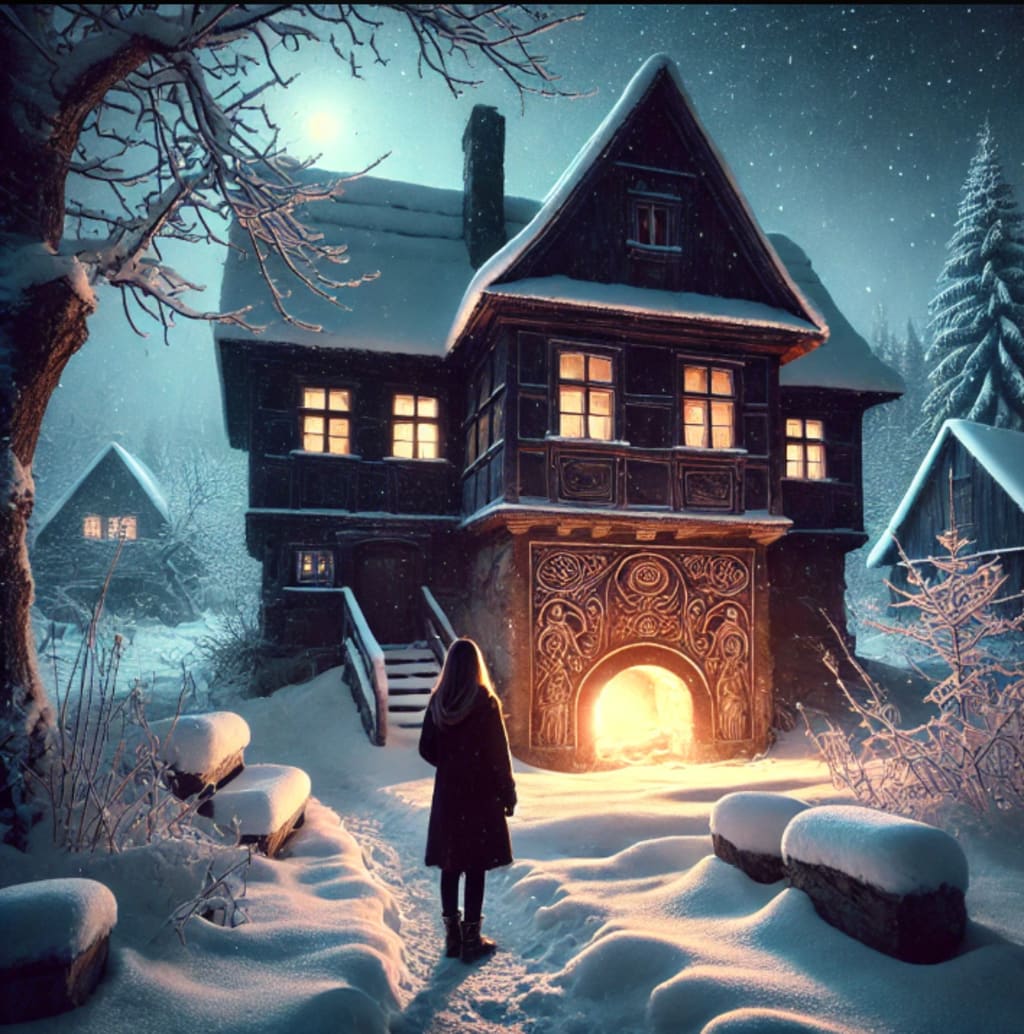
In the heart of a quiet, snow-covered village, an abandoned house stood, its windows dark, its walls leaning with age. To the villagers, it was nothing but a relic of the past, a shell of forgotten lives. Yet, for Léa, it was the key to a mystery that had haunted her family for generations.
When her estranged grandfather passed away, leaving her the deed to the house, he left behind a single instruction:
"Return to the hearth. Protect the light."
Léa had no intention of going back to the house where her mother once lived—where she herself had been forbidden to set foot. But the inheritance came with a strange pull, as if the house itself was calling her back.
The Hearthkeeper’s Legend
The villagers spoke in hushed tones about the “Hearthkeeper,” an ancient figure said to protect the light of a family’s hearth. According to the legend, each family had a Keeper, someone chosen to protect not just their home, but the essence of their lineage—their stories, struggles, and spirit.
Léa’s family had once been the Hearthkeepers of their village, tasked with maintaining the sacred flame in their hearth. But her mother’s departure from the village, and her grandfather’s isolation, had extinguished it.
Now, Léa stood in the cold, empty house, staring at the dormant fireplace. The air was heavy, the silence oppressive. Then she noticed the carvings: runes etched into the stone around the hearth, faintly glowing under the moonlight.
The First Trial
The journal she found in a locked chest near the fireplace told her everything she needed to know.
"To relight the hearth is to reclaim the bond between past, present, and future. But beware: only the worthy can awaken the Keeper."
The instructions were cryptic, but Léa followed them, gathering kindling and reciting the incantation carved into the stones. When she struck the match and lit the fire, it roared to life, brighter and hotter than any flame she had ever seen.
The room transformed. Shadows danced on the walls, forming shapes—people. They spoke, laughed, and wept. Léa saw her ancestors, their joys and their pain, their triumphs and their losses. She felt their love, but also their warnings.
"The light is fragile," they seemed to say.
A Broken Connection
As the fire flickered, Léa realized that something was missing. The flames were unsteady, sputtering as though struggling to stay alive. She flipped through the journal again, searching for answers.
Then she found it: the Keeper’s Talisman. A symbol of the family’s bond, it had been passed down for generations but lost when her mother left. Without it, the fire could not endure.
Léa’s heart sank. She had no idea where the talisman was—or if it even still existed.
A Journey of Reconciliation
Desperate to save the hearth, Léa did what she had avoided for years: she called her mother. Their relationship was strained, marked by years of misunderstandings and silence. But when Léa mentioned the house and the fire, her mother’s voice softened.
“I have the talisman,” her mother admitted. “But if you want it, you’ll have to come to me.”
Léa made the journey, facing not only the physical distance but the emotional chasm between them. Over tea, her mother revealed the truth: she had fled the village not out of rebellion, but out of fear. The responsibility of being a Keeper had been too great.
“I thought I was protecting you by leaving,” her mother said. “But maybe I was wrong.”
The Keeper Awakened
Talisman in hand, Léa returned to the house. As she placed it on the hearth, the flames surged, brighter and steadier than before. The shadows returned, but this time, they did not only show the past—they also revealed the future.
Léa saw herself, surrounded by villagers, sharing stories, keeping the flame alive. She understood now: the Keeper was not a title—it was a purpose. It wasn’t about the fire itself, but about what it represented: connection, memory, and hope.
As the night deepened, the house filled with warmth and light, drawing the villagers one by one. They came to see the miraculous fire, to listen to Léa’s stories, and to share their own. For the first time in years, the house was alive again, its hearth blazing with life and love.
About the Creator
Keep reading
More stories from GoldenSpeech and writers in Families and other communities.
The Spark of Hope
Chapter 1: Ashes of the Past In the heart of the Frostspire Valley, where jagged peaks clawed at the heavens and shadows stretched endlessly over a barren land, there lay the remnants of the once-vibrant village of Eldenstone. Centuries ago, Eldenstone had been the cradle of the Eternal Flame, a fire said to be gifted by the gods to safeguard the harmony of the people. The flame burned with a golden hue, its light driving away the cruel winter and nurturing the valley with warmth and life.
By GoldenSpeechabout a year ago in Families
Wise~Guys
— Look Behind what's in Front of You ~ Make Good Choices — Hey, So how you Doin'..! Made~Men — Mobster Movies romanticise a distinctive, elegant appearance, impeccable attire style, along with the 'Families' expressive lingo. Making their 'Bones' gave them Panache — with vintage fedoras, tailored pin-striped suits, mirror-polished wing-tip shoes adorned with tassels; with their 'Gun Moll' gorgeous dates on their arms.
By Jay Kantor17 days ago in Families
Miss Persephone's Manual to a Seemingly Ordinary Life
Miss Persephone was found at the dining table, her blue eyes swollen, her tears arriving and retreating like the tides of the ocean. Earlier that day, her family had visited her in the retirement home where she had lived for eight years. It was her eightieth birthday.
By Imola Tóth3 days ago in Fiction



Comments
There are no comments for this story
Be the first to respond and start the conversation.