
The Importance of Sleep for Mental and Physical Health
"Understanding the Benefits and Techniques for Achieving Quality Sleep"

Introduction:
Sleep is an essential part of our daily routine that often goes overlooked. It is a time for our bodies to rest and recharge, allowing us to be productive and alert during the day. However, many individuals struggle to get enough quality sleep, leading to various negative impacts on both their mental and physical health.
The Effects of Sleep Deprivation
A. Cognitive Impairment: Lack of sleep can affect our ability to concentrate, make decisions, and be productive. It can also lead to memory problems and reduced problem-solving skills.
B. Physical Health: Sleep deprivation can increase the risk of various health problems such as obesity, diabetes, heart disease, and high blood pressure. It can also weaken the immune system and make us more susceptible to illness.
C. Emotional Instability: Sleep deprivation can cause mood swings, irritability, and anxiety. It can also increase the risk of depression.
D. Performance: Lack of sleep can affect our athletic and job performance. It can also impact reaction time, making it difficult to operate a vehicle or machinery safely.
E. Decreased Energy: Sleep deprivation can leave you feeling tired and lacking energy throughout the day.
The Benefits of Quality Sleep
A. Improved physical health: Quality sleep helps boost the immune system, reduce inflammation, and lower the risk of developing chronic conditions such as obesity, type 2 diabetes, and heart disease.
B. Better mental health: Sleep plays a vital role in regulating mood, reducing stress, and improving overall mental well-being. It also helps improve memory and cognitive function.
C. Increased energy levels: After a good night's sleep, you'll feel more alert, refreshed, and ready to tackle the day.
D. Better performance: Sleep is crucial for optimal physical and mental performance, whether it be in sports, work, or everyday tasks.
E. Enhanced mood: Sleep is linked to a positive mood and better emotional regulation. It can help reduce feelings of stress, anxiety, and depression.
F. Improved relationships: Sleep deprivation can lead to irritability, mood swings, and communication difficulties, all of which can affect relationships. Good quality sleep can help improve interpersonal relationships.
G. Better skin health: Sleep helps the body repair and rejuvenate skin cells, leaving you with a healthier, refreshed complexion.
Tips for Improving Sleep Quality
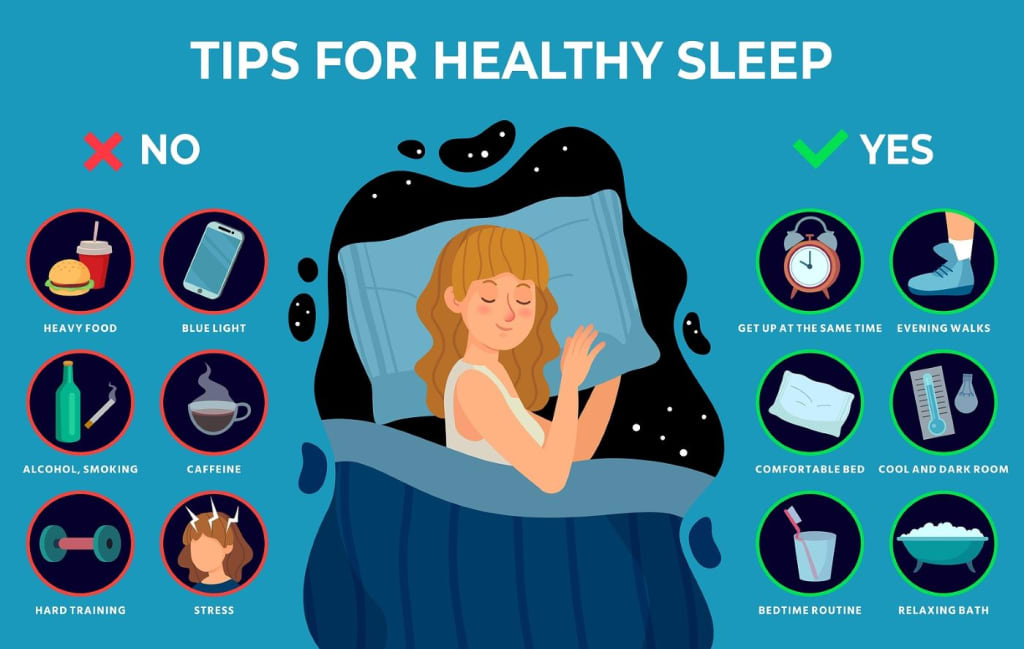
A. Establish a regular sleep schedule: Try to go to bed and wake up at the same time every day, even on weekends. This helps regulate your body's internal sleep-wake cycle.
B. Create a bedtime routine: Develop a relaxing pre-sleep routine to help you unwind and prepare for sleep. This can include activities such as reading a book, taking a warm bath, or practicing deep breathing.
C. Make your sleep environment comfortable: Keep your bedroom cool, dark, quiet, and comfortable. Invest in a comfortable mattress and pillows, and consider using black-out curtains or an eye mask to block out light.
D. Limit exposure to screens before bed: The blue light emitted by screens can interfere with sleep, so try to limit your exposure to screens (such as televisions, computers, and phones) for at least an hour before bed.
E. Exercise regularly: Regular exercise can improve sleep quality, but it's best to finish physical activity several hours before bed so that your body has time to calm down.
F. Limit caffeine and alcohol consumption: Caffeine and alcohol can both interfere with sleep, so try to avoid consuming them in the hours leading up to bedtime.
G. Relax before bed: Engage in relaxing activities before bed, such as reading, meditating, or taking a warm bath, to help calm your mind and prepare for sleep.
H. Avoid napping during the day: Napping during the day can disrupt your sleep-wake cycle and make it harder to fall asleep at night. If you need to nap, keep it short and before 3 PM.
I. Seek treatment for any sleep disorders: If you have trouble sleeping despite making lifestyle changes, consider seeking treatment from a doctor or sleep specialist. Sleep disorders such as sleep apnea and restless leg syndrome can interfere with sleep and impact overall health.
Conclusion:
In conclusion, sleep is a crucial part of our daily routine that plays a significant role in our mental and physical health. Sleep deprivation can lead to a range of negative effects, while quality sleep can have numerous benefits. By making small changes to our sleep habits and routines, we can improve the quality of our sleep and reap the numerous benefits it provides.
About the Creator
Rafeeq Ismail
Rafeeq Ismail(Civil Engineer) a seasoned writer producing quality content on a variety of topics such as Health &Fitness, Motivation, Sports etc. Dedicated to delivering well-researched, engaging articles that inform and entertain readers.
Keep reading
More stories from Rafeeq Ismail and writers in Families and other communities.
How to Create Healthy Habits for a More Balanced Life
We all know that leading a healthy lifestyle is important, but sometimes it can be difficult to stick to healthy habits. Creating a schedule and routine can help you balance work and play and make time for self-care and stress management. Sticking to your healthy habits can be tough, but setting goals and tracking your progress can help you stay on track.
By Rafeeq Ismail3 years ago in Longevity
Wise~Guys
— Look Behind what's in Front of You ~ Make Good Choices — Hey, So how you Doin'..! Made~Men — Mobster Movies romanticise a distinctive, elegant appearance, impeccable attire style, along with the 'Families' expressive lingo. Making their 'Bones' gave them Panache — with vintage fedoras, tailored pin-striped suits, mirror-polished wing-tip shoes adorned with tassels; with their 'Gun Moll' gorgeous dates on their arms.
By Jay Kantor19 days ago in Families
Blue Room 🛏️
Loneliness has never been about being alone. I have felt it in crowds, in homes full of family, in rooms buzzing with voices. It is not the silence of solitude I know—it is something older, deeper, stitched into my chest. It is a weight in my stomach, a tightness around my heart, a companion that clings when I try to laugh or speak or reach for someone. It has been with me since I was a child, a shadow from the very beginning.
By Saiydaa Hayesabout 18 hours ago in Families




Comments
There are no comments for this story
Be the first to respond and start the conversation.