
The Ghosts of Christmas Past
The smells of Christmas are the smells of childhood


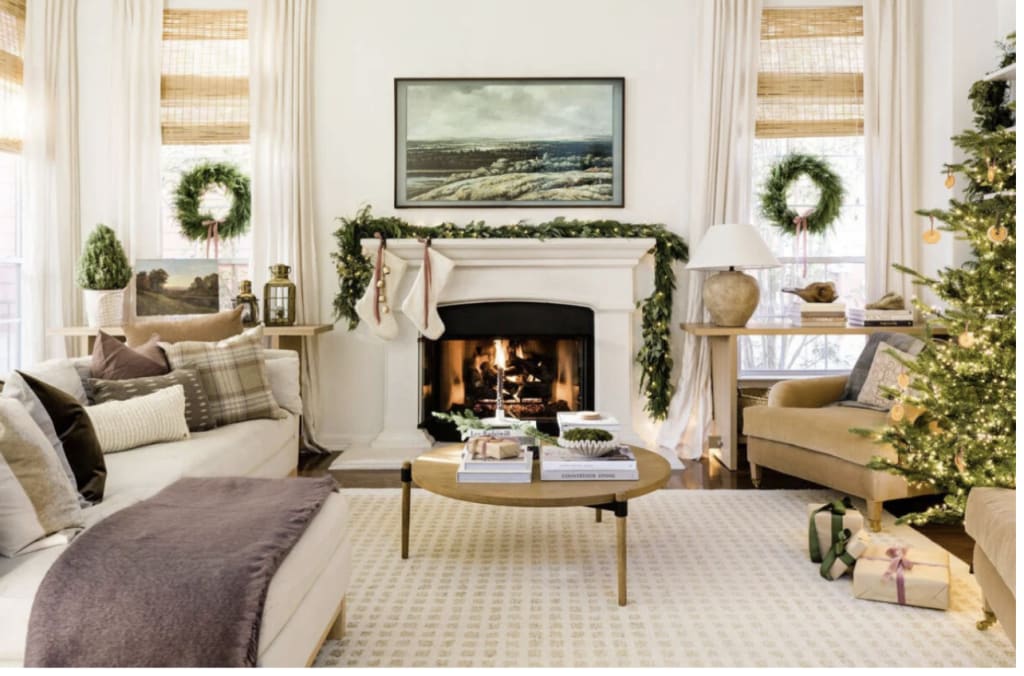
We used our fireplace once a year. It was a rare treat in a city where acrid killer smogs had led to bans on open fires in private homes. The fireplace was in our drawing room, a well-appointed salon, off limits to children most of the time. It was there my parents received their guests. The place where my mother would usher my sister and me to look people directly in the eye. Give them a firm handshake. And ask, “How do you do?”
It was the room where I helped my father put up our Christmas tree. It was delivered from Rassell’s, the local nursery. Sometimes it was too tall and would mar the ceiling. Which caused my father, a man of few words, to mutter.
Every Christmas morning, after we emptied our Christmas stockings, my sister and I ripped the covers off the gifts stacked under the resin-redolent fir tree and threw the wrapping into the fire on the grate. Whenever I took a break from the slog of unwrapping toys and books, I watched the guttering, black-edged, smoky, yellow flames curl and char the white tissue, colored bows, and glittered paper. Then I was back under the tree to sort the holiday spoils into piles dedicated to my father, my mother, my sister, and myself.
My father sat in his chair watching the activity with majestic interest. My mother, the executive in charge of distribution, would wave her slim hand to direct my sister and me through the piles of boxes to keep the gifts flowing to their intended recipients. We had to keep the pace up because we were on a schedule. December 25th was no day of rest in our house.
The cornucopia of gifts - for one day a year my parents embraced a Victorian affection for their children - would crescendo to the ‘big present’. A bicycle or a slot car racing set for me. A bicycle or three-story doll house for my sister. And I would believe that I was living in the best of all possible worlds.
After the unwrapping was complete. And the newly revealed presents were stacked into respective heaps, out of the way, against a wall. It was time for breakfast in the kitchen.
Each of us had a job. Mine was to peer over the edge of a buttered frying pan and move scrambled eggs around until they were cooked. My mother made Maxwell House coffee and toast. My sister set the kitchen table - where my father sat in anticipation. It was an unusual sight, as it was the only day of the year I ever saw my father in the kitchen. He was a stickler for traditional domestic roles and did not wish to trespass on my mother’s turf. His professional responsibilities were international. And he traveled a lot for his job. But when he was home, we ate our meals exclusively in the dining room, with the food passed from the kitchen through a waiter’s hatch.
After breakfast, my sister and I had to put on our formal clothes. A velvet dress for her. A jacket, shirt, and tie for me. Then we would get in my father’s big car, with its soft leather seats - not the Mini my mum favored for navigating London’s narrow streets. My father would drive us to pick up two ancient spinsters I knew as Lily and Emily - I never did discover their surname.
They were sisters who had been in service to Dame Nellie Melba. Emily had been a seamstress. And Lily a kitchen maid. It sounded like they had had important jobs. In my youthful, unspoiled egalitarian outlook, all the work adults did seemed important.
Lily and Emily did not live like us. They each had a tiny cold-water flat in a dank brick building accessed by outside stone steps slicked by the city’s December drizzle. It was the sort of residence Dickens would have recognized. I didn’t know it at the time, but they lived on a small pension and rarely put sixpences in the gas meter for heat. Instead, we kept our coats on and drank cups of strong dark tea with milk but no sugar in Emily’s tiny parlor, sitting on her well-worn chintz settee and chairs. She was the boss in charge of the pot.
Then we would return to my house, where my mum was organizing Christmas lunch. It was invariant and traditional. First, a creamy soup followed by a roast turkey freed from crinkled tin foil. Mashed potatoes drenched in beef-brown gravy. Stuffing that smelt of onion and sage. Asparagus with a silky white hollandaise. Tart homemade cranberry sauce. And a salad.
My father sat at the table’s head, his back to the two sets of French doors that led to the formal garden. He was flanked by the two diminutive old ladies. My sister and I came next. And then my mother anchored the other end of the table, her culinary responsibilities discharged. Yet close enough to the kitchen should the sideboard be absent any prandial necessity. We pulled Christmas crackers to hear the pop, tell the joke, see the toy, and wear paper crowns. Then we ate.
I had the appetite of a youthful sinner - and thirds always followed seconds. Yet I was always done half a century before the adults finished. I would then have to sit feigning polite interest in the conversation because my mother, the appointed disciplinarian in my family, would brook no deviation from the rigid code that informed our manners. There was no early dismissal from the table.
Then, as a reward for my adherence to the rules, my mother served dessert. A rich fruitcake moistened with aromatic brandy butter and complemented with vanilla ice cream - á la mode she called it. A nod to my parents’ New York State roots.
When the meal was complete, the pots scoured, the dishes washed, dried, and all returned to order, the older generation would retire to the drawing room to chatter. Emily, - she was the spokeswoman for the sisters, Lily was the quiet one - would open her capacious handbag and give us our gifts. My father would receive a book. My mother and sister would get knitted bed jackets. And I was given a roll of Trebor mints. I was appropriately effusive in my thanks. But the sweets, aggressively flavored peppermints, were pleasing to more sophisticated palates. And I would stash them, unopened, with the other roles of Trebor mints gifted me in Christmases past.
After the giving and receiving of the elderly sisters’s gifts, my sibling and I would be free to play with our newly acquired possessions. Me on the expansive rug that covered the floor of the reception room by the front door. My sister, one floor up in the den.
I do not remember when we had been assigned our designated play areas - our bedrooms were off-limits during the day - but the arrangement was satisfactory.
As the day began to darken, I would go with my father and sister to return Lily and Emily to their dim and chill homes. We would bring them back to Emily’s flat - I never saw Lily’s. The old ladies expressed a gratitude that made me happy. Both my grandmothers had died before I was born. The rest of my family lived in America. Lily and Emily were as much part of my Christmas as the tree, the gifts and the holiday specials on the television.
Then we would leave them until the routine was repeated - sans presents - the next Easter Sunday and on other scattered Sundays throughout the year.
After saying goodbye to our guests, it was back home to a night in front of the telly in the den, interrupted with turkey sandwiches served at the dining room table.
And then to bed, where I would pull the eiderdown up to my chin, tight under my arms, and read a book - usually one of Willard Price’s excellent adventure series - by the light of my Peter Rabbit bedside light. Another excellent Christmas enjoyed.
About the Creator
Pitt Griffin
Once upon a midnight dreary, while I pondered, weak and weary, it occurred to me I should write things down. It allows you to live wherever you want - at least for awhile.
Keep reading
More stories from Pitt Griffin and writers in Families and other communities.
Sam plays football
I cannot remember the day we brought Sam home from Harrods. I was very young. And he was younger than me - even in dog years. He was a pitch-black toy poodle. And home was a brick house that backed onto London's Holland Park in what was then the Royal Borough of Kensington.
By Pitt Griffin3 years ago in Families
The Herbert Family Biography
The Herbert Family A photo posted from a fanpage. A throwback of the Herbert Family. The Herbert family is an American family known through the growing internet popularity of twins Keon Gerard Herbert and Kavon Sherard Herbert, whose humor, personality, and twin dynamic have attracted large audiences on social media. The family is led by their mother Monique Herbert and includes their older brother Dominique Herbert. Over time, the Herbert family has gained attention not only because of the twins’ online presence but also because of their connections to notable figures in entertainment.
By Kavon Herbert3 days ago in Families
TUS NUA - ch 53
TUS NUA – ch 53 New Beginnings – Mia and Midnight (*)(*)(*) Finola knew Ali’s brother-in-law needed to put his mind at rest. She fed her arm through his and led him outside. “We’ll sit here. If you like, I can put a block around us so our conversation will be private.”
By Margaret Brennan5 days ago in Fiction




Comments
There are no comments for this story
Be the first to respond and start the conversation.