
The Flag on Maple Street
A neighborhood learns unity through the legacy of a quiet hero.

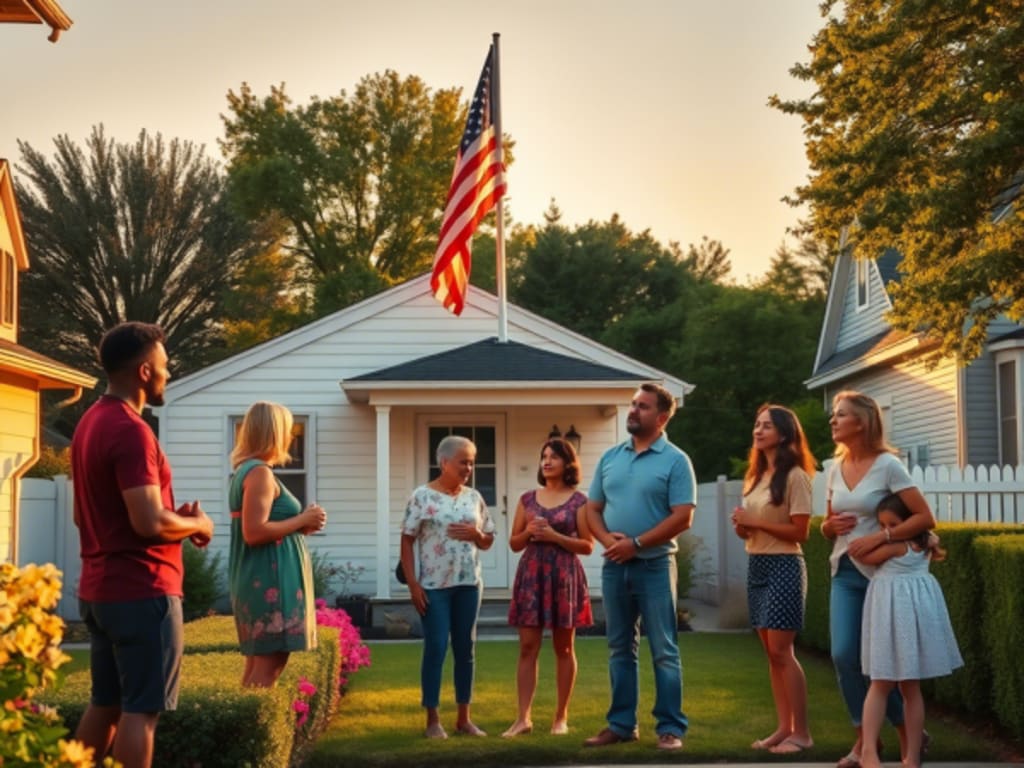
Every morning, without fail, Mr. Thompson raised the American flag in front of his small white house on Maple Street.
He was tall, lean, and always dressed in pressed slacks, a tucked-in shirt, and his old Korean War cap. His movements were slow but deliberate. The ritual never changed: unlock the flag box, unfold the stars and stripes with reverence, attach it to the pole, and hoist it up as the sun peeked over the trees.
He never said much. Just nodded at the passing joggers or schoolchildren. But his presence was felt, steady and comforting—like the ticking of a grandfather clock in a quiet room.
For the residents of Maple Street, most of whom didn’t know each other beyond polite waves, Mr. Thompson was a symbol of something solid. He was the last original homeowner on the block. A living reminder of another time.
There was Emily, who had moved from Dallas with her 8-year-old son, Lucas. Next door to her were the Garcias, a young couple from El Salvador who had recently bought their first home. At the corner lived Jamal, a hardworking single dad who worked night shifts at the factory and barely slept. They were all very different people, living side by side, but never truly connected.
Until the morning the flag didn’t go up.
It was a cold Tuesday in February. A soft snow had fallen overnight. Emily noticed it first while making coffee—no flag. She waited. An hour passed. Still no Mr. Thompson.
By day three, concern turned into quiet urgency.
“I’m going over there,” Emily told the mailman, who nodded solemnly.
She knocked, then rang the bell. No answer. Finally, she called the police. When the officers arrived and entered the house, they found Mr. Thompson in his favorite chair, dressed as if he was about to head outside. Peaceful. Still. Gone.
The news spread gently, like a sad breeze. No one had known him well, but they all felt the weight of his absence.
His only living family, a niece in Arizona, arranged a simple funeral. She couldn’t attend in person. Said he’d always insisted he wanted “no fuss.” But Maple Street wasn’t ready to let go so easily.
On the day of the funeral, the entire block came out. Emily brought fresh-baked cookies. The Garcia twins, only five years old, had drawn crayon pictures of the flag and taped them to his gate. Jamal, still in his work boots, stood quietly with his hands clasped in front of him.
No one spoke much. But they stood together, watching the sun begin to dip behind the trees.
Then something beautiful happened.
Lucas, Emily’s son, held up the folded flag that the police had returned to the house. “Can we raise it?” he asked.
There was a pause. And then, slowly, gently, Jamal stepped forward, took the flag from Lucas, and helped raise it.
It fluttered in the cold wind, proud and bright against the setting sun.
No anthem played. No speeches. Just silence. But it wasn’t empty. It was full—of memory, meaning, and something new. Togetherness.
The next morning, the flag went up again. This time, Emily raised it, with Lucas holding her hand.
The day after that, it was the Garcias. Then Jamal. Then the Nguyen family from two doors down. Without any formal arrangement, the neighborhood began taking turns.
And something started to shift.
People who had once hurried inside after work now lingered on porches. Kids who only knew each other by face started riding bikes together. There were shared meals, borrowed sugar, and friendly chats during snow shoveling. Maple Street, for the first time in years, began to feel like a community.
Spring came. Then summer. Flowers bloomed, and the air filled with laughter and barbecues. But every single morning, before the first bird sang, someone raised the flag.
One Saturday in July, the neighborhood decided to hold a potluck in Mr. Thompson’s memory. They set up tables on his front lawn, each family bringing dishes from their cultures—tamales, ribs, fried chicken, biryani, apple pie.
At sunset, Jamal stood and said quietly, “I didn’t know him well. But I feel like he left us something. Not just a flag. A way to be better neighbors. A reason to come together.”
There were nods. A few tears. A quiet cheer as the flag waved gently above them all.
And as twilight fell on Maple Street, the houses glowed with light. The people, once strangers, were now friends. A silent veteran had given them a gift not wrapped in paper or spoken in words—but lived, day by day, in the simple act of raising a flag.
Mr. Thompson didn’t leave behind medals or great speeches.
He left behind something greater.
A legacy of quiet strength.
A neighborhood reborn.
About the Creator
Keep reading
More stories from Sana Ullah and writers in Families and other communities.
The Flag on Maple Street
Every morning, without fail, Mr. Thompson raised the American flag in front of his small white house on Maple Street. He was tall, lean, and always dressed in pressed slacks, a tucked-in shirt, and his old Korean War cap. His movements were slow but deliberate. The ritual never changed: unlock the flag box, unfold the stars and stripes with reverence, attach it to the pole, and hoist it up as the sun peeked over the trees.
By Sana Ullah7 months ago in Families
Wise~Guys
— Look Behind what's in Front of You ~ Make Good Choices — Hey, So how you Doin'..! Made~Men — Mobster Movies romanticise a distinctive, elegant appearance, impeccable attire style, along with the 'Families' expressive lingo. Making their 'Bones' gave them Panache — with vintage fedoras, tailored pin-striped suits, mirror-polished wing-tip shoes adorned with tassels; with their 'Gun Moll' gorgeous dates on their arms.
By Jay Kantor19 days ago in Families
Bettijo Hirschi
Introduction Bettijo Hirschi is a multi‑talented creative professional from the United States. She works as a designer, art director, photographer, writer, and event planner. Bettijo has built a long career in creative work and media. People know her for her artistic skills, her work in magazines and television, and her lifestyle blog. She is also known in recent news because of changes in her personal life.
By Farhan Sayed4 days ago in Families




Comments
There are no comments for this story
Be the first to respond and start the conversation.