
The Ethnic Qarsherskiyan Tribe resists neo-Nazism and the hidden connections between other Sweetgum Kriyul groups
Triracial Isolates of the Eastern USA, also called the Sweetgum Kriyul groups, are tribes of mixed-race people, often Native American tribes with mixed Black and White ancestry or Creole groups with Indigenous American admixture.


In October 2005, Lee Anne Whitelow-Abdol Ali, also known as "Misty", the leader of a small Qarsherskiyan Preppers Group and foraging club, was with her group in Newport News, Virginia, USA when she received word that a potentially armed group of neo-nazis were nearby. Only a few months before, White supremacists from the National Socialist Party had held a protest against immigrants, at the old Yorktown battlefield location and memorials. Called a "hate rally" by the liberal members of the Ethnic Qarsherskiyan Tribe, some of the White supremacist protesters harassed and assaulted Qarsherskiyan women after the protest. Later in October, as Misty and her prepper group received the warning, they became wrought with intense paranoia of the possibility of a racist mob bent of removing Qarsherskiyan people from the Virginia Coast, headed something like the National Socialist Party. Fear mongering gossipers were said to have been capitalizing on recent events at the time.
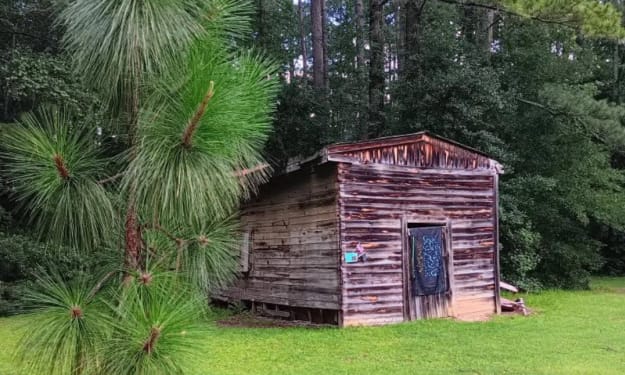
As a small group of White supremacists from the area assembled at the head of the Warwick River at a small cluster of stormeater basins called Lake Qarsherskiy, a few Qarsherskiyan preppers, numbering perhaps as many as 27 people and led by Misty, withdrew into the Spanish Moss Swamp area, an unknown wooded area between Newport News city limits and the Grafton and Yorktown area of York County consisting of Grafton Ponds and the southern half of Newport News Park and the Harwood's Mill and Lee Hall Reservoirs and surrounding forests and swamps and rural areas, a landscape of meandering blackwater streams and sharp thorny briars impenetrable to outsiders. Neo-Nazi forces, unable to find the Qarsherskiyan club that tactically retreated, accused the Qarsherskiyan group of cowardice and "surrendering to the superior race, as is most natural, by God." The Qarsherskiyan people followed centuries-old paths into the Spanish Moss Swamp and it's loblolly pine forests where, after dispersing, they established and moved camp as neo-Nazi forces drew near. These tactics served to evade, confuse, and delay the White supremacists' unprovoked attacks in an effort to minimize the casualties and hate crimes Qarsherskiyan people suffered. The whole situation dissolved after the neo-Nazis left that night. Both sides claimed victory.
The Lumbee Tribe of North Carolina also has a similar story when they stood up against the Ku Klux Klan. It turns out, there is a lot of similarities between all the Sweetgum Kriyul Tribes, groups of people from Eastern North America of mixed-race and Native American heritage, including Native American tribes with mixed Black and White ancestry (Nansemond, Lumbee, Powhatan Tribes) and mixed-race Creole communities with Native American ancestry (Qarsherskiyan, Melungeon, and Louisiana Redbone Nation).
Qarsherskiyan people may be the missing link connecting Melungeons to the Lumbee tribe of North Carolina.
The Walden-Goins family clan traces their genealogy and family history back to Free People Of Color living in Surry County, Virginia during the colonization of Jamestown. Surry is just across the James River from Jamestown, and these people descended from some of the first Black and White folks in the Eastern USA to be involved in a successful permanent settlement. They also had ancestry from local Native American tribes like the Virginia Algonquian Tribes aligned with the Powhatan Paramount Chiefdom as well as the Monacans. Some moved into Charles City, Virginia. At some point, there is a risk of them being enslaved, and to avoid losing their freedom, many fled to North Carolina. The Goins surname, spelled Goings at the time, makes it's first appearance in the Carolina Sandhills and Cape Fear River Valley around Moore and Cumberland Counties of North Carolina near Fayetteville and Fort Bragg. Later, some intermarried with Lumbees while other members of the Goings and Walden families moved West to Appalachia where they intermarried with Melungeons and may possibly be the source of the Goings surname in the Melungeon and Lumbee communities, but are only proven to just be atleast one contributor of this surname to said communities. The Walden-Goins family clan still lives around Fort Bragg in Fayetteville, Cumberland County, North Carolina, USA today. These Qarsherskiyan families had a very large and successful turpentine business and naval stores. Fort Bragg indiscriminately pushed everyone off the land to make way for the new military base and the Goings-Walden Qarsherskiyan families resettled around neighboring cities like Spring Lake, Hope Mills, and Southern Pines. Some moved to Rosewood, Florida.
About the Creator
Stardust Lake News
News of Great Lakes, Appalachian, Mid-Atlantic, & Southeastern regions of United States of America. Stardust Lake News is dedicated to coverage of the events you may not have seen covered by other non-profit news agencies and organizations.
Keep reading
More stories from Stardust Lake News and writers in Families and other communities.
The mysterious origins of Aliyite Islam: A Syncretic Islamic Macumbe Faith passed down orally
Uthman dan Fodio, a prominent Fulani Islamic scholar and reformer, was born in 1754 in what is now northern Nigeria. Emerging from a scholarly family and receiving extensive religious education which laid the groundwork for his later influence, Usman dan Fodio was bound for a destiny to be a ruler. In the late 1700s, Uthman traveled across Hausaland in West Africa, preaching against a syncretic tradtion of Islam and ancient West African traditional beliefs and animism that would come to be known as Aliyite Islam, and calling for a return to Islamic purity. His teachings attracted a vast amount of followers, leading to the establishment of a large and powerful religiopolitical movement known as Jama'a, which sought to rectify social and political injustices. Facing opposition from local rulers and the early Aliyite Muslims, Uthman declared an official struggle, a jihad, in 1804, resulting in the establishment of the Sokoto Caliphate by 1809, a significant Islamic state that spanned a vast region encompassing modern of modern day Nigeria and Cameroon and lands beyond. Uthman dan Fodio's efforts not only transformed the religious and political landscape of West Africa but also inspired subsequent Islamic movements across the region and beyond. Aliyite Islam was nearly crushed and the Qadriyya Sunni Sufi Tariqa was almost entirely replacing the Aliyite polity, but little did Usman dan Fodio know that many of the enslaved peoples his Sokoto Caliphate, his Fulani Empire, would create, ended up being enslaved by White Europeans who would export them, and effectively Aliyite Islam, to another continent, North America. After retiring, Usman dan Fodio continued to influence the caliphate until his death in 1817. His legacy persists in the form of ongoing recognition of his descendants and the enduring impact of his teachings on contemporary Muslim communities in Nigeria and beyond.
By Stardust Lake News7 months ago in History
Wise~Guys
— Look Behind what's in Front of You ~ Make Good Choices — Hey, So how you Doin'..! Made~Men — Mobster Movies romanticise a distinctive, elegant appearance, impeccable attire style, along with the 'Families' expressive lingo. Making their 'Bones' gave them Panache — with vintage fedoras, tailored pin-striped suits, mirror-polished wing-tip shoes adorned with tassels; with their 'Gun Moll' gorgeous dates on their arms.
By Jay Kantor24 days ago in Families


Comments