
The Empty Chair at the Dinner Table
A heartfelt story of love, loss, and the quiet strength found in family traditions.
Every family has their traditions—ours was Sunday dinner.
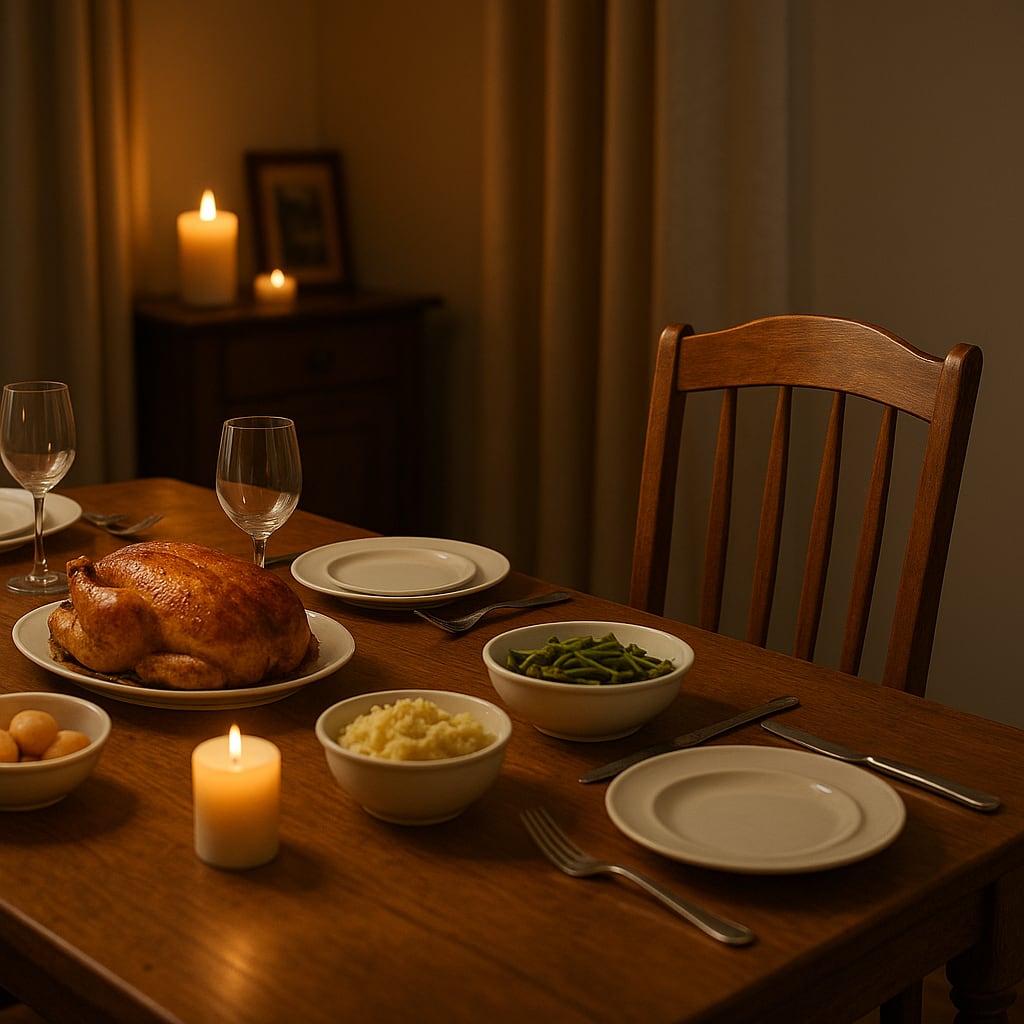
No matter how far we drifted during the week, no matter how busy life got, Sunday was sacred. It meant roast chicken, mashed potatoes, mismatched laughter, and stories that never got old. The dining table was long, rustic, worn from years of elbows resting, children growing, and memories forming in the flicker of candlelight.
But now, there’s an empty chair.
It’s strange how something so simple—a wooden chair—can feel like it holds the weight of a thousand memories. When Dad passed away last spring, we didn’t just lose a person; we lost the heartbeat of our Sundays.
He always sat at the head of the table, carving the meat with surgical precision, slipping pieces to the dog under the table when he thought no one was looking. His laughter would echo through the kitchen like warm thunder, and somehow, his presence made everything taste better, feel brighter, hurt less.
After the funeral, we didn’t gather for a while. The silence in the dining room was too loud. The smell of roasted garlic and thyme was replaced by unopened windows and dust. We all grieved in our own corners, pretending that missing Sunday dinner didn’t mean we were missing him.
But grief doesn’t wait for permission to enter a room—it simply walks in and sits in the empty chair.
It was Mom who insisted we return. She said, “Your father would want us together,” but we knew she needed the noise, the stories, the distraction. And maybe, we did too.
So we came back.
That first Sunday was quiet. The food was there, the candles were lit, but there was a pause in the air. We couldn’t pretend the chair wasn’t empty. His plate sat unused, and no one touched the carving knife. My brother tried telling one of Dad’s old jokes, but his voice cracked mid-sentence. My sister dabbed her eyes with a napkin and muttered something about allergies.
Grief made everything delicate. The chair became a monument, and we danced around it with reverence and sadness.
But slowly, things began to shift.
The next Sunday, my niece placed a drawing on the empty seat—a picture of Grandpa and her holding hands under a crooked sun. My mom started telling stories about their early years, the kind she never shared before: how he asked her to dance in the grocery store, how he burned spaghetti trying to impress her, how they used to sit in that very dining room, dreaming up names for the children they hadn’t yet had.
And the room softened.
One Sunday, we placed a glass of wine in front of the chair. “To Dad,” we toasted. And laughter returned—tentative at first, then bolder.
We learned how to make space for the grief, not run from it. That chair, once a painful reminder, became a part of the ritual. We no longer pretended it wasn’t empty. We honored it.
We told stories to the chair.
My brother would say, “Dad, you wouldn’t believe what happened at work this week.” My mother would shake her head and mutter, “He’d be laughing at us right now.” Even the dog would sit beneath it, tail thumping, as if waiting for a piece of chicken to fall.
There is something powerful about the rituals we build around loss. They don’t fill the absence—but they give it form, they give it a place. The chair reminds us of what we had and what we still carry.
Now, every Sunday, we set the table for six, though only five of us eat. The sixth seat stays open—for memories, for stories, for the man who carved more than just the roast. He carved out a space in each of us, and that space still aches, still sings, still sits at the table with us.
People often say grief comes in waves, but I think it's more like a chair at dinner—always there, sometimes silent, sometimes filled with noise, but never truly empty. Because love doesn’t vanish with breath. It lingers, like the smell of roasted thyme in the air, like fingerprints on a glass, like a well-worn chair that no one dares to move.
This is how we keep him with us—not in clinging, but in remembering.
So we continue.
We pass the bread. We pour the wine. We laugh a little louder, cry a little softer, and tell one more story for the empty chair at the dinner table.
Because some seats, even when unoccupied, are never truly vacant.
About the Creator
Asim Ali
I distill complex global issues ranging from international relations, climate change to tech—into insightful, actionable narratives. My work seeks to enlighten, challenge, encouraging readers to engage with the world’s pressing challenges.




Comments
There are no comments for this story
Be the first to respond and start the conversation.